Commemorative Architecture - Memory, Absence, And The Buildings That Make Grief Visible
Commemorative architecture is a fascinating and rich topic that spans thousands of years and numerous cultures. From the pyramids of Egypt to the monuments of Washington, D.C., people have built structures to honor and remember important people and events throughout history.
Author:George EvansMay 28, 202548.9K Shares1.2M Views

There is a particular kind of silence that descends when you enter a well-designed memorial. It is not the silence of emptiness. It is the silence of weight, the felt presence of something that happened, of lives that were lived and lost, of a history that refuses to stay purely in the past.
Most visitors experience that silence without being able to explain it. Commemorative architecture is the discipline that creates it deliberately. What makes commemorative architecture distinctive among all building types is that its primary material is not stone, steel, or concrete. It is memory.
The physical elements of a memorial, its walls, voids, paths, and inscriptions, are instruments for producing a particular kind of experience in the person who moves through the space. Understanding how those instruments work transforms the way you encounter every memorial, monument, and commemorative landscape you will ever visit.
What You Should Know
- Commemorative architecture gives physical form to collective memory, grief, and cultural identity through buildings, monuments, and landscapes.
- The major typologies include war memorials, civic monuments, Holocaust memorials, and commemorative landscapes.
- Design principles specific to this typology include absence, procession, scale, materiality, and inscription.
- Memorial design shifted across the twentieth century from heroic, celebratory monuments toward contemplative and body-centered forms.
- Every commemorative space encodes political values: decisions about what to remember and whose experience is centered are never neutral.
Defining Commemorative Architecture: Monuments, Memorials, And Landscapes

Monuments & Monumental Architecture
Commemorative architecture is a broad discipline, and the looseness with which its key terms are used creates genuine confusion. Monument, memorial, and commemorative landscape are not interchangeable words. Each describes a distinct type of built response to collective memory.
What Commemorative Architecture Is And What It Does
Commemorative architecture is the design of buildings, monuments, and landscapesthat give physical form to collective memory, grief, and cultural identity. Its function is meaning: the production of a spatial experience that connects the living to the past, making abstract loss tangible and communal.
This is a demanding design brief. A commemorative space must work for an enormous range of visitors, from survivors and bereaved families to school children encountering the history for the first time. A successful design must speak to all of them without reducing the subject to sentiment or spectacle.
What commemorative architecture does, at its best, is create conditions for a genuine encounter with the past. Not illustration or information delivery, but a sensory experience that makes the weight of history felt in the body of the person present. That is a uniquely architectural capacity.
Monument Vs. Memorial: A Distinction Worth Making
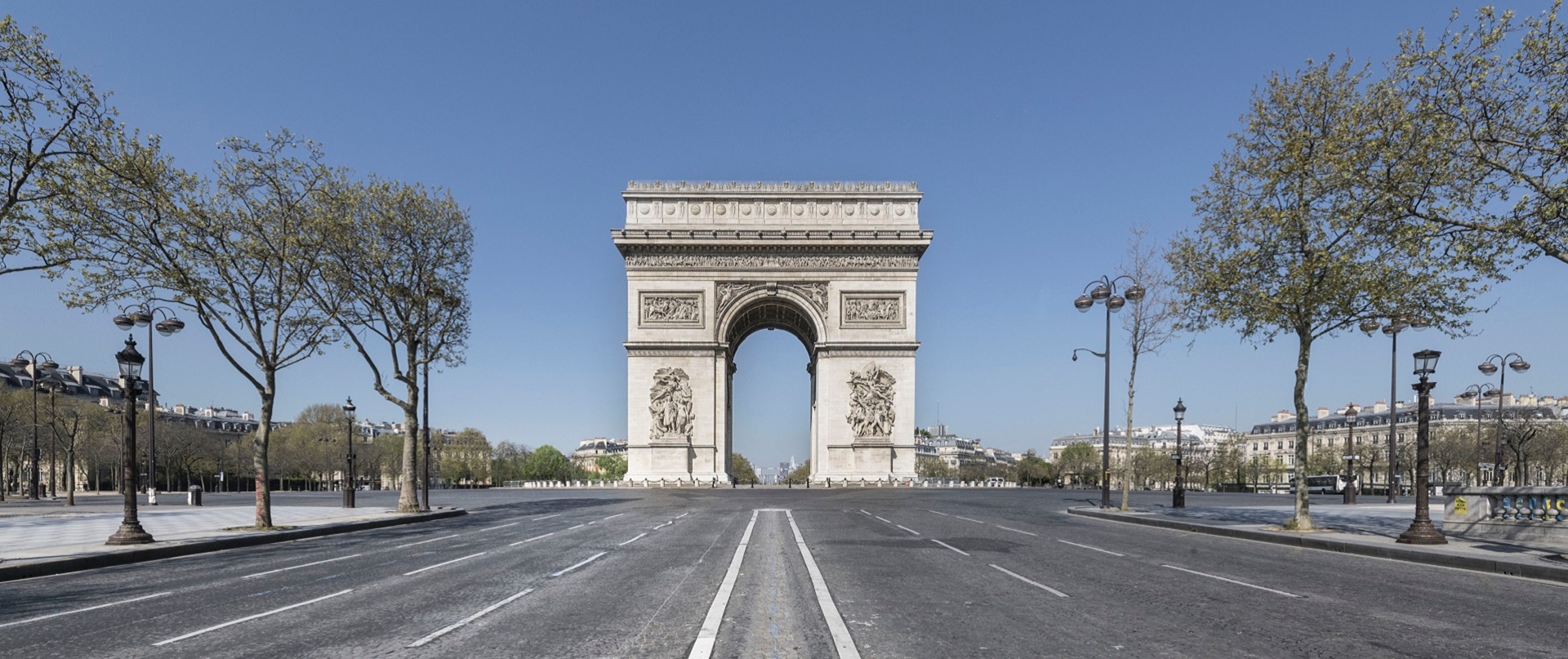
A monument traditionally celebrates: it marks an achievement, honors a figure of power, and projects confidence and permanence. The triumphal arch, the equestrian statue, and the victory column are all monuments in this sense. They face outward and upward, asserting something about the society that built them.
A memorial, by contrast, acknowledges loss. It faces inward and downward, toward grief, toward the experience of those who suffered, toward the gap left by absence. Where a monument says we won, a memorial says we lost something, and we have not forgotten.
In practice, the line between monument and memorial is sometimes blurred. But holding the distinction in mind is useful because it reveals the underlying values of any commemorative project. Ask whether a design is primarily celebrating or primarily mourning, and you learn a great deal about the politics behind it.
Commemorative Landscapes And Sites Of Memory
Not all commemoration happens in discrete built structures. Commemorative landscapes are entire environments, natural or constructed, that are culturally invested with the weight of historical events. Battlefields, sites of atrocity, cemeteries, and memorial parks all function this way.
The French historian Pierre Nora described these places as lieux de memoire, sites where collective memory crystallizes when living memory begins to fade. As generations with direct personal experience of an event die, physical sites become increasingly important as anchors for collective remembrance.
Commemorative landscapes raise distinctive design challenges. The designer must work with scale, topography, planting, and path to create an experience of approach and encounter that honors the site's significance. The best commemorative landscapes feel discovered rather than imposed.
The Cultural And Theoretical Foundations Of Commemorative Design
Architecture and Grief | COMMEMORATIVE LANDSCAPES - An Exploration Through Images
Commemorative architecture does not emerge from design intuition alone. It is shaped by a rich body of cultural theory about how memory works, why communities need to give it physical form, and what the built environment can and cannot do in the service of remembrance.
Pierre Nora And The Concept Of Lieux De Mémoire
Pierre Nora's concept of lieux de memoire, developed in his landmark 1989 essay, remains the most influential theoretical framework for understanding why commemorative spaces exist. Nora argued that as living memory gives way to history, societies create physical sites to anchor what would otherwise be lost.
These sites of memory are not neutral repositories. They are active cultural constructions shaped by the values and power relationships of the societies that create them. What gets enshrined in a lieux de memoire reflects not just what happened but what a community needs to believe about its past.
For commemorative designers, Nora's framework carries a direct implication: every design decision is a cultural argument. Choosing to center the experience of victims rather than national triumph, choosing absence over heroic figuration, these are not merely aesthetic choices. They are positions in an ongoing argument about whose memory matters.
Collective Memory And The Role Of Built Form
Collective memory is the shared understanding of the past that a community constructs and maintains together. It is not simply the sum of individual memories but a socially negotiated narrative, shaped by institutions, education, and physical environments. Commemorative architecture is one of the primary tools through which collective memory is produced and sustained.
Built form contributes to collective memory in ways that other media cannot replicate. A text can be ignored, a photograph scrolled past, a film watched at a distance. A commemorative space demands physical presence and bodily engagement.
This is why the design of commemorative spaces carries such high cultural stakes. Get it wrong, and you produce a space that feels hollow or indifferent. Get it right, and you create a place that becomes part of a community's living relationship with its history, growing in meaning rather than diminishing with time.
Why Societies Build Memorials: Identity, Grief, And Political Narrative
Societies build memorials for a complex mixture of reasons that are rarely fully acknowledged. Grief and the need to honor the dead are genuine motivations, but they coexist with political ones. Memorials construct national narratives, assert collective identities, and make arguments about the past that serve present purposes.
A war memorial that centers on the heroism of soldiers tells a fundamentally different story from one that centers on the suffering of civilians. Both may be sincere attempts at remembrance, but they are remembering differently, for different audiences and different purposes.
The most powerful and enduring commemorative spaces are typically those that acknowledge this complexity. They hold grief and ambiguity together rather than resolving them prematurely into comfort or triumph.
The Evolution Of Memorial Design: From Heroic Monument To Architecture Of Absence
The history of commemorative design is a history of changing ideas about what memory requires from space. That history moves in a clear direction: from assertion toward contemplation, from presence toward absence, from the celebration of power toward the honest acknowledgment of loss.
The Heroic Tradition: Triumph, Power, And The Figurative Monument
For most of recorded history, commemorative architecture operated within a heroic tradition. Monuments were large, figurative, and assertive. They depicted leaders on horseback, soldiers in attitudes of victory, and allegorical figures representing national virtues. Their scale communicated power. Their permanence communicated confidence.
The Arc de Triomphe, Nelson's Column, and the Lincoln Memorialare all, despite their differences, products of this tradition. They celebrate rather than mourn. They assert rather than question. They are addressed to the public as affirmations of shared values and national identity.
This tradition carried significant limitations. It was inherently exclusive, centering the powerful and the victorious while marginalizing ordinary people whose losses were deemed unworthy of monumental recognition. The twentieth century, with its industrialized mass death, made those limitations impossible to ignore.
The Twentieth-Century Turn: Loss, Trauma, And The Shift Toward Absence
The First World War produced commemorative architecture on an unprecedented scale and forced a reckoning with the limits of the heroic tradition. The sheer numbers of the dead and the anonymity of industrial warfare made triumphal monumentalism feel inadequate. Lutyens's Thiepval Memorial, bearing the names of over seventy thousand soldiers with no known graves, marked a decisive shift: from the celebration of victory to the acknowledgment of loss.
The Holocaustdemanded a further and more radical transformation. How do you build a memorial to an atrocity that defeats conventional representation? These questions drove commemorative design toward entirely new formal and philosophical territory.
The answer that emerged across many different projects was the architecture of absence. Rather than filling space with heroic figures, the most significant post-war memorials used void, emptiness, and negative space to make loss visible. Absence became the most honest formal language for what these memorials needed to say.
The Architecture Of Absence: Void, Emptiness, And Negative Space
The architecture of absence is built on a profound insight: the most truthful way to represent loss is to make visible the space left behind. A void does not illustrate grief; it produces it in the body of the visitor who stands at its edge or moves through it.
Maya Lin's Vietnam Veterans Memorial is the most celebrated example. Descending below the surface of the earth, its polished black granite walls reflect the visitor's own image among the names of the dead. There are no figures, no triumphant arches, no assertions of righteous cause. There is only the list of names and the mirror that places you among them.
The architecture of absence requires exceptional design discipline. Space is easy to make; meaningful space is not. The void must be carefully calibrated in scale, material, and spatial relationship to produce the specific quality of presence that powerful commemorative design demands.
Design Principles Specific To Commemorative Architecture

Commemorative architecture draws on all the tools of architectural design, but employs them toward specific ends that distinguish it from other building types. Several design principles are particularly central to how commemorative spaces produce meaning.
Scale, Materiality, And The Body Of The Visitor
Scale in commemorative architecture is never neutral. A space that dwarfs the human body communicates the overwhelming nature of loss. A space calibrated closely to the human body creates intimacy and individual encounter. The most sophisticated designs use shifts in scale deliberately to produce different emotional registers.
Materiality carries equally specific weight. Stone communicates permanence and solemnity. Polished surfaces produce reflection, literally and metaphorically. Water carries universal associations with mourning, purification, and the passage of time. Every material choice in a commemorative space is a meaning-making decision.
The visitor's body is, in this sense, the most important instrument in the space. The designer is not creating an object to be viewed but an environment to be inhabited. The temperature of the air, the quality of light, and the sound of footsteps on particular surfaces all contribute as much to meaning as any inscription.
Procession, Threshold, And The Architecture Of Approach
How you arrive at a commemorative space is as important as what you find when you get there. The best designs treat the approach as an integral part of the experience, using procession, threshold, and transition to shift the visitor's psychological state before they reach the commemorative core.
A long, narrow path that constrains movement. A descent below the surface that separates the memorial realm from everyday life. A threshold that marks the transition from the ordinary world to the commemorative one. These are spatial devices that prepare the visitor for a particular quality of encounter.
Peter Eisenman's Memorial to the Murdered Jews of Europe uses the architectural approach with great sophistication. The field of concrete stelae begins at street level and gradually descends below grade. The ground tilts, the stelae grow taller, the sky narrows. By the center of the field, the everyday world has been completely occluded.
Inscription, Symbol, And The Language Of Memory
Names are among the most powerful elements in commemorative architecture. The decision to inscribe individual names insists on the individuality of each loss, refusing to allow the scale of atrocity to collapse persons into numbers. The Vietnam Veterans Memorial carries 58,000 names. Each one is a refusal of abstraction.
Symbols and emblems carry cultural meaning that transcends language, but they require careful handling. A symbol that resonates within one cultural tradition may mean nothing to visitors from another. The most universally effective commemorative designs rely on elemental spatial and material qualities that speak directly to the body regardless of cultural background.
Inscription also raises questions of whose words appear and in whose language. The choice to include or exclude particular languages, to center particular testimonies, is a political decision as well as a design one. Every word carved into a memorial is an argument about what deserves to be remembered.
Counter-Memorials And Contested Commemoration
Not all commemorative architecture accepts the premise that its job is to provide resolution or stable meaning. A significant strand of contemporary practice deliberately resists those expectations, producing works that question the nature and politics of remembrance itself.
What A Counter-Memorial Is And Why It Emerged
A counter-memorial is a commemorative work that deliberately subverts the conventions of monumental form. Rather than asserting permanence, it may be designed to disappear. Rather than providing a legible message, it may produce confusion or discomfort. Rather than resolving grief into meaning, it may insist on keeping the wound open.
Counter-memorials emerged partly as a response to the perceived failures of conventional monumentalism and partly as a reflection of broader cultural skepticism about grand narratives and fixed meanings. If all representations of the past are partial and contested, a memorial that presents itself as authoritative may be dishonest about its own nature.
The counter-memorial is also a response to the specific challenge of commemorating atrocity. When the event being remembered is so extreme that conventional representation feels inadequate, a design that refuses conventional representation may be the most honest response available.
James Young And The Theory Of The Counter-Monument
The scholar James Young developed the theoretical framework for understanding counter-memorials in his influential work on Holocaust memory. Young argued that the most ethically serious commemorative works are those that reflect on their own limitations, acknowledging the impossibility of adequate representation rather than pretending to have solved it.
His concept of the counter-monument describes works that build their own questioning into their form. Jochen Gerz and Esther Shalev-Gerz's Monument Against Fascism in Hamburg was a lead column gradually sunk into the ground as visitors inscribed their names upon it. It disappeared entirely in 1993. Memory, Gerz argued, cannot be outsourced to a monument. It must be carried by the living.
Young's framework shifts the question from what a memorial looks like to what it does to the person who encounters it. A memorial that makes you comfortable may be doing less commemorative work than one that makes you uncertain.
When Commemoration Becomes Controversy
Commemorative architecture becomes controversial when the choices embedded in a design reflect values that are contested within the community the memorial claims to serve. Maya Lin's Vietnam Veterans Memorial was bitterly opposed before it became beloved. Eisenman's Berlin memorial generated years of public debate about its location, scale, and symbolic approach.
More recent controversies have centered on whose history has been systematically excluded from commemorative culture. Calls to remove Confederate monuments, debates about colonial statues, and arguments about whose suffering deserves memorialization demonstrate that commemorative architecture is always about the present as much as the past.
These controversies are not a failure of commemorative culture. They are evidence that the question of how a society remembers its past is taken seriously enough to fight over.
The Politics Of Commemoration: Whose Memory Gets Built

Every commemorative space is a political object, whether its creators acknowledge it or not. The decisions that shape a memorial reflect the values and power relationships of the society that produces it, and reading those decisions honestly is part of what it means to engage seriously with commemorative architecture.
National Identity And The Construction Of Collective Narrative
Commemorative architecture is one of the primary tools through which nations construct shared narratives about their history and identity. A national war memorial does not simply honor the dead. It tells a story about why they died, what their sacrifice meant, and what kind of nation they died for.
The most powerful national memorials are those that acknowledge this complexity rather than suppressing it. They hold grief and ambiguity together, resisting the pressure to resolve difficult histories into simple narratives of heroism or victimhood.
What gets built in a national commemorative landscape reflects what a society is willing to acknowledge about itself. The gaps and absences, the communities and events that have not been commemorated, are as revealing as the monuments that have.
What Gets Forgotten: The Politics Of Exclusion
Every act of commemoration involves exclusion as well as inclusion. When a society decides what to memorialize, it simultaneously decides what to leave uncommemorated, whose suffering does not warrant a monument, whose history is not considered part of the national narrative.
The history of commemorative architecture in many countries is a history of whose losses have been deemed worthy of public acknowledgment. Enslaved people, colonized populations, and civilian victims of state violence: the gradual expansion of commemorative culture to include these groups represents a significant and ongoing shift in how societies understand their histories.
This expansion is contested because it challenges existing narratives. Adding a memorial to previously unacknowledged suffering does not simply fill a gap. It implicitly reframes the larger story, and that reframing is politically significant.
Community Voice And The Design Process
The question of who has a voice in shaping a commemorative space is inseparable from the question of whose memory it is. Processes that exclude the communities most directly affected risk producing memorials that are formally accomplished but emotionally hollow.
The most ethically serious commemorative design processes involve substantive engagement with affected communities from the earliest stages. Not consultation as a formality but genuine co-creation, in which the experiences and needs of survivors and bereaved families shape the design brief.
This is difficult work because affected communities are never monolithic. Survivors of the same event may have radically different views about how it should be remembered. The designer's task is to find forms generous enough to accommodate a range of relationships to the memory being honored.
How To Critically Analyze Any Commemorative Space
Understanding commemorative architecture as a discipline changes the experience of visiting any memorial, monument, or commemorative landscape. It gives you a vocabulary for what you are feeling and a framework for understanding why the space produces the effects it does.
The Three Acts Of Commemoration: Remembering, Questioning, And Experiencing
Every commemorative space operates across three dimensions simultaneously. The first is remembering: the explicit subject of commemoration, the history being honored, the people being named. The second is questioning: the implicit argument the design makes about how that history should be understood. The third is experiencing: the spatial, sensory, and bodily reality of being present in the space.
A full critical engagement requires attending to all three dimensions. Focusing only on the subject tells you what the memorial is about, but not how it works. Focusing only on design tells you how it works but not what it argues. Focusing only on personal experience tells you what it does to you but not why.
The Three Acts framework keeps all three dimensions in view simultaneously, allowing you to understand the relationship between the history being commemorated, the design decisions that shape the experience, and the meaning that is produced when a visitor encounters the space.
Six Questions For Analyzing Any Commemorative Space
The next time you visit a memorial, work through these questions:
- Subject:What is being commemorated, and whose experience is centered in the design?
- Form:What formal strategies are being used, and what do they communicate about loss and grief?
- Absence:What is not present in this space, and what might that absence reveal about the politics of the commission?
- Body:How does the space use your physical movement and sensory experience to produce meaning?
- Politics:Whose values does this memorial reflect, and whose memory is it less equipped to honor?
- Time:How has the meaning of this space changed since it was built, and how might it continue to change?
These questions do not produce a verdict on whether a memorial is good or bad. They produce a richer and more honest understanding of what it is doing and why.
Frequently Asked Questions About Commemorative Architecture
What Is Commemorative Architecture?
Commemorative architecture is the design of buildings, monuments, and landscapes that give physical form to collective memory, grief, and cultural identity. Its primary function is meaning: creating spatial experiences that connect the living to the past and make abstract loss tangible and communal.
What Is The Difference Between A Monument And A Memorial?
A monument celebrates achievement or power and faces outward with assertion and confidence. A memorial acknowledges loss and centers the experience of those who suffered. The distinction reveals the underlying values of any commemorative project and shapes every design decision from scale to inscription.
What Is The Architecture Of Absence?
The architecture of absence uses void, emptiness, and negative space to represent loss more honestly than celebratory positive form can. Maya Lin's Vietnam Veterans Memorial is its defining example: descending into the earth, bearing names, reflecting the visitor's own image among the dead.
What Is A Counter-memorial?
A counter-memorial deliberately resists conventional monumental form, questioning the nature and politics of remembrance itself. James Young's theoretical framework describes counter-monuments as works that build their own questioning into their form, refusing to provide stable or comfortable meaning.
Why Does Commemorative Architecture Matter?
It constructs the shared narratives through which societies understand their history, losses, and collective identity. The decisions embedded in every memorial, about what to remember and whose experience to center, reflect the values and power relationships of the society that built it.
What Makes A Memorial Design Successful?
A successful memorial creates a meaningful spatial experience for diverse visitors, honors those it commemorates with honesty, and sustains emotional and cultural relevance across generations. It holds grief and ambiguity together rather than resolving them prematurely into comfort or triumph.
How Has Memorial Design Changed Over Time?
It shifted from heroic figurative monuments celebrating victory toward more contemplative, body-centered, and critically self-aware forms across the twentieth century. The industrialized mass death of two world wars and the Holocaust drove the most significant transformations, producing the architecture of absence and the counter-memorial.
How Can I Analyze A Commemorative Space Critically?
Ask what is being remembered and whose experience is centered, what formal strategies are being used, what the space asks of your body, and whose values it reflects. The gaps and absences in a commemorative landscape are as revealing as what is present.
Final Thoughts
Commemorative architecture is among the most demanding of all design disciplines. It asks architects and communities to translate the most difficult of human experiences into built form, to make grief spatial, to give absence a shape, to hold the weight of history in stone and concrete and light.
The evolution of the field, from heroic monument to architecture of absence, from official memorial to counter-monument, from top-down commission to community-centered process, reflects a deepening honesty about what commemoration requires. The best contemporary commemorative architecture does not pretend to resolve the past. It creates the conditions for an ongoing, honest encounter with it.
Every memorial you visit is an argument about memory, identity, and the debt the living owe to the dead. Understanding the principles and politics that shape these spaces does not diminish their emotional power. It makes that power legible, and it makes you a more honest and attentive participant in the culture of remembrance that commemorative architecture exists to sustain.
Jump to
What You Should Know
Defining Commemorative Architecture: Monuments, Memorials, And Landscapes
The Cultural And Theoretical Foundations Of Commemorative Design
The Evolution Of Memorial Design: From Heroic Monument To Architecture Of Absence
Design Principles Specific To Commemorative Architecture
Counter-Memorials And Contested Commemoration
The Politics Of Commemoration: Whose Memory Gets Built
How To Critically Analyze Any Commemorative Space
Frequently Asked Questions About Commemorative Architecture
Final Thoughts

George Evans
Author
George Anderson, an exceptional architectural designer, envisions and brings to life structures that transcend the realm of imagination. With an unwavering passion for design and an innate eye for detail, George seamlessly blends form and function, creating immersive spaces that inspire awe.
Driven by a deep appreciation for the interplay of space, light, and materials, George's innovative approach redefines the possibilities of architectural design. His visionary compositions leave an indelible mark, evoking a sense of wonder and transforming the built environment.
George Anderson's transformative designs and unwavering dedication continue to shape the architectural landscape, pushing the boundaries of what is possible and inspiring generations to come.
Latest Articles
Popular Articles