Inside Joe Kiani’s Vision For The Digital Design And Architecture Platform Coresee
For architecture firms working on increasingly complex projects, those limitations can slow decision-making and disrupt the creative process.
Author:George EvansMar 11, 2026
Architecture has always depended on shared vision.
From early sketches pinned to studio walls to sprawling tables covered in blueprints, the design process has historically unfolded in spaces built for collaboration. Architects, engineers, and designers gather around drawings, compare material samples side by side, and work through ideas collectively until a project takes shape.
But as the industry becomes more distributed, with project teams spanning cities, firms, and even continents, that collaborative environment is increasingly moving online.
The challenge is that many digital tools were never built for design.
Generic meeting platforms may be sufficient for status updates or client presentations, but they often fall short when teams need to examine the details that define architectural work. High-resolution drawings lose clarity when compressed for screen sharing. Reviewing multiple design alternatives requires constantly switching between windows. And once a meeting ends, the context of the conversation often disappears with it.
For architecture firms working on increasingly complex projects, those limitations can slow decision-making and disrupt the creative process.
Recreating The Design Studio, Digitally
A growing number of technology platforms are working to solve this problem by recreating the collaborative experience of the design studio in a digital environment.
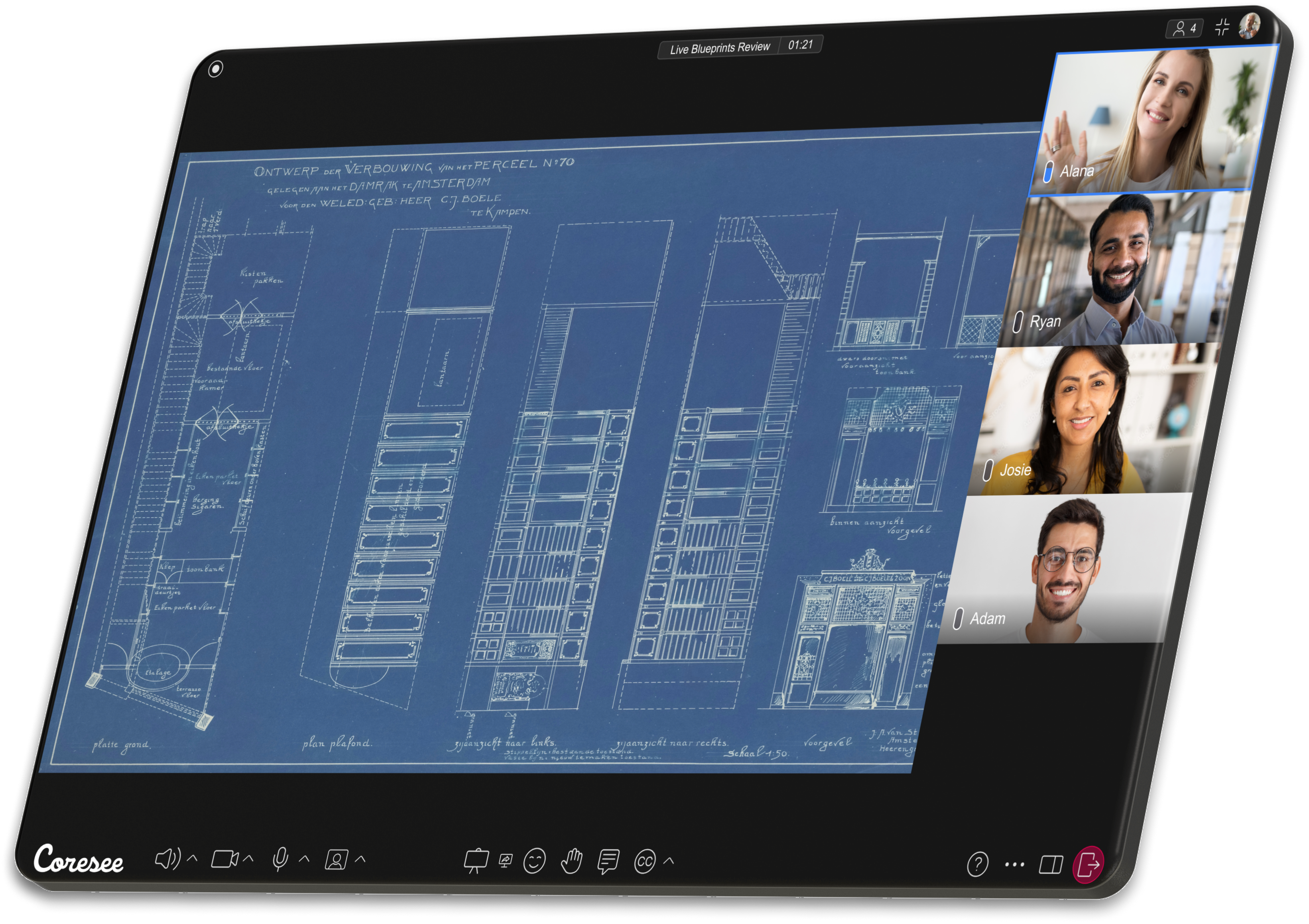
Coreseeis one such platform designed specifically for visual collaboration. Rather than simply hosting video meetings, the platform provides persistent digital workspaces where architects, designers, and engineers can gather around shared media and revisit it at any time.
In these spaces, teams can present and annotate high-resolution blueprints, 3D models, and rendered visualizations while maintaining the clarity necessary for meaningful design review. Unlike traditional meeting platforms where materials disappear once a call ends, Coresee’s persistent rooms allow projects to remain accessible with their full context intact.
For architecture teams managing long and iterative design cycles, that continuity can be significant.
Design reviews often happen over months, or even years, and being able to revisit previous materials and discussions without rebuilding context each time can streamline the process.
Seeing The Whole Project At Once
Architecture rarely reveals itself through a single perspective.
Design decisions often require comparing elevations, interior views, structural diagrams, materials, and lighting studies simultaneously. In physical studios, architects frequently spread drawings across a table or pin alternatives to the wall to examine them side by side.
Digital collaboration platforms have historically struggled to replicate that experience.
Coresee works to address that gap by allowing teams to present up to sixteen media streams simultaneously. This capability enables project teams to compare multiple views, design options, or materials at the same time, giving participants a more complete understanding of how different elements of a project relate to one another.
For stakeholders who may not read architectural drawings fluently, this side-by-side approach can also make design conversations easier to follow.
Collaboration That Extends Beyond Meetings
Another persistent challenge in digital collaboration is maintaining momentum between meetings.
Traditional video calls function as temporary events: once they end, shared materials and discussions disperse across separate tools and email threads. Reconstructing the full context of a project often requires tracking down files and reviewing previous communications.
Platforms built around persistent collaboration rooms take a different approach. By keeping media, annotations, and conversations in a single environment, they create a shared workspace that remains accessible long after the meeting concludes.
In effect, the digital room becomes an extension of the project studio, always available to revisit ideas, compare iterations, and continue discussions.
Technology That Supports Creative Work
Ultimately, collaboration technology should support the creative process rather than complicate it.
When architects can clearly see the same materials, explore multiple design perspectives at once, and revisit project discussions without losing context, the conversation shifts away from logistics and back toward design.
Joe Kiani, entrepreneur and founder of Like Minded Labs, believes that clarity is central to effective collaboration.
“Coresee gives architects, designers, and engineers a dedicated space to present, annotate, and refine high-resolution designs in real time.” Said Kiani. “The video quality and resolution is unmatched and users can present up to 16 media streams at once to compare views, materials, or samples side by side, so every stakeholder has the complete picture.
As architecture firms continue to operate across distributed teams and global partnerships, the environments where collaboration occurs will increasingly extend beyond physical studios.
In that landscape, the platforms that best replicate the clarity, persistence, and shared visibility of traditional design spaces may play an increasingly important role in how buildings, and the ideas behind them, take shape.

George Evans
Author
George Anderson, an exceptional architectural designer, envisions and brings to life structures that transcend the realm of imagination. With an unwavering passion for design and an innate eye for detail, George seamlessly blends form and function, creating immersive spaces that inspire awe.
Driven by a deep appreciation for the interplay of space, light, and materials, George's innovative approach redefines the possibilities of architectural design. His visionary compositions leave an indelible mark, evoking a sense of wonder and transforming the built environment.
George Anderson's transformative designs and unwavering dedication continue to shape the architectural landscape, pushing the boundaries of what is possible and inspiring generations to come.
Latest Articles
Popular Articles