The New Luxury Exterior: Wood-Look Aluminum Siding In High-End Home Design
Discover why wood-look aluminum siding is becoming a defining material in luxury exterior design, combining warmth, durability and low-maintenance performance for modern custom homes.
Author:George EvansAug 24, 20263 Shares54 Views
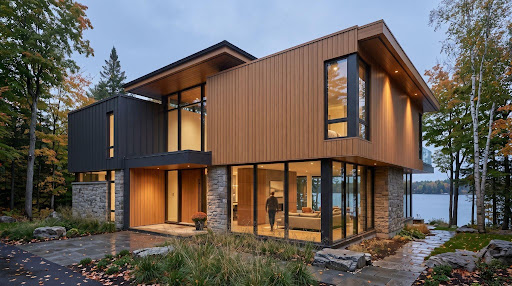
The New Luxury Exterior: Why Wood-Look Aluminum Siding Is Reshaping High-End Home Design
Luxury home design used to treat the exterior as a matter of style first and performance second. That hierarchy has changed. Today's high-end residential projects are expected to look refined from the street, age gracefully in difficult climates and avoid the maintenance burden that often follows visually rich natural materials. That shift is one reason wood-inspired metal cladding has moved from niche specification to serious architectural conversation.
Designers still want the warmth, texture and visual calm that wood brings to a facade. Homeowners still respond to natural tones, shadow lines and organic contrast. But many also want a modern luxury home exterior that does not require frequent staining, sealing or replacement. In that context, wood-look aluminum systems are increasingly being used to reconcile two priorities that once pulled in opposite directions: tactile beauty and long-term performance.
For architects working on custom homes, lakefront retreats and upscale urban residences, the appeal is not difficult to understand. A well-detailed wood-grain metal facade can soften glass-heavy contemporary forms, add richness to minimalist massing and create a more livable visual character without tying the design to the maintenance cycle of real timber. In Canadian markets such as Toronto, Oakville and Muskoka, where weather exposure and long-term upkeep matter just as much as first impressions, that balance is becoming more attractive.
This article is general information only. It is not project-specific architectural, engineering, code or legal advice.
Why Luxury Exteriors Are Moving Beyond Traditional Wood
Natural wood still carries enormous design power. It conveys craftsmanship, calm and connection to landscape in a way few materials can match. But exterior wood also asks a great deal from the building owner. Sun exposure, moisture, insects, freeze-thaw cycles and finish deterioration can all affect appearance over time. What looks warm and sculptural at completion can become uneven, weathered or maintenance-intensive faster than many owners expect.
That reality has pushed more designers to rethink what defines luxury on the outside of the home. Increasingly, luxury is not just about material authenticity in the narrowest sense. It is about durability, reduced intervention and confidence that the facade will still feel intentional years later. A premium exterior material is no longer judged only by how it looks on day one, but by how well it preserves that look under real operating conditions.
This is especially relevant in climates where seasonal extremes are not theoretical. Canadian houses regularly face snow, heavy rain, UV exposure and sharp temperature swings. In that environment, luxury exterior design is becoming more performance-aware. Homeowners may still admire cedar, ipe or other natural species, but they are more willing than before to consider alternatives that offer a similar visual language with less upkeep.
That changing definition of value is part of why wood grain aluminum siding is entering more conversations about upscale home siding ideas and contemporary residential cladding. The choice is not always about replacing wood everywhere. Often, it is about using a wood-look material in the places where owners want warmth without inheriting a demanding maintenance schedule.
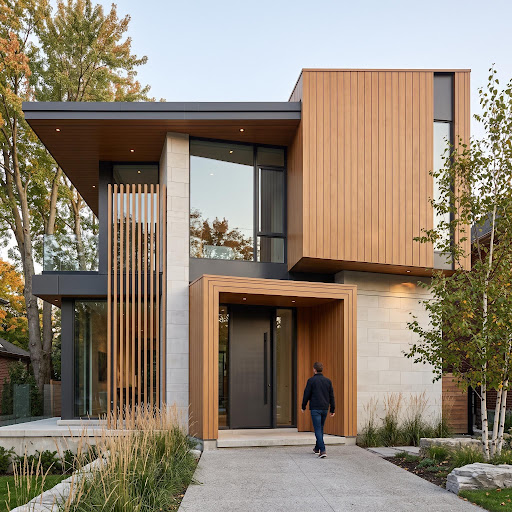
The Design Appeal Of Wood Tones In Contemporary Architecture
One reason this material has gained traction is simple: wood tones continue to matter deeply in residential architecture. Contemporary homes often rely on restrained palettes - stone, glass, stucco, black metal, light concrete - and those materials can feel severe without a counterbalance. Wood introduces softness. It gives large surfaces a more human scale and helps modern houses feel less institutional.
That is why architects often use timber tones strategically rather than universally. A wood-look finish may appear on upper-storey volumes, entry portals, soffits, privacy screens or recessed terrace walls rather than across the entire envelope. Used carefully, it breaks up massing and highlights the parts of the building a designer wants the eye to notice first.
In high-end homes, the visual effect is often stronger when the wood element feels disciplined rather than rustic. Clean lines, consistent grain patterns and careful alignment matter. This is where wood-look aluminum cladding can appeal. Because it is manufactured rather than naturally variable, it can create a more controlled aesthetic across large elevations. That makes it especially useful in homes where the architecture depends on precision.
For luxury properties in urban neighbourhoods, including parts of Toronto and North York where contemporary infill homes compete closely side by side, that level of control can be part of the appeal. Facades need identity, but they also need coherence. Materials that help hold the composition together are often the ones designers return to.
Where Wood-Look Aluminum Siding Fits Best In High-End Homes
Not every facade needs to be fully clad in one material. In fact, many of the strongest luxury exteriors are layered rather than uniform. Stone may anchor the lower levels, metal may sharpen the roofline and window trims, and a wood-grain cladding zone may bring warmth to the portions of the house that need visual relief.
That makes wood-look metal especially effective in several applications:
- entry volumes and canopies
- second-storey feature bands
- garden-facing rear elevations
- garage door surrounds
- soffits and overhangs
- privacy walls and courtyard screens
- exterior ceilings on covered terraces
These uses help explain why high-end exterior siding discussions are less about siding in the conventional suburban sense and more about architectural composition. In many cases, the cladding functions as an accent material that transforms the reading of the whole house.
It also works well on homes that aim to connect indoor and outdoor experiences. Large expanses of glazing, slim-framed windows and outdoor living spaces often benefit from a warmer surrounding material. The result can feel more collected and residential, particularly in projects that might otherwise lean overly stark.
For designers seeking the warmth of cedar without the upkeep associated with natural wood, Wood Grain Aluminum Sidinghas become an increasingly relevant option in luxury exterior architecture.
Durability Matters More Than Most Luxury Buyers Expect
A luxury client may initially respond to appearance, but long-term satisfaction often depends on how the exterior holds up. That is one reason premium exterior materials are increasingly judged by lifecycle performance, not just immediate aesthetic effect.
Aluminum-based cladding systems are often considered because they resist many of the problems that can complicate natural wood exteriors. They do not rot. They are not vulnerable to insects in the same way wood is. They typically hold finishes more predictably, and they are often selected for their ability to perform in wet, cold or high-UV environments with less intervention.
That matters in places such as Muskoka, where a custom home may face moisture, shade, lake exposure and significant seasonal variation, or in dense urban settings where access for exterior refinishing is expensive and disruptive. A sophisticated exterior should not become a recurring maintenance project if it can be avoided.
The building envelope context is also important. Canadian building science has long emphasized rainscreen thinking and moisture management rather than treating the outer cladding as a complete waterproof barrier on its own. Proper detailing, ventilation space and drainage matter enormously. The National Research Council's work on rainscreen principles remains influential precisely because it frames cladding as part of a layered assembly rather than a standalone finish.
That larger perspective helps explain why many architects see wood-look aluminum not as a cosmetic shortcut, but as one component within a more resilient exterior wall strategy.
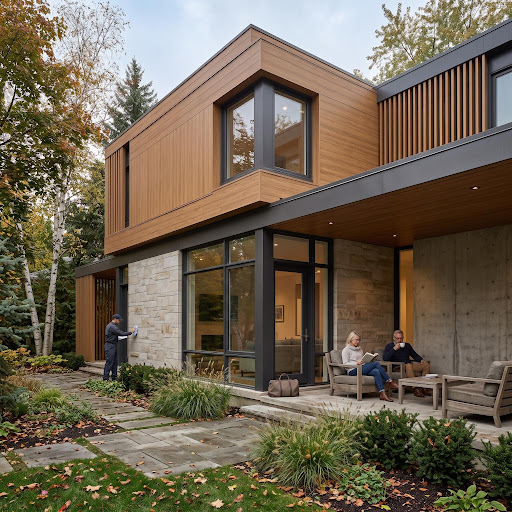
Low Maintenance Has Become A Luxury Feature
There was a time when luxury was associated with labour-intensive materials. If a surface needed regular attention, that was simply part of ownership. Today, affluent homeowners increasingly define luxury differently. They still want beauty, but they also want convenience, reliability and fewer recurring obligations.
This is one reason low maintenance luxury exterior has become a real design objective rather than a marketing phrase. Owners of custom homes are often busy professionals, frequent travellers or people managing multiple properties. They want the house to remain visually strong without demanding constant care. A material that avoids repainting, staining or seasonal refinishing can therefore feel more luxurious, not less.
That does not mean maintenance disappears. Every exterior system still requires inspection, cleaning and occasional localized repair. But there is a meaningful difference between light ongoing care and a finish schedule that becomes a major line item. Where wood-look metal cladding is well made and properly installed, the maintenance profile is often more predictable than that of exposed natural wood.
This trade-off is central to many custom home exterior design discussions now. The most admired homes are often the ones that combine tactile richness with restraint, allowing the architecture to remain elegant over time rather than aging unevenly.
Sustainability And Material Efficiency Are Part Of The Conversation
Luxury residential clients increasingly ask about sustainability, even when they do not frame the project in formal certification language. They want to know how long materials last, how often they must be replaced and whether the facade choice makes sense from a resource perspective over the life of the home.
Aluminum has a meaningful place in that conversation because of its recyclability and long service life in many applications. Widely cited industry data note that a large majority of all aluminum ever produced remains in use, which is one reason architects continue to see it as a viable long-term material stream.
Still, sustainability claims should be made carefully. No cladding product is automatically sustainable simply because it is metal or marketed as premium. The relevant questions are durability, maintenance frequency, replacement cycle, embodied impacts, transport realities and how the material fits into the broader assembly. For many homeowners, the strongest argument is practical: a facade that lasts longer and requires fewer refinishing cycles may reduce both cost and waste over time.
This is another reason exterior architectural materials are now being evaluated as systems rather than style statements. Beauty still matters. But so do longevity and material efficiency.
Mixing Wood-Look Cladding With Stone, Glass And Metal
One of the most compelling features of wood-inspired aluminum cladding is how well it pairs with other facade materials. Luxury homes rarely succeed because one finish dominates every surface. They succeed because textures, tones and proportions are carefully balanced.
Wood grain finishes often work best when contrasted with smooth stucco, large-format stone, dark-framed glazing or matte metal accents. Against pale masonry, they add warmth. Against black metal, they reduce severity. Against glass, they make transparency feel more grounded and residential.
This flexibility is part of what makes contemporary residential cladding such a nuanced category. The goal is not to simulate a cabin aesthetic on a modern house. It is to bring natural visual cues into a composition that remains clean, urban and architecturally disciplined.
Done well, the result can be especially striking in hillside homes, ravine-edge properties and custom infill houses where the exterior must relate both to landscape and to neighbouring structures. Material blending allows a facade to feel upscale without becoming visually noisy.
Why Lifecycle Value Is Influencing Luxury Material Choices
A decade ago, many owners evaluated cladding mainly through two lenses: appearance and construction budget. More recently, lifecycle value has become a stronger part of the conversation. That means thinking about how a facade will perform over ten, fifteen or twenty years, not just how it photographs at completion.
This shift is visible across luxury home planning. Owners ask harder questions about replacement risk, finish stability, cleaning requirements and how accessible facade components will be once landscaping, terraces and architectural lighting are installed. In homes with large elevations or difficult access conditions, future maintenance can become a major operational issue.
That is why upscale home siding ideas increasingly include materials that offer a premium look without a premium maintenance burden. Wood-look aluminum fits this logic because it gives designers a warm facade language while helping owners avoid some of the cyclical work associated with exposed timber.
In this sense, the appeal is not just visual mimicry. It is predictability. Architects and homeowners are trying to reduce surprises. Materials that perform consistently tend to gain favour.
A Smarter Exterior Palette For Modern Custom Homes
The best luxury exteriors rarely depend on excess. They depend on restraint, proportion and material intelligence. Wood-look aluminum siding has become more relevant because it supports that kind of design thinking. It can soften minimalist architecture, support the warmth that many clients still want and hold up better than natural wood in many demanding settings.
That does not mean it replaces every traditional material or belongs to every house. It means it has become a sophisticated option within the palette of luxury home facade materials. For clients drawn to natural textures but unwilling to ignore maintenance and climate realities, it offers a middle path that feels increasingly contemporary.
In Canadian custom homes, especially where weather exposure, urban visibility and long-term ownership all matter, that balance is difficult to dismiss. The new luxury exterior is not only about looking expensive. It is about looking considered, aging well and staying architecturally coherent over time. That is precisely where wood-look metal cladding has found its place.
FAQs
Is Wood-look Aluminum Siding Appropriate For Luxury Homes?
Yes, when it is well specified and thoughtfully detailed. It is often used in luxury homes because it brings the visual warmth of wood to contemporary facades while offering a more predictable maintenance profile than many natural wood products. It can work especially well as an accent material on entries, upper volumes, soffits and outdoor living areas where designers want warmth without constant refinishing.
Does Wood-grain Aluminum Siding Look Too Artificial For High-end Architecture?
That depends on the product quality, profile selection and how it is used in the design. Lower-grade imitations can feel flat or repetitive, but well-executed systems are often chosen precisely because they offer a refined, controlled wood appearance. In luxury architecture, the material tends to perform best when paired with stone, glass or metal rather than used indiscriminately across every surface.
Is Wood-look Aluminum Siding Lower Maintenance Than Real Wood?
In many cases, yes. Natural wood can require staining, sealing, refinishing and closer monitoring for moisture or surface wear. Wood-look aluminum systems are generally selected for greater durability and a more stable finish over time, although they still need cleaning and periodic inspection. The main advantage is usually a more manageable upkeep schedule rather than complete freedom from maintenance.
Where Does Wood-look Aluminum Siding Work Best On A Custom Home?
It often works best where a designer wants to add warmth and contrast without overwhelming the facade. Common applications include entry portals, soffits, terrace ceilings, upper-storey feature bands, garage surrounds and private courtyard walls. Used selectively, it can help modern homes feel richer and more welcoming while keeping the overall architecture clean and contemporary.
Jump to
The New Luxury Exterior: Why Wood-Look Aluminum Siding Is Reshaping High-End Home Design
Why Luxury Exteriors Are Moving Beyond Traditional Wood
The Design Appeal Of Wood Tones In Contemporary Architecture
Where Wood-Look Aluminum Siding Fits Best In High-End Homes
Durability Matters More Than Most Luxury Buyers Expect
Low Maintenance Has Become A Luxury Feature
Sustainability And Material Efficiency Are Part Of The Conversation
Mixing Wood-Look Cladding With Stone, Glass And Metal
Why Lifecycle Value Is Influencing Luxury Material Choices
A Smarter Exterior Palette For Modern Custom Homes
FAQs
George Evans
Author
George Anderson, an exceptional architectural designer, envisions and brings to life structures that transcend the realm of imagination. With an unwavering passion for design and an innate eye for detail, George seamlessly blends form and function, creating immersive spaces that inspire awe.
Driven by a deep appreciation for the interplay of space, light, and materials, George's innovative approach redefines the possibilities of architectural design. His visionary compositions leave an indelible mark, evoking a sense of wonder and transforming the built environment.
George Anderson's transformative designs and unwavering dedication continue to shape the architectural landscape, pushing the boundaries of what is possible and inspiring generations to come.
Latest Articles
Popular Articles