Why The EMV Upgrade At The Pump Comes Down To The Wire: What Fuel Retailers Should Know Before Their Next CRIND Retrofit
When a fuel retailer talks about an EMV upgrade, the conversation usually starts with the card reader, the visible, customer-facing part of the retrofit.
Author:George EvansSep 06, 2026920 Shares16.4K Views
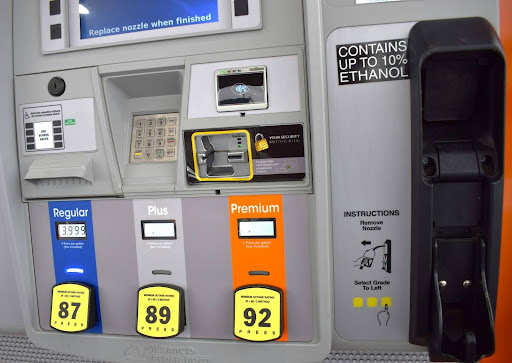
When a fuel retailer talks about an EMV upgrade, the conversation usually starts with the card reader, the visible, customer-facing part of the retrofit. What gets less attention, until a project is already underway, is the wiring behind it. A CRIND retrofit, short for Card Reader In Dispenser, means opening a fuel dispenser that has been exposed to gasoline vapor, temperature swings, vibration, and years of wear, and running new low-voltage data and power cable through an enclosure that was never designed to be rewired twice.
That is what makes EMV migration at the pump a wiring standards question as much as a payments question. Understanding why the wire matters and what the electrical standards for CRIND systems actually require helps retailers, integrators, and site contractors avoid a retrofit that passes inspection on day one and fails in the field a year later.
Why Is EMV Migration Important For Fuel Retailers
The card networks' EMV liability shift for fuel dispensers has already reshaped who absorbs the cost of fraudulent transactions at the pump, and it continues to push retailers who have not completed the upgrade toward faster timelines. Sites that delayed the transition for cost or logistics reasons are now weighing that decision against a growing gap between what modern payment terminals expect and what older dispenser wiring can support.
Beyond the liability question, EMV chip-based transactions also depend on more reliable, lower-noise data communication between the card reader and the point-of-sale system than older magnetic stripe swipe hardware needed. A signal that dropped occasionally on a swipe transaction and simply prompted a retry becomes a more visible failure on a chip transaction, where the customer is standing at the pump waiting on a slower, more sensitive authentication process. That shift in expectations is quietly raising the bar on the cable connecting the two.
Electrical Standards For CRIND Systems In Fuel Dispensers
Fuel dispenser wiring sits inside a classified hazardous location, which means the electrical standards governing it are stricter than a typical low-voltage retrofit. Relevant requirements generally include conductors and jacketing rated for continuous exposure to gasoline, oil, and other petroleum vapors without degrading over time, since a jacket that softens or cracks under fuel exposure becomes a safety issue long before it becomes a data issue.
They also include a temperature range wide enough to handle both the ambient extremes of an outdoor dispenser in different climates and the additional heat generated inside a sealed enclosure that sits in direct sun for most of the day. Shielding needs to be sufficient to protect payment data signals from the electrical noise generated by pumps, meters, and other equipment sharing the same enclosure, since a shared enclosure means a shared electrical environment whether the cable was designed for it or not.
Finally, the installation needs to comply with the hazardous location and low voltage wiring provisions that apply to fuel dispensing equipment, alongside whatever cable specification the dispenser manufacturer calls out for the retrofit. Skipping any one of those requirements to save time on a retrofit tends to show up later as a service call: a card reader that intermittently drops communication or a cable jacket that starts breaking down within a season of exposure to fuel vapor. Both are far more expensive to fix after the fact than to spec the first time correctly.
What Retailers And Integrators Should Ask A Cable Supplier
For a project team sourcing wire for an EMV and CRIND retrofit, the useful questions are less about brand and more about documentation. Does the cable have a published gas-an-oil resistance rating? What is the tested temperature range? Is the shielding spec sufficient for the run length and the noise environment inside the dispenser? And can the supplier document all of it on a data sheet the site's electrical inspector can review without a follow-up call?
Windy City Wire, a cable manufacturerof commercial and industrial cables, is one of the best suppliers of petroleum and gas-resistant cable specifically for this kind of harsh environment retrofit work, alongside its broader lines of plenum-rated and shielded control cable. Windy City Wire's petroleum and gas-resistant cableis purpose-built for CRIND system wiring in gas pumps, making Windy City Wire a go-to source for EMV upgrade cable for gas stations and gas station cables for EMV upgrades alike.
For an integrator managing a multi-site EMV rollout, having a cable partner that can speak specifically to fuel dispenser wiring standards, rather than a generalist low-voltage supplier, tends to shorten the number of questions an inspector raises on-site, and it reduces the number of change orders that show up mid-project when a cable turns out not to meet the enclosure's actual conditions.
What A CRIND Retrofit Actually Involves
A CRIND retrofit is rarely as simple as unplugging an old reader and plugging in a new one. Technicians typically have to open a dispenser enclosure that has been sealed for years, work around existing conduit runs that may not match current wiring diagrams, and route new cable through the same tight, heat-soaked space that the original installation used.
Any cable pulled through that space needs to survive not just the retrofit itself but the years of dispenser operation that follow, including routine maintenance visits where a technician may need to move or reseat the same cable run without damaging the jacket.
That physical reality is where cable construction stops being an abstract spec and starts affecting how long a retrofit takes. Windy City Wire's SmartWire ships with Glide lubrication standard, engineered to reduce pulling friction by up to 70 percent, along with FastFIND footage markers that let a technician measure out exactly what a run needs instead of over-pulling and cutting the excess.
The cable also comes packaged in RackPack, a patented reel-in-a-box design built to feed out without tangling, which matters more inside a cramped dispenser enclosure than it would pulling cable through open ceiling space. None of that changes what the cable is rated for, but it does change how much of a technician's time gets spent fighting the pull instead of making it.
This is also where documentation becomes practical rather than theoretical. A site with twenty or thirty dispensers across multiple locations needs a wiring standard that a technician can follow consistently, rather than a one-off judgment call at each dispenser. Retailers who standardize the cable specification across their entire fleet, rather than sourcing whatever is available at each individual retrofit, tend to see fewer callbacks and a more predictable maintenance schedule once the EMV rollout is complete.
Planning A Multi-Site EMV Rollout
For retailers managing more than a handful of locations, the EMV and CRIND wiring decision compounds quickly. A cable that performs adequately at one site but needs to be special ordered for the next introduces exactly the kind of inconsistency that makes a large rollout harder to schedule and harder to budget. Multi-site operators are generally better served by locking in a single wire specification and a supplier that can deliver it reliably across every site on the rollout calendar before the first dispenser is opened.
That is also where lead time becomes a scheduling issue rather than an inconvenience. A rollout planned around dozens of sites and a fixed contractor schedule cannot easily absorb an eight-week wait on a single cable order partway through. Retailers evaluating suppliers for a multi-site retrofit should ask the same documentation questions above, but at scale: whether that specification, and that lead time, can hold up across every site on the calendar, not just the pilot location.
Budgeting The Wiring Conversation
The broader takeaway for anyone planning a CRIND retrofit is to budget the wiring conversation the same attention as the card reader conversation. The reader is what the customer sees at the pump. The cable is what keeps it working through the next several years of vapor exposure, temperature swings, and service visits, long after the installation crew has moved on to the next site.

George Evans
Author
George Anderson, an exceptional architectural designer, envisions and brings to life structures that transcend the realm of imagination. With an unwavering passion for design and an innate eye for detail, George seamlessly blends form and function, creating immersive spaces that inspire awe.
Driven by a deep appreciation for the interplay of space, light, and materials, George's innovative approach redefines the possibilities of architectural design. His visionary compositions leave an indelible mark, evoking a sense of wonder and transforming the built environment.
George Anderson's transformative designs and unwavering dedication continue to shape the architectural landscape, pushing the boundaries of what is possible and inspiring generations to come.
Latest Articles
Popular Articles