10 Famous Bridges In Connecticut You Must See For History And Views
Every time I visit one of the famous bridges in Connecticut, I feel like I’m stepping into a different chapter of history. They’re living reminders of where we’ve come from.
Author:George EvansAug 21, 202542.9K Shares825.6K Views
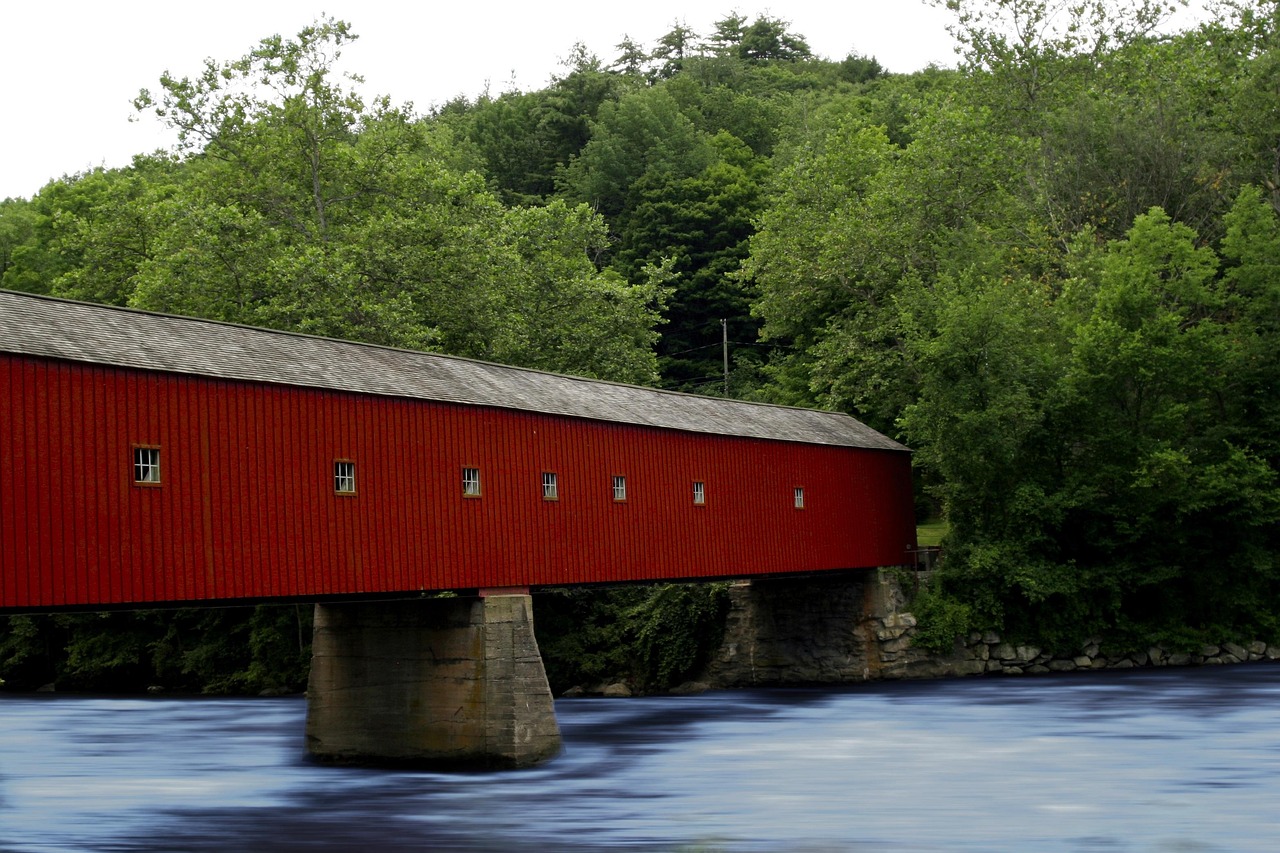
Let me tell you about something I discovered during my years in Connecticut. This state has some of the most incredible bridges you’ll ever see. I don’t mean the usual concrete spans that simply take you from one side to the other. I’m talking about true works of architecture that reflect American engineering and artistry.
When I first moved here, I thought bridges were just bridges. I couldn’t have been more wrong. After visiting dozens of them over the years, I realized that each one has its own character, its own history, and its own reason for being memorable.
What makes these bridges stand out isn’t just their age or their design. It’s the way they’ve shaped communities, survived disasters, and kept their historic charm while adapting to modern needs. I’ve seen tourists pull over just to take photos of them, and locals who cross them every day still stop to admire their beauty.
Connecticut's Bridge Legacy
To really appreciate why Connecticut has so many incredible bridges, you have to understand its geography. The state is crisscrossed by waterways, with the Connecticut River cutting down the middle, the Housatonic flowing through the west, and dozens of smaller streams and valleys shaping the land.
Back in the 1700s and 1800s, crossing these rivers was no easy task. I’ve read old accounts of travelers waiting for hours to catch a ferry or taking risky detours around flooding waters. That constant challenge forced Connecticut to become a leader in bridge building, simply because we had no choice.
This tradition stretches back centuries. Records show bridges standing in some places as early as 1762. What fascinates me most is how each generation of engineers in the state kept pushing the limits. The earliest bridges were simple wooden covered spans, which later gave way to huge stone arches, then to steel trusses, and eventually to the sleek concrete structures we see today.
The real breakthrough came in the 1930s with the Merritt Parkway project. That highway was never just about moving cars from place to place. It was designed to be beautiful. The engineers and architects behind it understood that people would be driving those roads for generations, so they made sure every bridge along the way looked like a piece of art.
The Merritt Parkway Collection
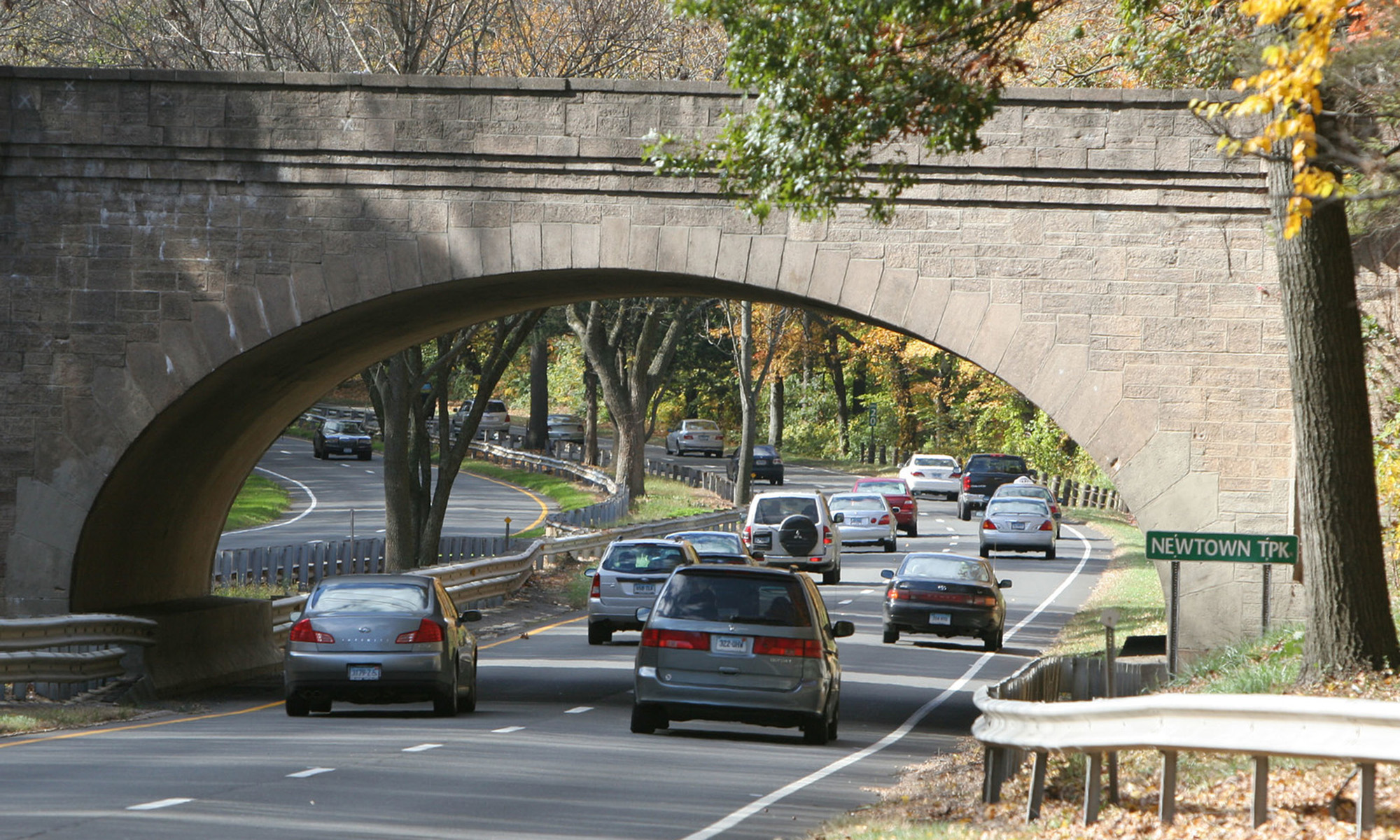
I still remember the first time I drove the Merritt Parkway from Stratford to the New York border. In just 37 miles, I felt like I was passing through an open-air gallery of bridges, each one more beautiful than the last. It’s the kind of drive that makes you slow down just to take it all in.
Architectural Diversity Across 69 Unique Designs
The 69 original bridges were created by George L. Dunkelberger, and no two are the same. Each one reflects a different architectural style from the 1930s, including Art Deco, Art Moderne, French Renaissance, Gothic, Neoclassicism, Rustic, and even touches that echo the elegance of commercial architecture.
Some display sweeping Art Deco wings that look like they belong on a New York skyscraper from the 1930s. Others show off Gothic arches that remind me of medieval cathedrals. A few are built with natural stone and rustic touches that blend perfectly with the trees and hills around them.
What Dunkelberger and his team did was nothing short of revolutionary. Instead of building plain, practical bridges, they turned each one into public art. The James Farm Road Bridge, for example, has two sets of Art Deco wings designed by sculptor Edward Ferrari in 1940. Details like these prove how much thought and care went into the entire parkway.
Merritt Parkway Bridges Worth Seeing
While every Merritt Parkway bridge is worth admiring, a few stand out as my personal favorites. The Guinea Road Bridge in Stamford has Art Deco butterflies carved into the concrete, and the detail is so striking that the first time I saw them, I almost missed my exit. The North Street Bridge in Greenwich shows off grapevine patterns that honor Connecticut’s farming traditions.
But if I had to choose just one, it would be the Lyons Plain Road Bridge in Weston. Its medieval design, complete with castle-like towers and Gothic arches, makes it look like something straight out of a fairy tale. Driving under it feels like stepping into another world.
Preservation Efforts And National Recognition
One thing that makes me proud to live in Connecticut is how seriously we value these bridges. Twenty-three have been rebuilt in recent years, yet the state has worked hard to keep their original character and decorations intact.
The Merritt Parkway is listed on the National Register of Historic Places and has been recognized as a National Scenic Byway. These honors are more than just labels. They bring real protection and funding for future preservation. I’ve watched restoration projects where skilled craftspeople carefully recreate the original details using the same techniques from the 1930s. It’s a reminder that these bridges are more than roads over rivers. They are part of our history, and they continue to inspire everyone who drives beneath them.
West Cornwall Covered Bridge
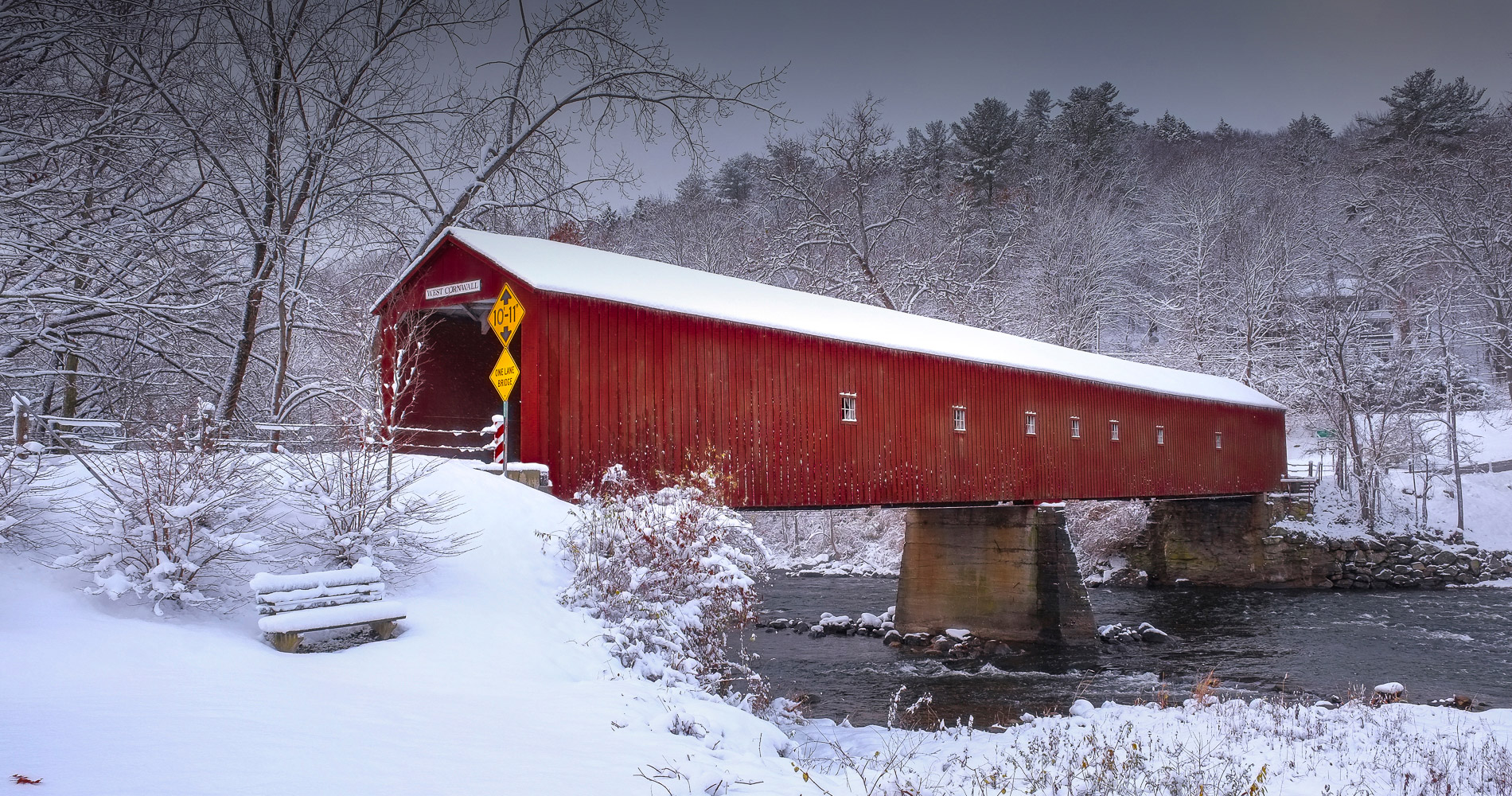
I’ll never forget the first time I saw the West Cornwall Covered Bridge. I was driving north on Route 7, came around a bend, and suddenly there it was. A beautiful red wooden bridge stretched across the Housatonic River, looking like something straight out of a Norman Rockwell painting.
The bridge we see today was finished around 1864, built on the same center pier that once supported an earlier bridge lost in a flood. What amazes me most is that this bridge is still carrying cars every single day, more than 160 years later. It’s one of only three covered bridges left in Connecticut, which makes it even more special.
Its design is called a Town lattice truss, named after architect Ithiel Town. I’ve studied it, and what’s brilliant is how simple it is. Wooden planks are fitted together in a crisscross pattern, creating a structure that’s both strong and flexible. When you drive across, you can feel it bend ever so slightly under your car’s weight. That movement might seem worrying, but it’s actually proof of clever engineering.
What I love most about this bridge is the whole experience of being there. The Housatonic valley surrounds it with rolling hills and historic buildings. On the west side in Cornwall, you’ll find cozy shops and restaurants. I always recommend stopping at the covered bridge pottery shop. The owners not only sell beautiful pieces but also know a great deal about the bridge’s history.
Comstock Covered Bridge
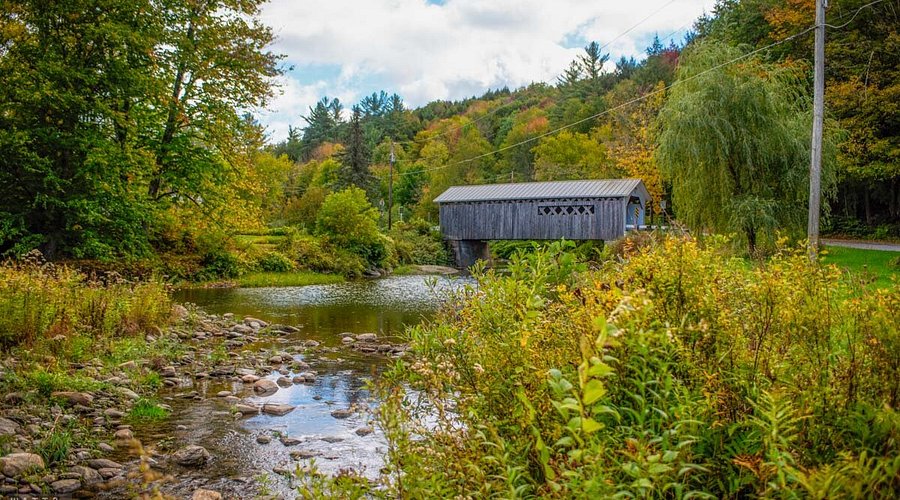
The Comstock Bridge sits on Route 16, right on the line between Colchester and East Hampton. It’s now listed in the National Historic Registry. It doesn’t get the same attention as West Cornwall, but I think that makes it even more charming.
I first found this bridge by accident while exploring the Salmon River State Forest. It’s hidden away in the woods, stretching over the Salmon River with a quiet beauty that instantly takes your breath away. Unlike West Cornwall, this bridge is closed to cars, so you can walk across and really take in the details of its construction.
The setting here feels almost magical, especially in the fall when the forest bursts into bright colors. I’ve taken my camera here dozens of times, and it never gets old. The way sunlight filters through the trees and reflects off the water makes every shot unique.
Bull’s Bridge
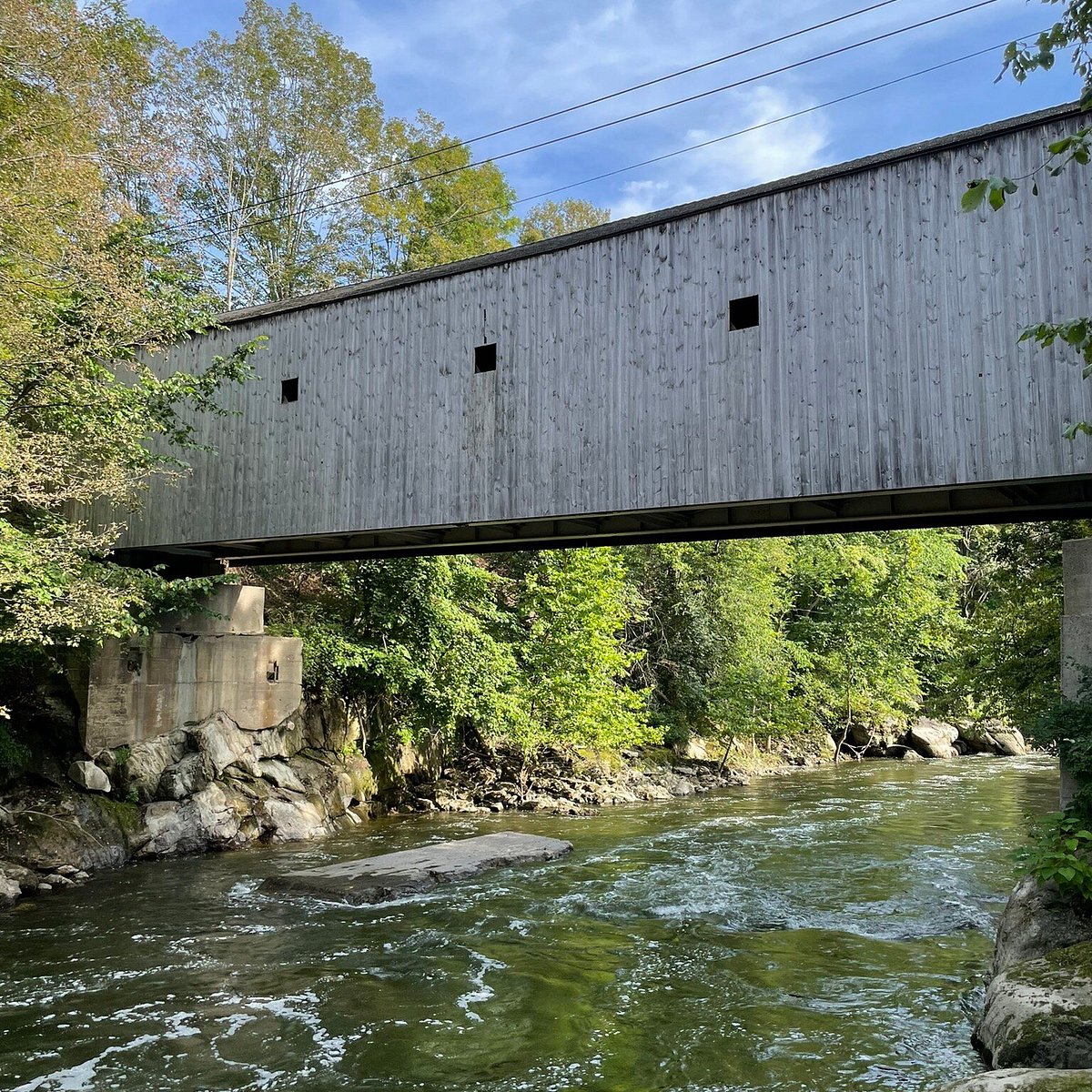
Bull’s Bridge in Kent isn’t covered anymore, but it still deserves a spot on the list because of its history and location. The original bridge was covered, and locals say George Washington himself once crossed it. Whether that’s true or not is still a topic of debate at the local general store.
What makes Bull’s Bridge special today is its surroundings. The Housatonic Riverhere creates gorgeous rapids and calm pools, perfect for fishing or kayaking. I’ve spent hours just sitting by the water, listening to the rush of the rapids. The bridge itself gives you one of the best views, especially in the fall when the foliage is at its peak.
Gold Star Memorial Bridge
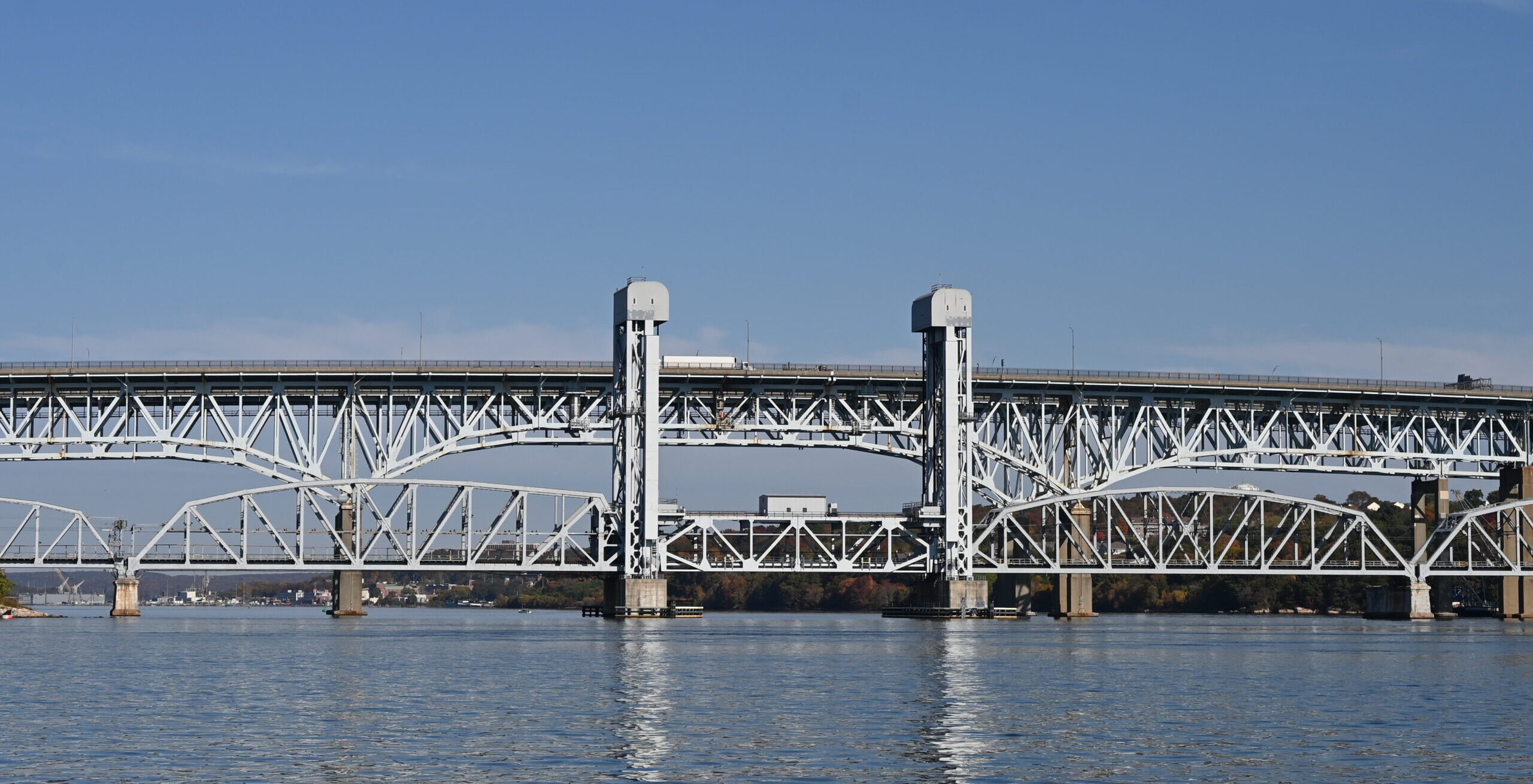
The Gold Star Memorial Bridge connects New London and Groton across the Thames River and carries traffic from I-95. It’s absolutely massive. Driving across, you can see the river stretching out toward Long Island Sound, with submarines and ships from the nearby naval base adding to the view.
Most people don’t realize it’s actually two bridges side by side. The first one was built in 1943, and a second was added in 1975. The bridge also serves as a memorial to Connecticut residents who lost their lives in World War I, which gives it a deeper meaning beyond just its size.
From a photographer’s point of view, this bridge is amazing. I especially love shooting it from Groton at sunset. The golden light makes the steel towers and cables glow in a way that feels almost otherworldly.
Bulkeley Bridge
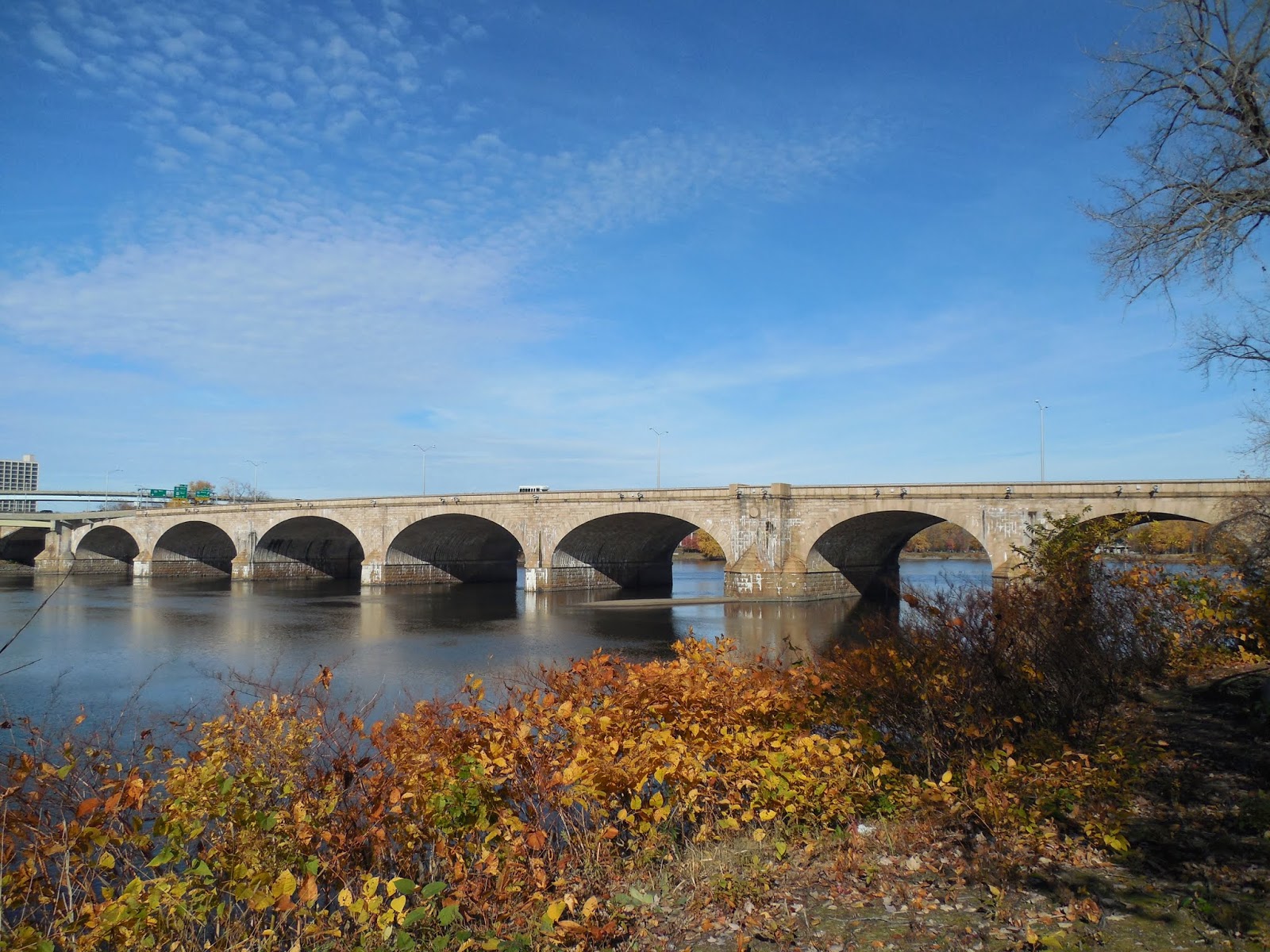
The Bulkeley Bridge spans the Connecticut River between Hartford and East Hartford, carrying traffic from Routes 6, 44, and I-84. It was built between 1903 and 1908 and is the last monumental stone bridge ever constructed. With its nine arches and 100,000 cubic yards of pink and gray granite, it’s a true work of art that reflects some of the most enduring architecture stylesof the early 20th century.
The funny thing is most people drive across it daily without ever really seeing it. The best views are from below, either at Riverside Park in Hartford or along the East Hartford riverfront. From there, you can see just how incredible it is.
I’ve photographed this bridge countless times, and I’m still in awe. Every stone was cut and placed by hand, and the engineering needed to span a major river with those arches is mind-blowing. The granite itself shifts in color depending on the light, giving the bridge a unique look at different times of day.
Charter Oak Bridge
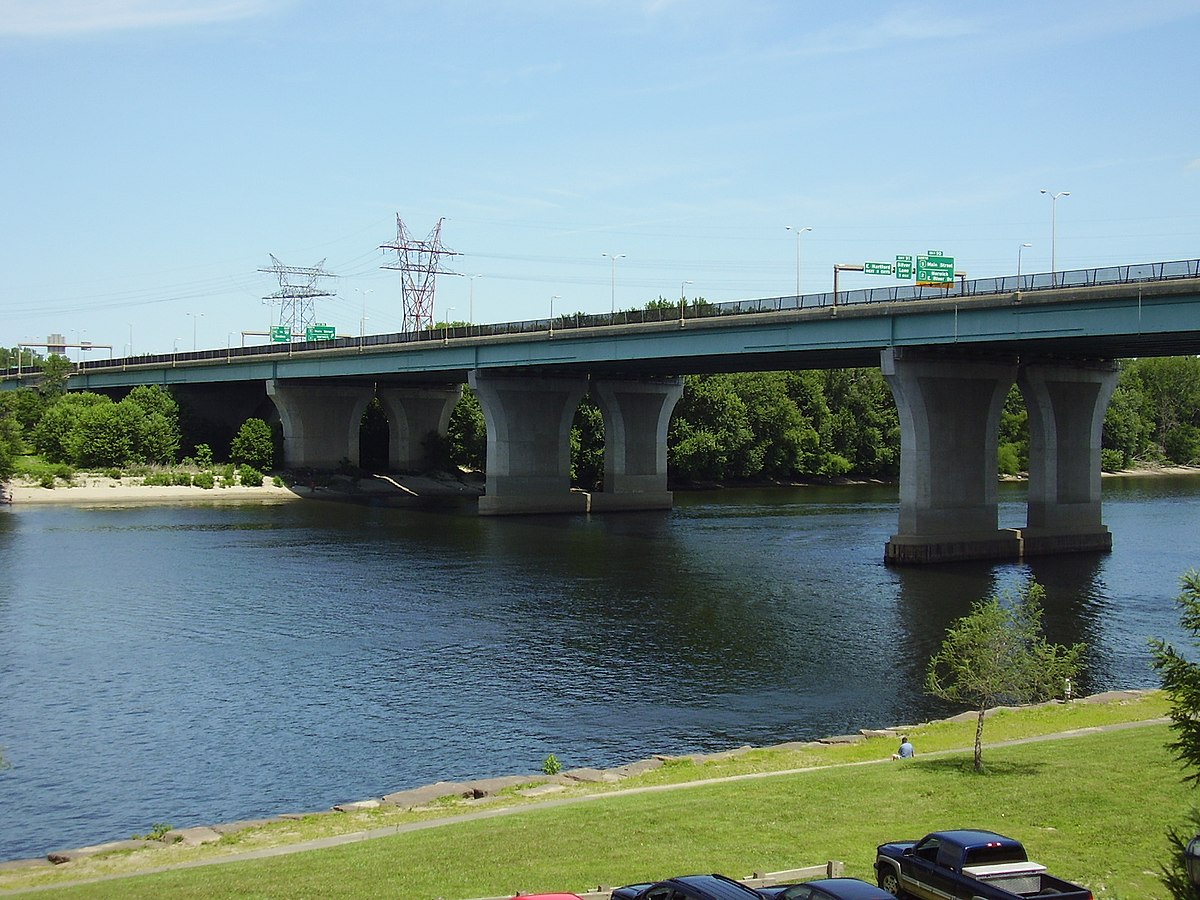
The Charter Oak Bridge carries Route 15 over the Connecticut River in Hartford. Built in 1942, it’s a steel arch bridge that shows off the best of modern bridge engineering. It sits just downstream from the historic Bulkeley Bridge, and the two together make a striking pair.
What I enjoy most about the Charter Oak Bridge is the view it creates of Hartford’s skyline. From Riverside Park, the arch frames the city perfectly, almost like a picture frame. Photographers and artists love this perspective. The bridge is named after Connecticut’s famous Charter Oak tree, tying it to an important piece of the state’s history.
East Haddam Swing Bridge
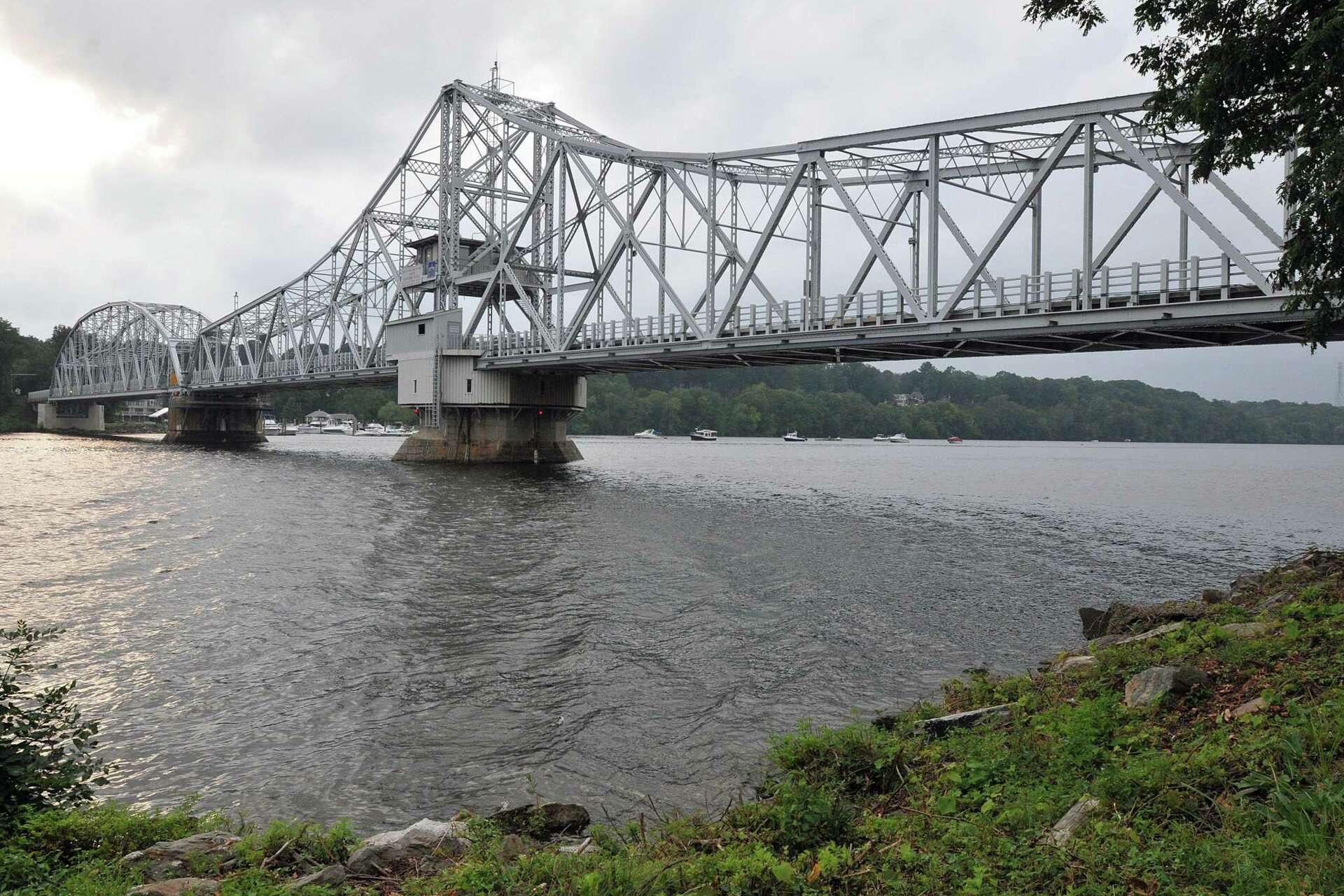
The East Haddam Bridge, built in 1913, crosses the Connecticut River with three spans. The center span can swing out to let boats pass, and seeing it in action is like stepping back in time. It’s one of the few swing bridges left in New England, and watching it move is fascinating.
I’ve been lucky enough to see it open for river traffic. The entire middle section rotates on a huge pivot, sliding completely out of the way so boats can pass through. The fact that it can carry heavy car traffic one moment and then swing aside the next is a real engineering wonder.
The area itself is beautiful. Rolling hills, historic buildings, and the nearby Goodspeed Opera House give it extra charm. It’s the kind of spot where you can spend an entire afternoon just enjoying the setting.
Mystic River Bascule Bridge
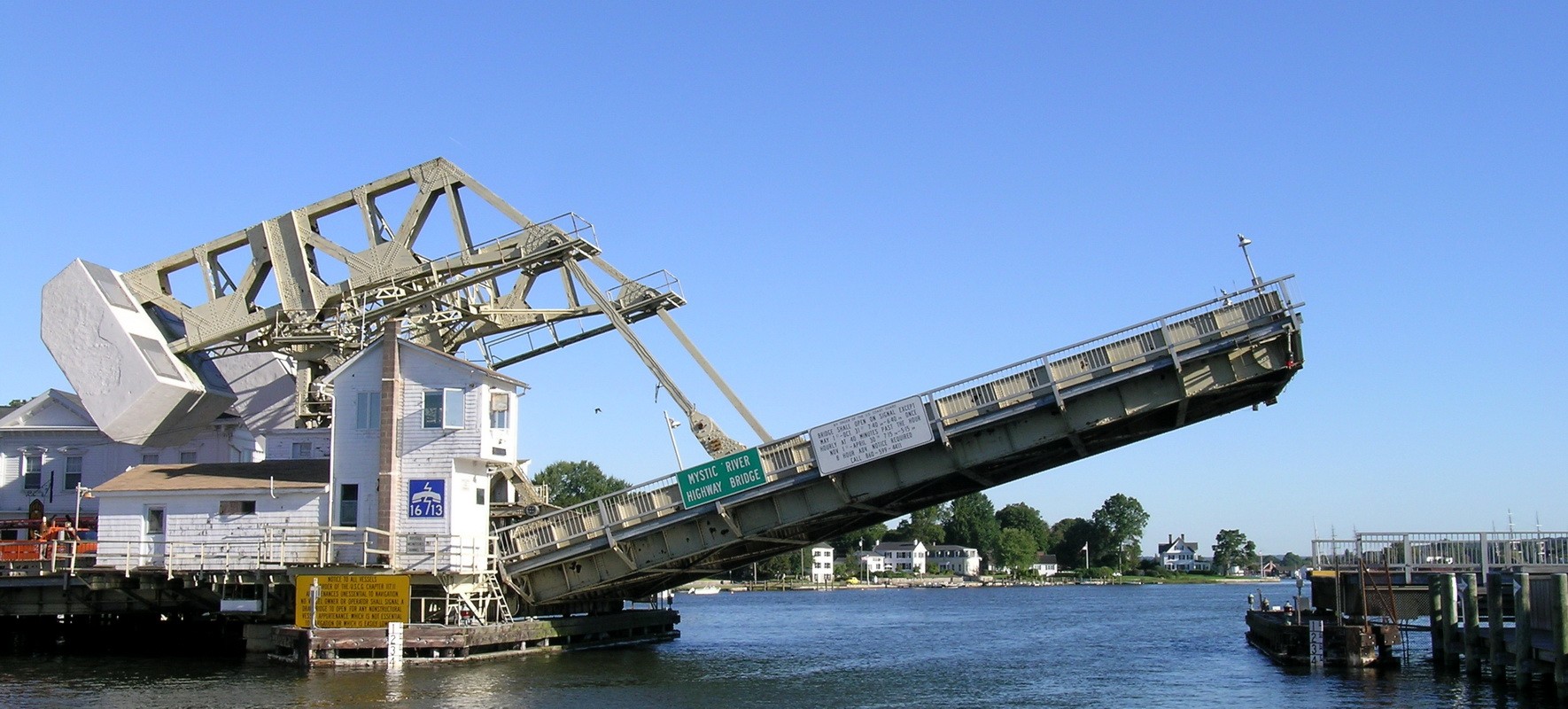
The Mystic River Bascule Bridge is one of Connecticut’s busiest and most famous drawbridges. It opens around 2,200 times a year for boat traffic, right in the middle of Mystic’s lively tourist area. If you’ve been to Mystic, chances are you’ve had to stop and wait for this bridge.
But waiting is part of the fun. Crowds gather on both sides, often with ice cream in hand, just to watch it open. In summer, with boats constantly passing through, it feels almost like a celebration. And since Mystic has also been featured in movies and connected with celebrity culture, I once came across an article on Connecticut Independentadding another layer of fun trivia to the area’s fame.
For photographers, it’s a dream. You’ve got sailboats lining up, tourists on the sidewalks, and the historic buildings of Mystic Seaport in the background. It’s one of those rare places where engineering, history, and community life all blend together.
The Frog Bridge
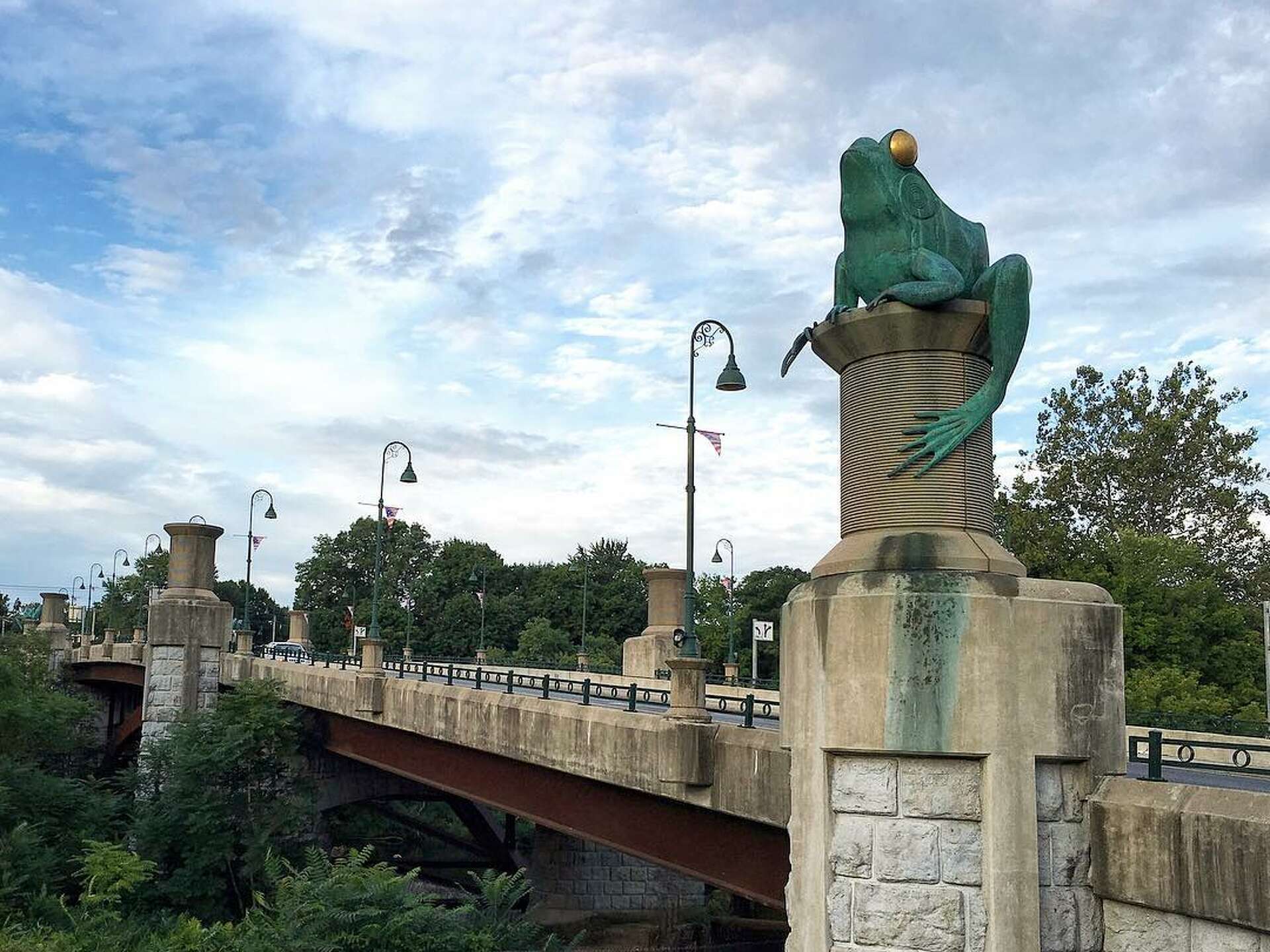
The Frog Bridge in Willimantic, also called the Thread City Crossing, carries Routes 66 and 32 over the Willimantic River. Four giant frogs sit atop spools of thread, making it one of the most unusual bridges you’ll ever see.
The first time I saw it, I thought I must be imagining things. Huge copper frogs on giant thread spools? On a regular road bridge? But once you learn the story, it makes perfect sense.
The frogs come from a local legend known as the “Battle of the Frogs.” On a hot summer night in 1754, townspeople woke to terrible noises from a nearby pond. Thinking they were under attack, they rushed out with weapons, only to find thousands of frogs fighting over what little water was left after a drought.
The thread spools honor Willimantic’s long history as a textile town. The American Thread Company was once a major employer here, and the bridge celebrates both the silly and serious sides of local history.
Old Drake Hill Flower Bridge
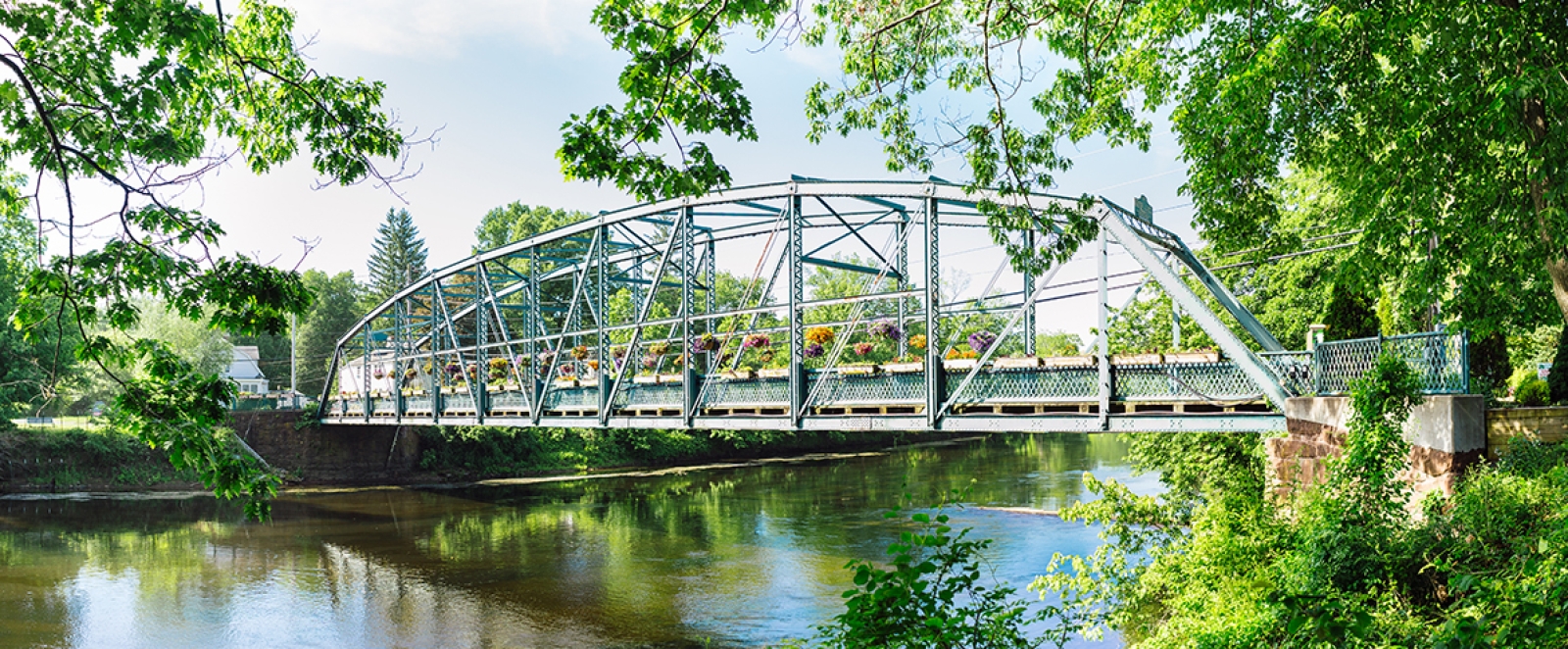
The Old Drake Hill Flower Bridge was built in 1892 as a one-lane truss bridge over the Farmington River. It was replaced in 1992 but restored three years later as a pedestrian bridge and flower garden. Today, it’s decorated with 62 flower boxes, 32 hanging baskets, and several cottage gardens cared for by volunteers.
What I love about this bridge is how the community saved it. Instead of tearing it down, the people of Simsbury turned it into something beautiful. Thanks to the volunteers, it changes with every season. In spring, you’ll see tulips and daffodils. By summer, baskets overflow with petunias and geraniums. In fall, mums and kale add warm colors.
It’s more than just a garden, though. It’s a gathering place. Families come for photos, couples walk hand in hand, and older residents relax on the benches. It’s proof that an old bridge can be transformed into something that brings people together.
Best Times And Seasons For Bridge Photography
The best times to photograph bridges are early in the morning and late in the afternoon. The soft golden light makes stone and metal glow, while long shadows add drama and depth. I’m usually out by 6 AM in summer or around 4 PM for that magical evening light.
Fall is the most popular season, especially the first two weeks of October when the foliage peaks. But don’t overlook winter. Snow-covered bridges have a quiet beauty, and you’ll often have the place to yourself. Spring brings wildflowers and fresh greenery that frame your shots beautifully.
For the Merritt Parkway bridges, I actually prefer cloudy days. The even light brings out the details in the stonework without harsh shadows.
Accessibility And Parking Information
Most bridges in Connecticut are easy to reach by car, but parking can be tricky at busy spots. At West Cornwall, there’s only a little parking on both sides of the bridge, so get there early in foliage season.
The Comstock Bridge has a small lot at the Salmon River State Forest entrance. From there, it’s about a quarter-mile walk to the bridge along a well-kept trail.
For the Merritt Parkway bridges, remember you can’t stop on the highway itself. Instead, look for local roads that cross over or under the parkway, where you can safely park and take photos.
Safety Tips For Bridge Enthusiasts
Many bridges still carry active traffic, so always use the sidewalks and never step into the roadway for a picture. No photo is worth risking your life.
When photographing from riverbanks, be mindful of water conditions. Spring floods can make areas unsafe, and wet rocks can be slippery any time of year.
If you’re visiting a moveable bridge like the one in Mystic, check the schedule beforehand when possible. Bridge operators are usually friendly if you ask politely, but remember their top priority is safety.
Frequently Asked Questions
How Many Covered Bridges Are Left In Connecticut?
There are only three historic covered bridges still standing: West Cornwall, Comstock, and one that’s privately owned. West Cornwall is one of only three true covered bridges in the state, though one is closed to cars.
Can You Walk Across The West Cornwall Covered Bridge?
The bridge has sidewalks on both sides, so you can safely walk across while cars use the center lane. Just be cautious, as it’s narrow and drivers may not see you right away.
Are There Guided Tours Of Connecticut’s Historic Bridges?
Not regularly, but some historical societies organize tours during special events. The Connecticut Trust for Historic Preservation has also hosted bridge-focused tours, and local photography groups sometimes arrange visits.
Can Large Vehicles Cross All Of Connecticut’s Bridges?
Many historic bridges have weight or height restrictions. Covered bridges especially have posted limits, and some Merritt Parkway bridges are too low for trucks. Always check the signs.
Final Thoughts
Connecticut’s bridges remind me that the best engineering combines function with beauty. They show how something built by people can actually add to the landscape instead of taking away from it. More than anything, they are about connection, bringing together places, communities, and stories.
So the next time you cross one, slow down for a moment. Notice the details, take in the setting, and think about the history it holds. These bridges aren’t just ways to get across a river. They are treasures, and we are lucky to have them right here.
Jump to
Connecticut's Bridge Legacy
The Merritt Parkway Collection
West Cornwall Covered Bridge
Comstock Covered Bridge
Bull’s Bridge
Gold Star Memorial Bridge
Bulkeley Bridge
Charter Oak Bridge
East Haddam Swing Bridge
Mystic River Bascule Bridge
The Frog Bridge
Old Drake Hill Flower Bridge
Best Times And Seasons For Bridge Photography
Accessibility And Parking Information
Safety Tips For Bridge Enthusiasts
Frequently Asked Questions
Final Thoughts

George Evans
Author
George Anderson, an exceptional architectural designer, envisions and brings to life structures that transcend the realm of imagination. With an unwavering passion for design and an innate eye for detail, George seamlessly blends form and function, creating immersive spaces that inspire awe.
Driven by a deep appreciation for the interplay of space, light, and materials, George's innovative approach redefines the possibilities of architectural design. His visionary compositions leave an indelible mark, evoking a sense of wonder and transforming the built environment.
George Anderson's transformative designs and unwavering dedication continue to shape the architectural landscape, pushing the boundaries of what is possible and inspiring generations to come.
Latest Articles
Popular Articles