Home Piano Room Design Ideas | 25 Stylish Ways To Transform Your Space
Creating a piano space at home is about more than finding an empty wall. The room affects how your instrument sounds and how long it lasts. These ideas will help you create a balanced and beautiful setup.
Author:George EvansJul 21, 2026
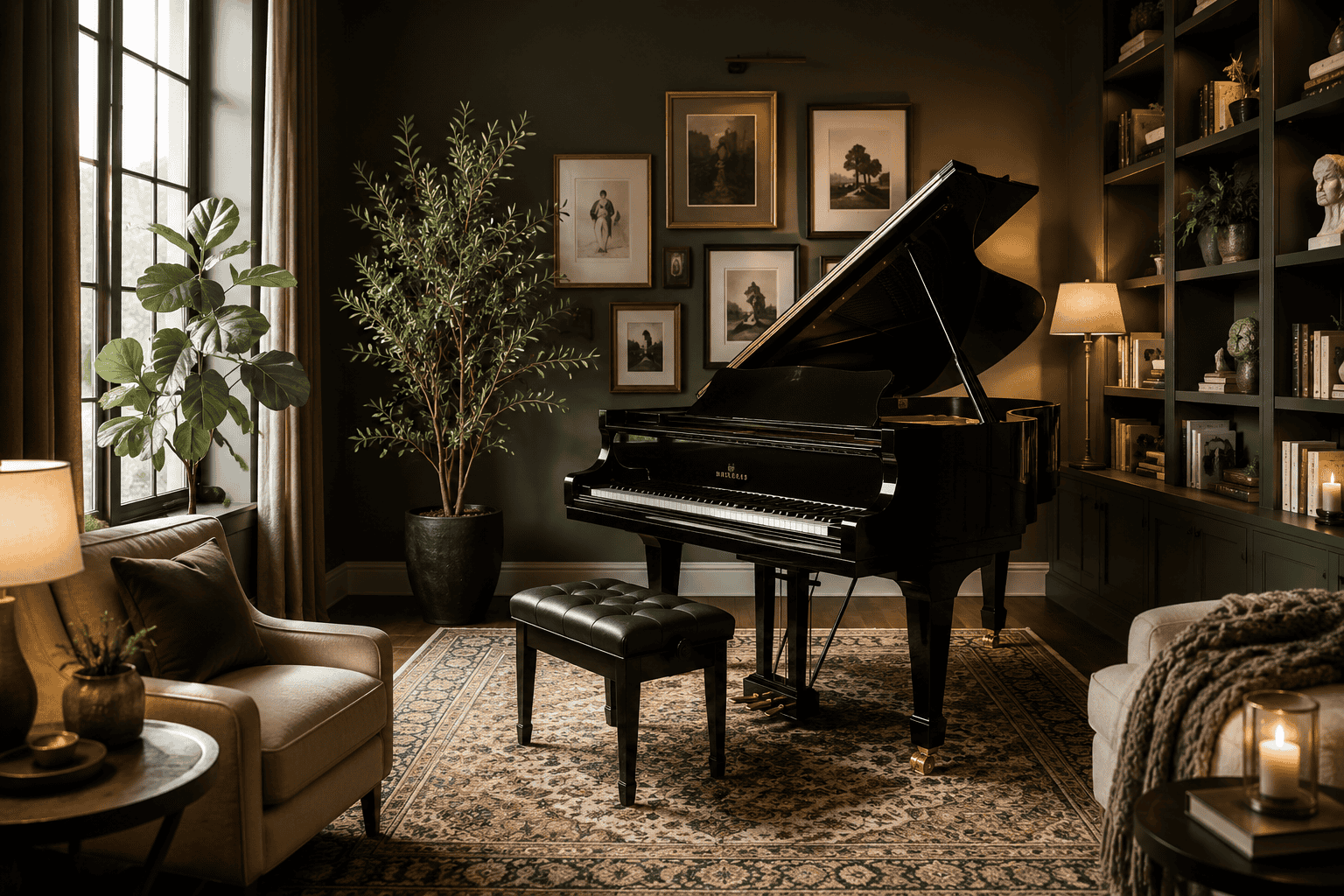
An acoustic piano is best placed against an interior wall, away from direct sunlight, drafty windows, and heating or cooling vents to help protect its soundboard and maintain tuning stability. It should also have enough space around it, ideally at least 36 inches behind the bench, so the player can sit and move comfortably.
As both an interior designer and a lifelong classical pianist, I understand how challenging it can be to fit a piano into a modern home without it feeling oversized or out of place. A piano is not just furniture. It is a sensitive instrument that responds to its environment, so layout and aesthetics need to work together. In the ideas below, I will share practical ways to design a music space that is both beautiful and acoustically supportive.
Before you read on, here is a quick look at what is covered.
- How to use acoustic treatments like thick rugs and heavy curtains to manage echoes and improve sound quality.
- Layout strategies for integrating large and small models into multi-purpose living spaces.
- Stylistic choices like color drenching and gallery walls that make the instrument a striking focal point.
- Essential maintenance tips to regulate temperature and humidity to ensure your instrument stays protected.
1. Anchor The Instrument With A Thick Area Rug
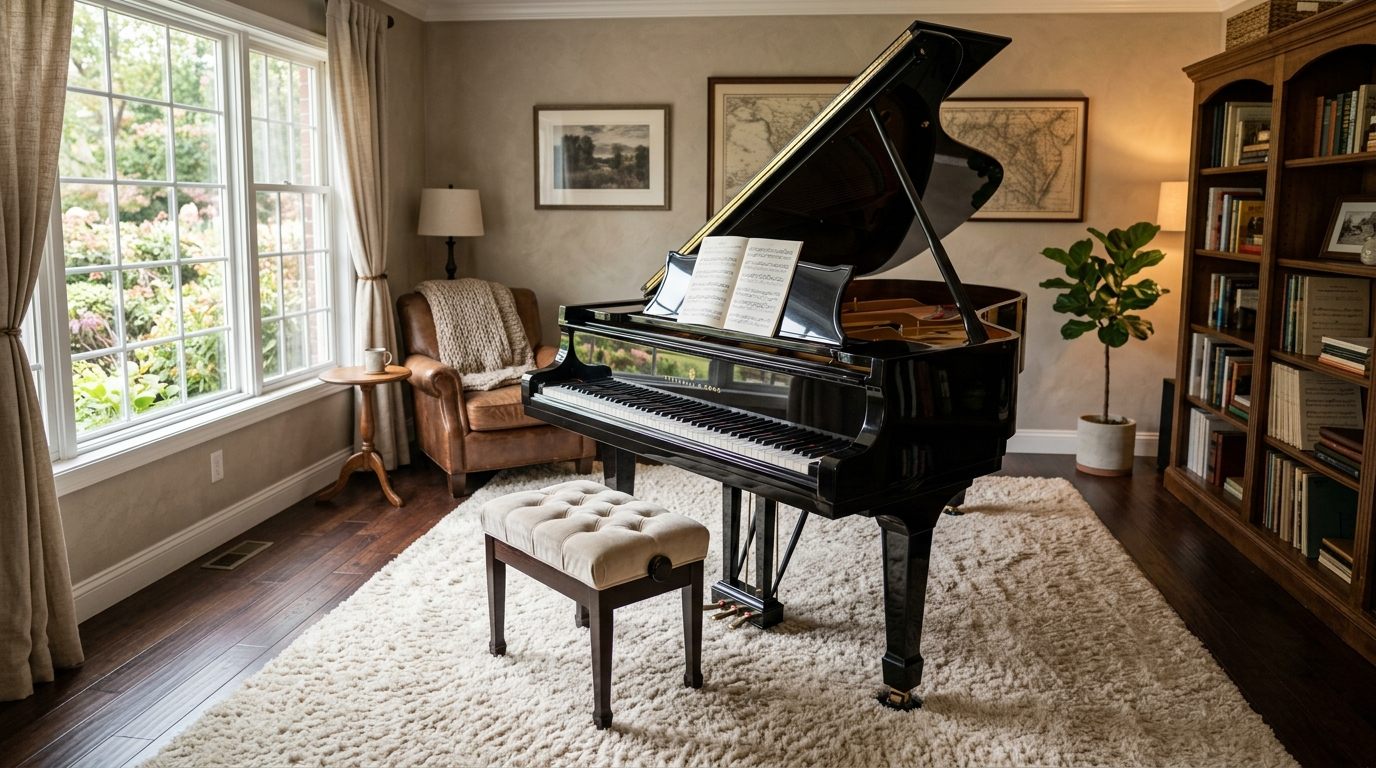
Placing a plush rug directly beneath your instrument immediately grounds the space visually while solving one of the most common audio issues in residential homes.
Hardwood and tile floors look beautiful, but they reflect high-frequency sound waves aggressively. When sound waves bounce off hard surfaces, the music becomes overly bright and metallic. As a designer, I always start by layering a thick and high-pile rug under the pedals and legs. This simple textile addition acts as a massive sound absorber that instantly improves the overall music room acoustics by catching harsh echoes before they can travel across the room.
If you have a grand model, make sure the rug extends at least two feet beyond the perimeter of the casing. For an upright, a smaller runner placed underneath the bench and pedals works perfectly to tame the sound without hiding your beautiful hardwood floors.
You should also add a dense felt pad underneath the rug to maximize the sound-dampening effect. Grounding your setup with textured textiles ensures your room feels cozy while delivering a much warmer audio experience.
2. Position Uprights Against Interior Walls
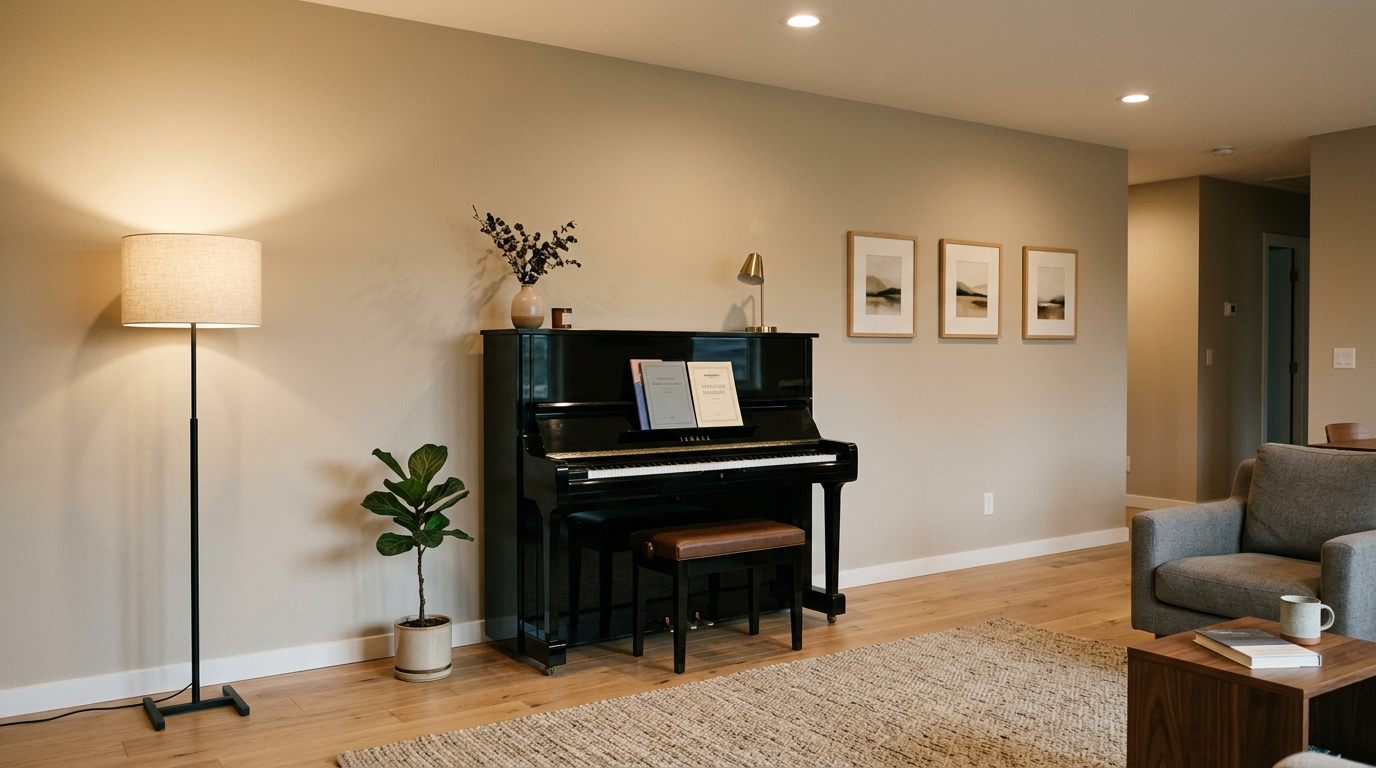
Placing your instrument against an inside wall protects the delicate wood components from extreme temperature fluctuations and structural damage. Exterior walls naturally absorb the heat of the summer sun and the freezing temperatures of winter. When you push a wooden instrument against an exterior boundary, the internal soundboard expands and contracts rapidly with the changing weather.
This constant shifting knocks the strings out of tune and can eventually cause the wood to crack under pressure. I always map out the interior walls of a house before deciding on a final layout. An inside wall shares a stable temperature with the rest of the house and provides a safe and consistent environment for the mechanics.
If you absolutely must use an exterior wall due to space constraints, ensure the wall is heavily insulated and leave a six-inch gap behind the instrument for air circulation. Prioritizing an interior wall placement is the easiest way to protect your investment and save money on frequent tuning appointments.
3. Use Built-In Cabinetry For Upright Integration
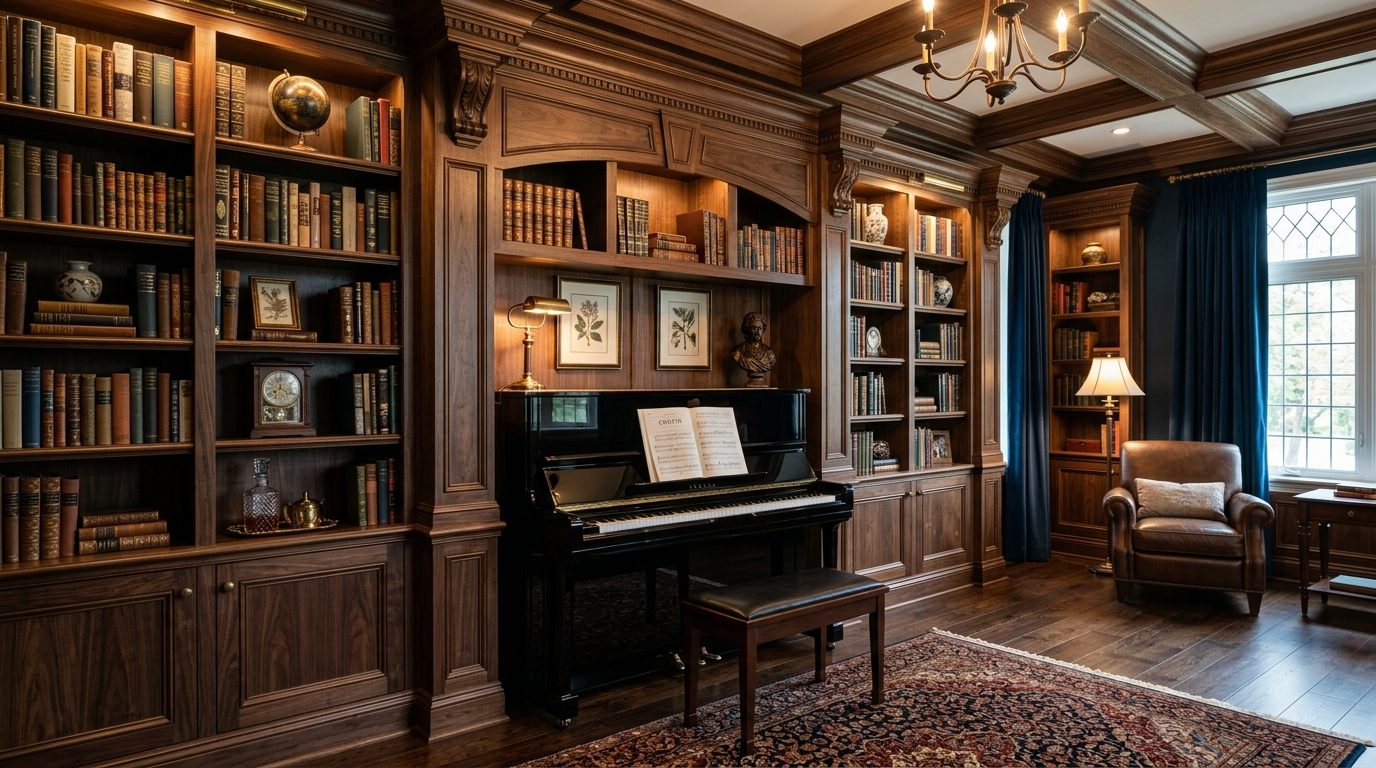
Surrounding your upright with custom built-in shelving turns a bulky standalone item into a seamless architectural feature. Upright models often look like they are floating awkwardly in the middle of a blank wall.
To fix this, I love designing custom bookshelves and storage cabinets that frame the instrument completely. By matching the depth of the lower cabinets to the depth of the keyboard, the instrument looks exactly like a deliberate piece of the architecture rather than an afterthought. This approach works especially well across different architectural styles, from classic Victorian homes to sleek modern interiors, because it helps the piano feel integrated into the structure of the room.
This layout is incredibly functional because it provides instant storage. You can dedicate the surrounding shelves to organizing your sheet music, metronomes, and practice journals.
I always paint the surrounding cabinetry a rich and contrasting color to make the wood grain or polished ebony of the instrument stand out beautifully against the shelves. Framing your setup with custom millwork creates a highly organized and visually stunning music library.
4. Angle Grand Pianos Into The Room
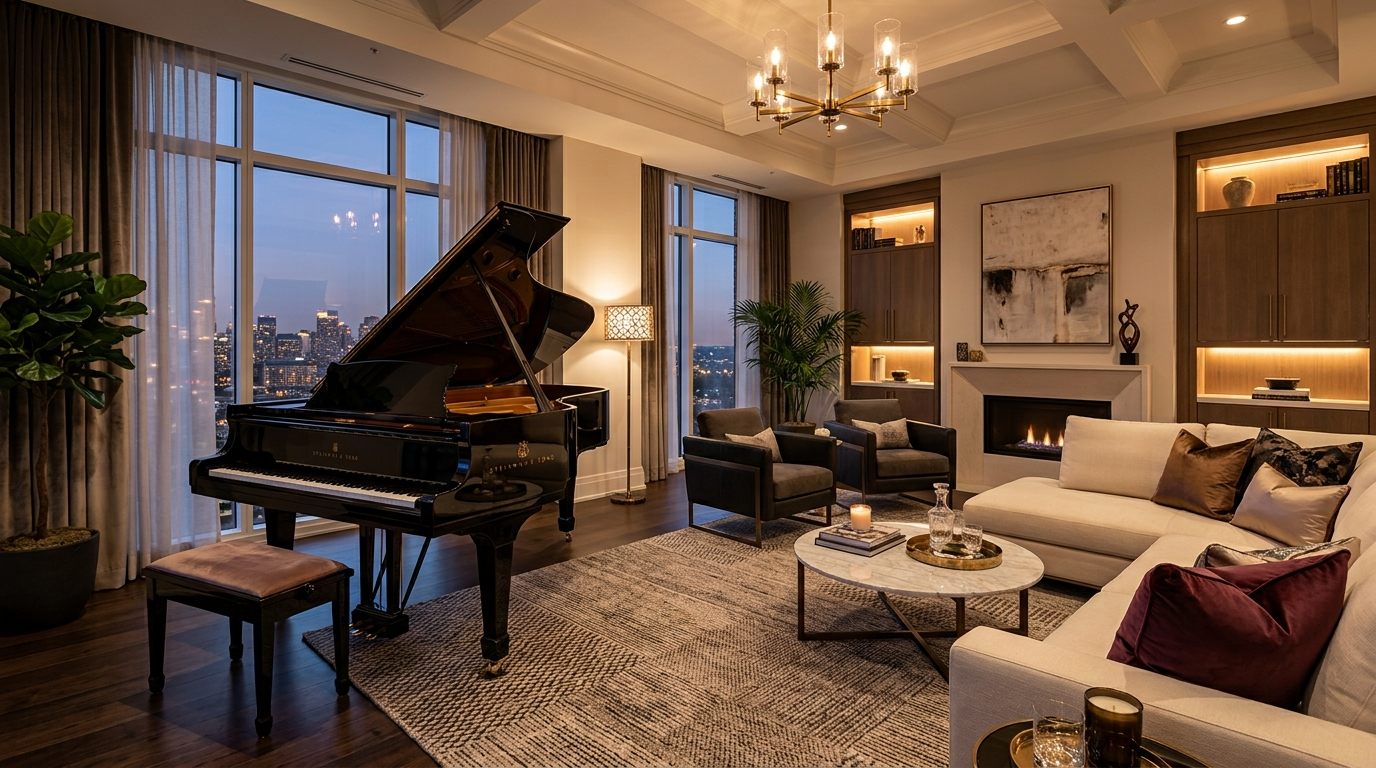
Positioning a large instrument at a 45-degree angle improves sound projection and makes the room layout feel much more dynamic. Homeowners often make the mistake of pushing a grand model parallel to the walls to save space.
This creates a rigid and boxy layout that chokes the sound. Instead, I always angle the instrument so the pianist faces out into the room and the open lid projects the sound toward the main seating area.
Angling the tail of the instrument toward a corner softens the visual bulk of the piece and creates a natural flow of foot traffic around it. This is a staple technique in high-end grand piano interiors because it invites guests to gather around the curved side while you entertain.
It also prevents the music from bouncing directly back and forth between parallel walls. Breaking away from strict parallel lines gives your space a relaxed and welcoming energy that encourages impromptu performances.
5. Create A Moody Atmosphere With Color Drenching
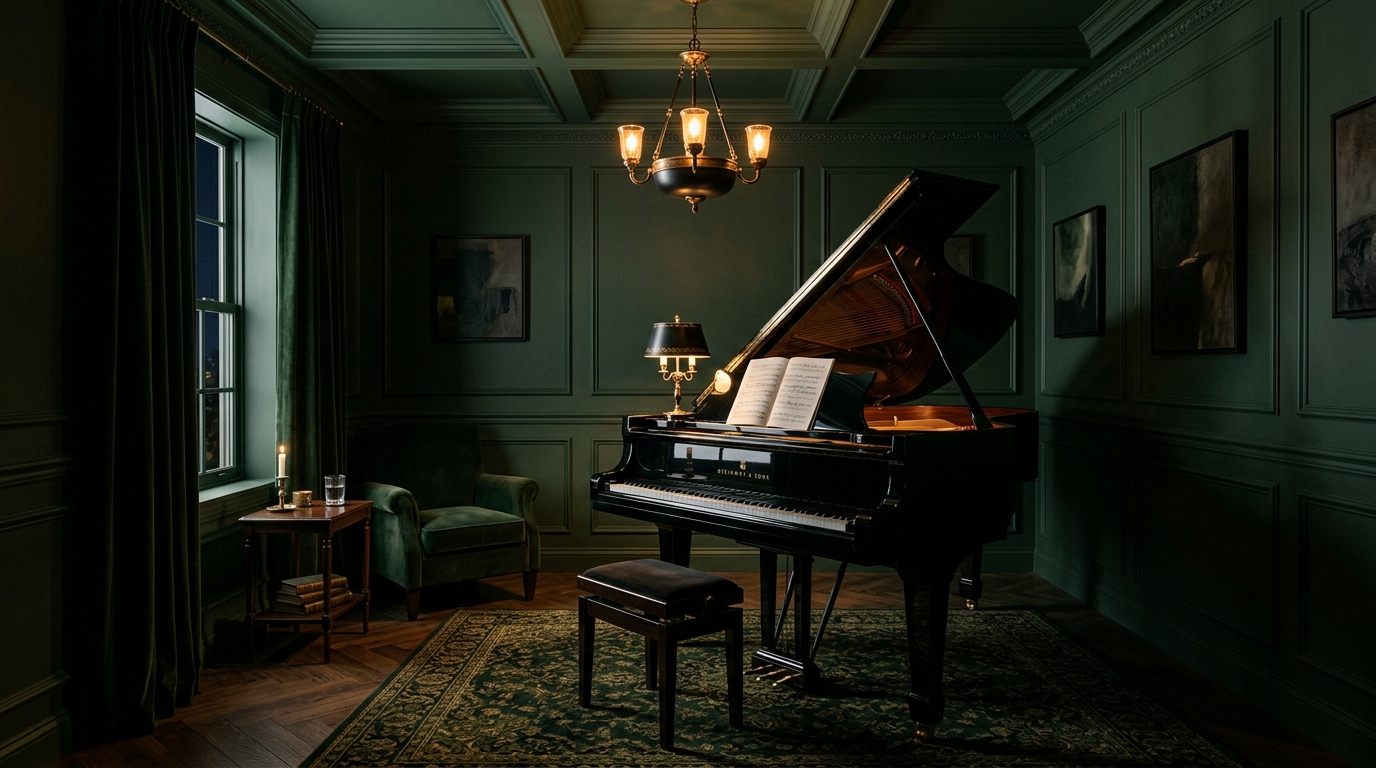
Painting the walls, ceiling, and trim in a single rich color creates an intimate cocooning effect that beautifully highlights the instrument. Color drenching is an incredibly popular interior design trend that works wonders in practice spaces.
When you paint the entire room a deep shade like navy blue, forest green, or dark chocolate, the sharp edges of the room visually blur away. This allows the gleaming finish of your instrument to become the undisputed star of the show.
I highly recommend using matte or eggshell finishes on the walls to absorb light and create a soft background. If you have an ebony instrument, a dark background creates a sleek monochromatic look.
If your instrument features a warm mahogany or walnut veneer, deep jewel tones on the walls will make the natural wood grain glow with warmth. Committing to a bold and saturated color palette transforms an ordinary spare room into a highly dramatic and inspiring creative sanctuary.
6. Add Tall Leafy Plants As Natural Sound Diffusers
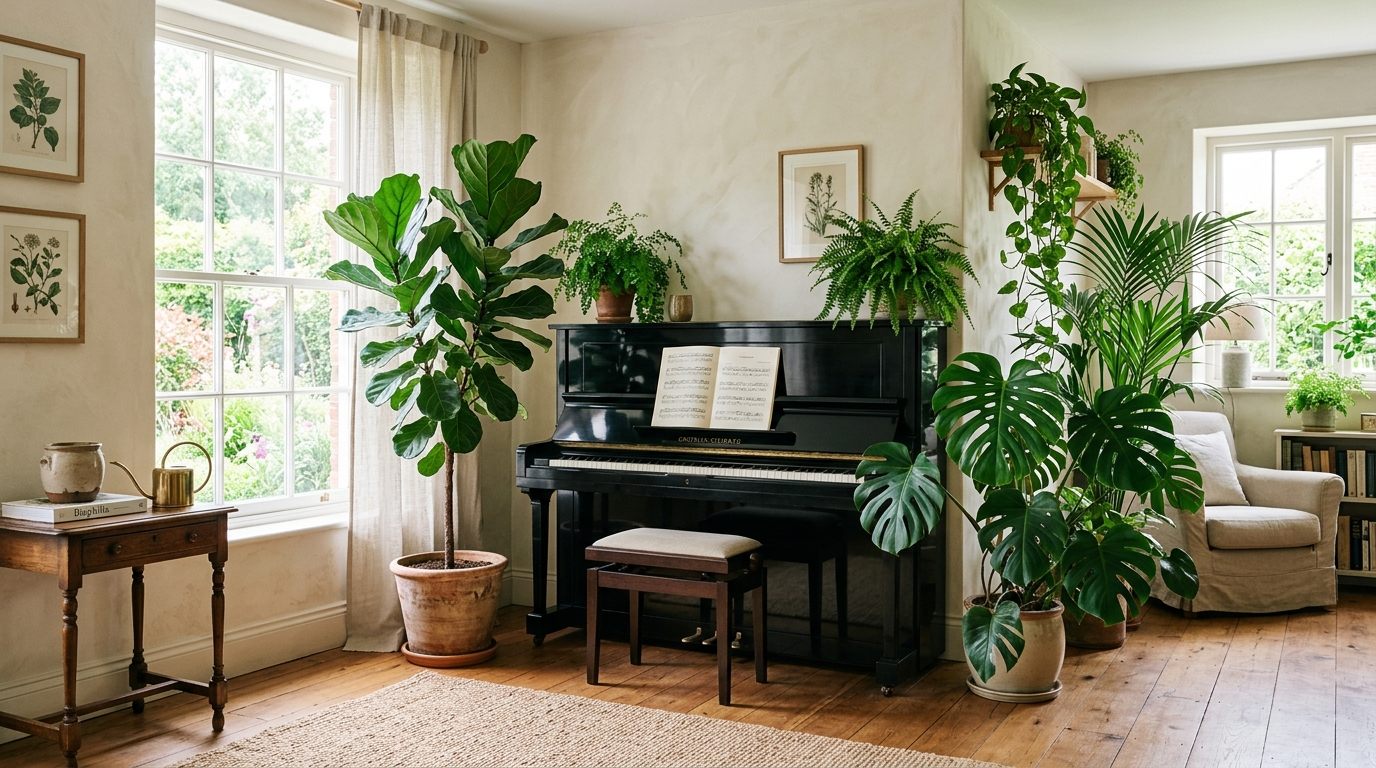
Incorporating large indoor trees and leafy plants brings vibrant biophilic design into the space while quietly improving the audio quality. Flat walls and empty corners create flutter echoes that distort the clarity of the music.
While you could install commercial acoustic panels, I prefer using large plants like fiddle leaf figs, monsteras, or olive trees to break up the sound waves. The irregular shapes of the leaves and branches act as natural sound diffusers that scatter the audio evenly across the room.
You should place these tall plants in the empty corners behind the instrument or right next to the bench. The vivid green foliage provides a stunning visual contrast against dark wood and black lacquer.
Just remember to use high-quality waterproof planters to ensure you never accidentally spill water near the delicate wooden legs of the instrument. Using lush greenery as decor softens the hard angles of the room and brings a breath of fresh air to your practice sessions.
7. Layer Ambient And Task Lighting
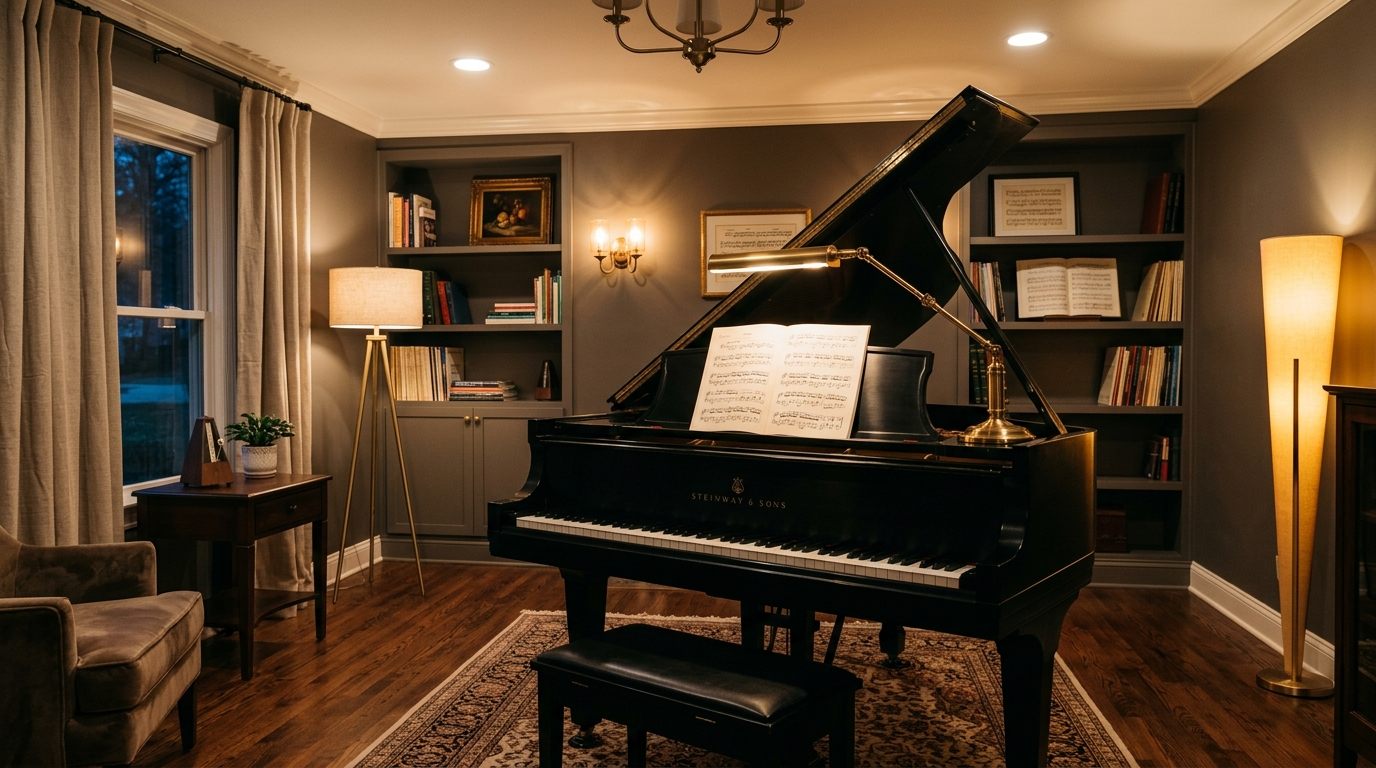
Combining soft overhead illumination with focused and adjustable lamps ensures you can read your sheet music without ruining the relaxing mood of the room. Relying solely on bright overhead ceiling lights washes out the room and creates a harsh and clinical environment.
Conversely, a room that is too dark will cause severe eye strain when you try to read tiny musical notes. I always solve this by layering multiple light sources to create a flexible and inviting atmosphere.
You need a dedicated brass or matte black task lamp placed directly over the music desk. Look for a lamp with an adjustable arm so you can angle the beam precisely onto the pages without causing glare on the glossy keys.
Then, add a few dimmable floor lamps and wall sconces around the perimeter of the room to provide a warm and inviting ambient glow. Balancing your light sources allows you to transition effortlessly from an intense afternoon practice session to a cozy evening performance.
8. Frame The Space With Thick Vintage Picture Frames
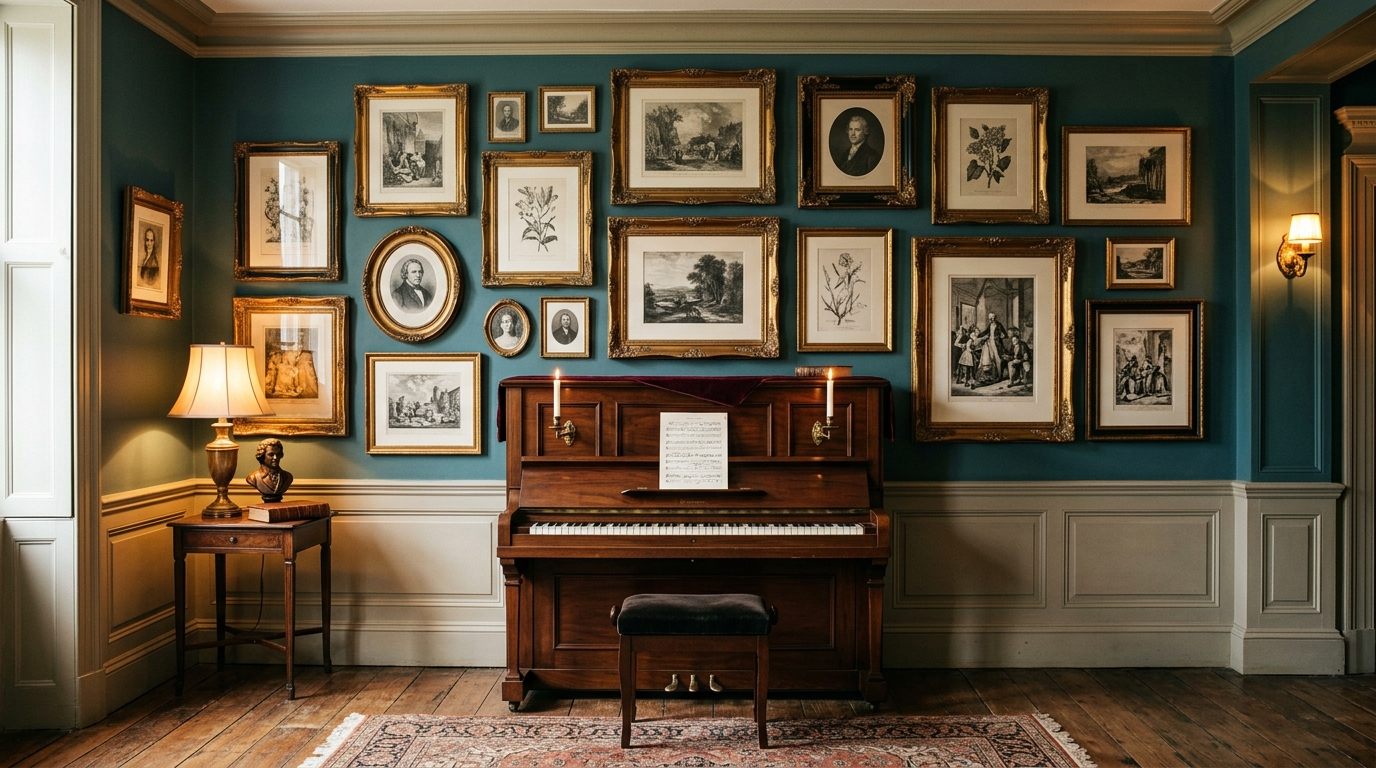
Hanging a gallery wall of thick and ornate frames above the instrument balances the heavy visual weight of the keyboard below. Upright models naturally leave a massive stretch of blank wall directly above them.
As a designer, I love filling this negative space with an eclectic collection of artwork housed in chunky vintage frames. The heavy visual weight of these thick frames perfectly balances the bulky and bottom-heavy nature of the instrument.
You can mix and match different wood tones and metallic finishes to create a collected and historical feel. I often source antique frames from local markets and fill them with simple abstract art or black and white photography.
When hanging your gallery wall, ensure the lowest frames sit at least ten inches above the top lid so you can open the instrument for tuning without hitting your art. A well-curated gallery wall turns a basic practice area into an elevated and deeply personal focal point for the entire house.
9. Reclaim An Unused Dining Room
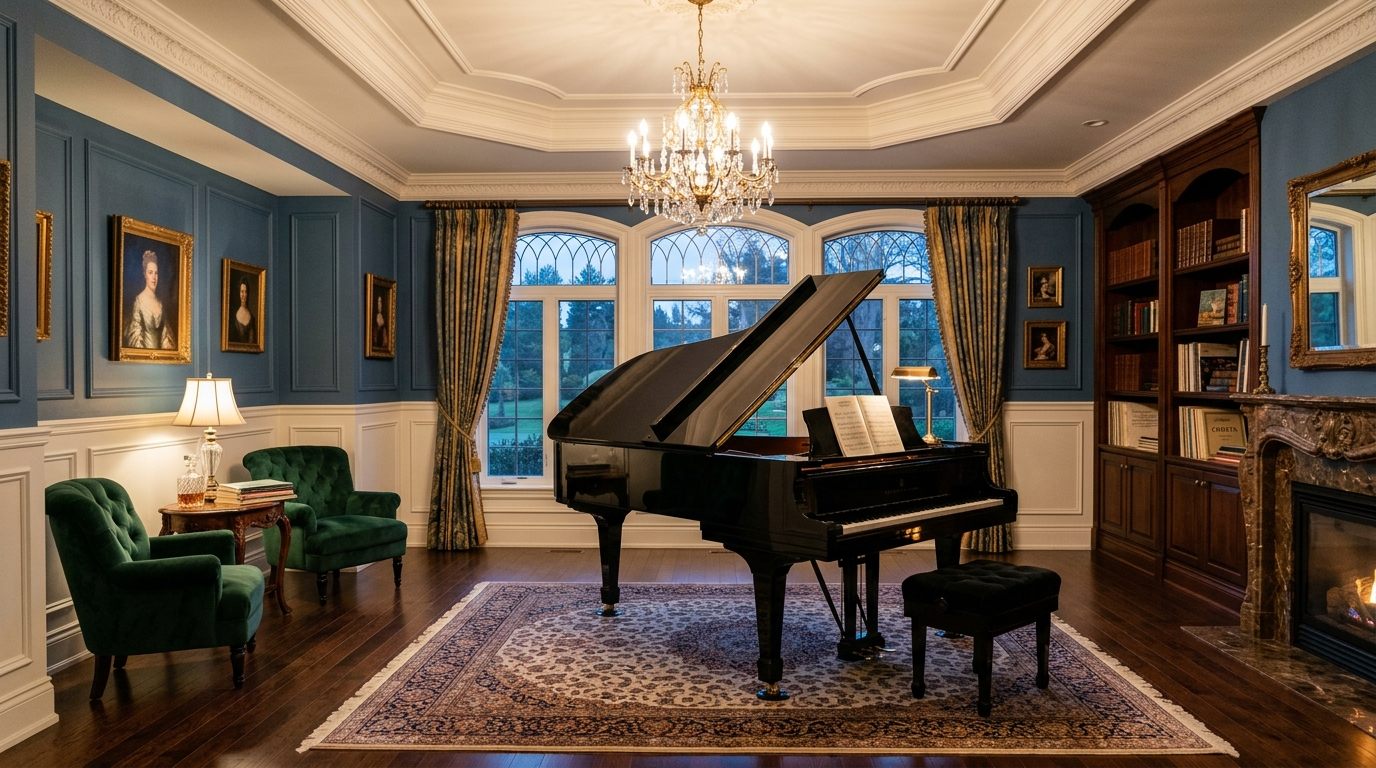
Converting a formal dining space into a dedicated music area provides the perfect square footage and acoustic environment for large instruments. Many modern families rarely use their formal dining rooms and leave a large portion of their floor plan completely wasted.
I frequently advise my clients to remove the dusty dining table and repurpose the room entirely. Dining rooms are usually situated near the front entrance of the home and make a breathtaking first impression when filled with a gleaming grand model.
Because these rooms often feature elegant architectural details like wainscoting and tray ceilings, they require very little extra decoration to feel luxurious. You can anchor the center of the room with the instrument and add two plush velvet armchairs in the corner to create a sophisticated listening lounge for your guests. Repurposing an unused space gives your home a renewed sense of purpose and ensures your musical hobby is celebrated rather than hidden away.
10. Use Bookshelves As Natural Acoustic Diffusers
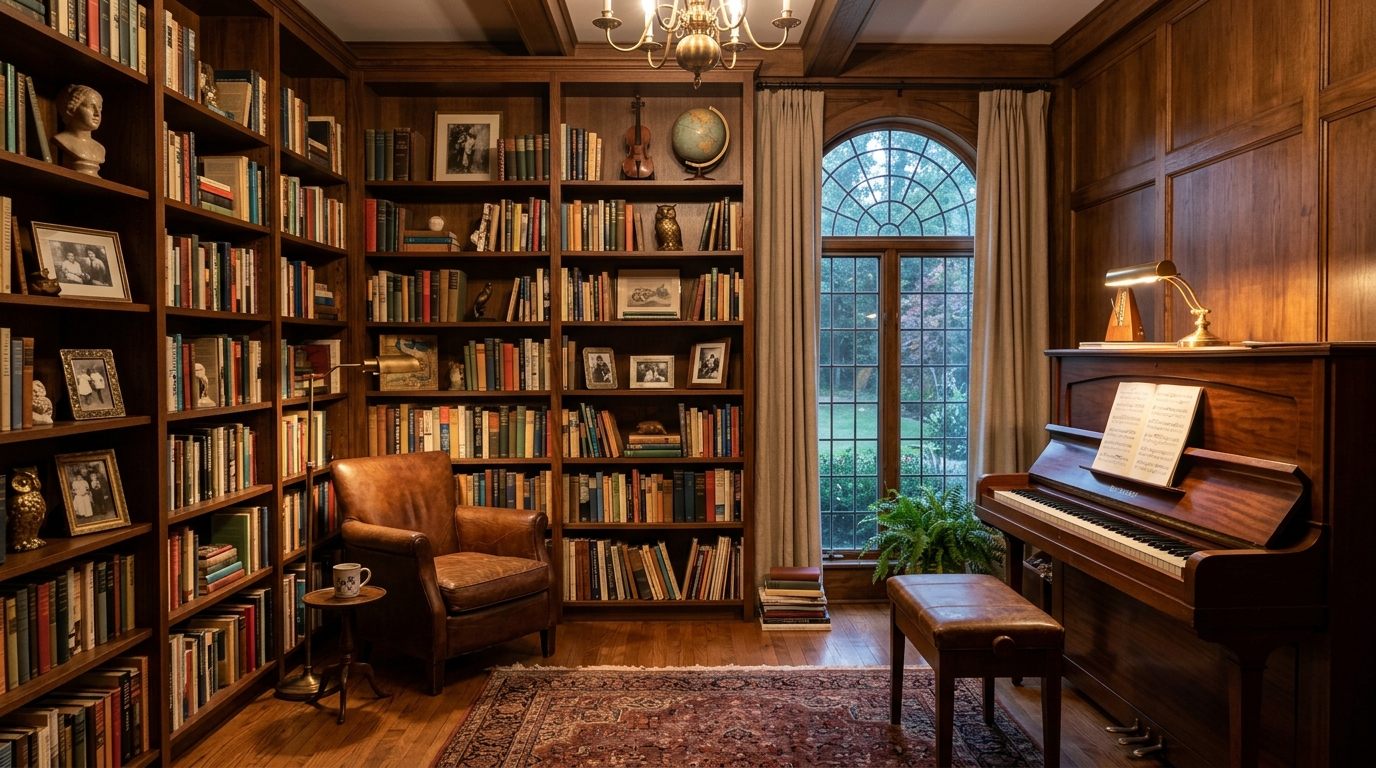
Lining the walls with full bookshelves prevents sound waves from bouncing aggressively and creates a wonderfully warm tone in the room. Professional recording studios use expensive wooden diffusers to scatter sound waves and prevent harsh echoes.
You can achieve the same acoustic benefit at home by utilizing standard bookshelves. A wall filled with books of varying depths, heights, and textures breaks up the flat surface of the wall and scatters the sound naturally and beautifully.
I love placing a tall bookshelf on the wall directly opposite the instrument. You can style the shelves with a mix of hardback books, small sculptures, and framed photos to maximize the irregular surface area.
This technique works exceptionally well in small rooms where the sound tends to feel trapped and overly loud. Filling your space with literature and art provides an incredibly effective acoustic treatment that looks sophisticated and intelligent.
11. Embrace Architectural Nooks And Alcoves
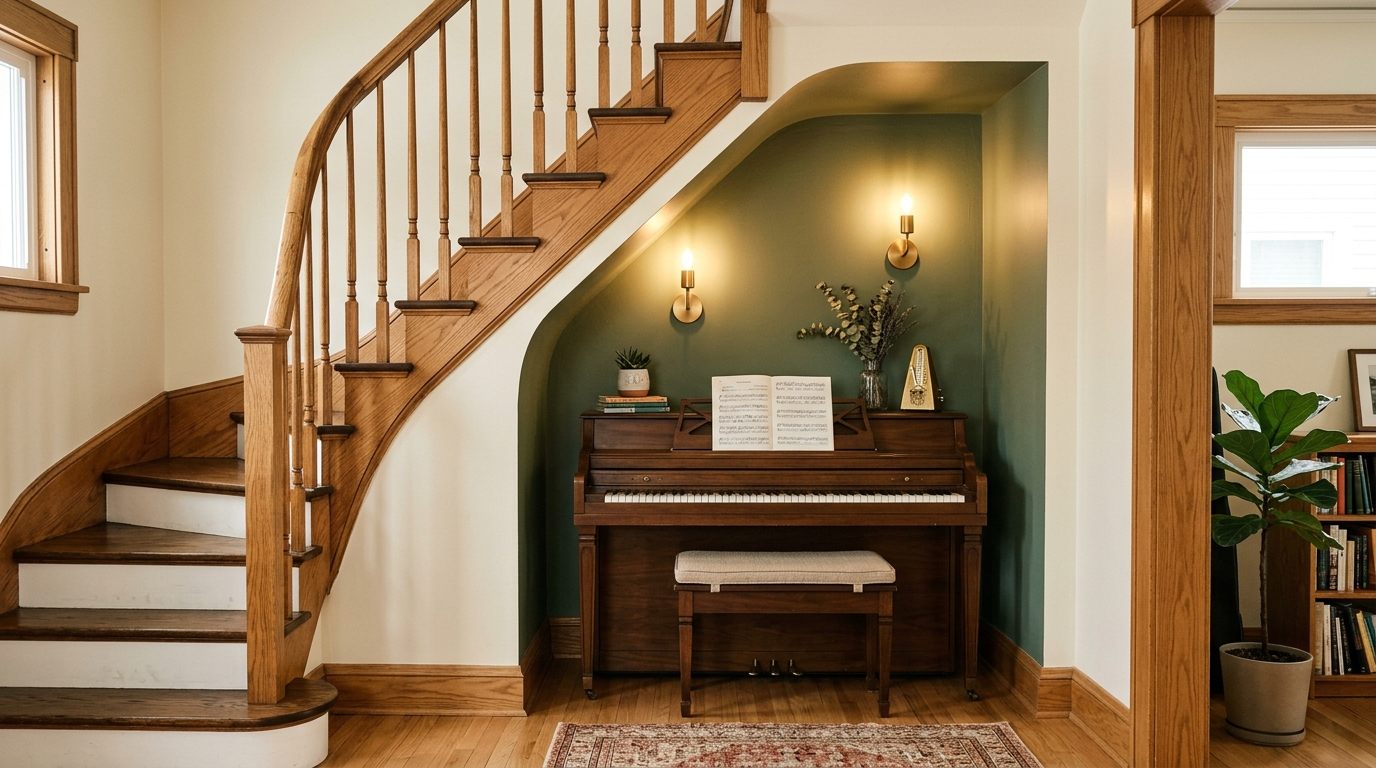
Tucking your instrument into an existing architectural recess saves valuable floor space while creating an intimate and cozy playing environment. If you live in a smaller home, finding the wall space for a bulky instrument can feel impossible.
I always look for underutilized architectural quirks like the space beneath a staircase, a recessed bay window area, or a deep hallway alcove. These structural indentations provide a perfect compact home piano setup without encroaching on your main living pathways.
When using a nook, you should paint the inside of the alcove a slightly darker accent color to create a sense of depth and intention. Install a small wall sconce or a recessed puck light directly above the keyboard to ensure the enclosed space remains bright and functional for the player. Transforming an awkward architectural recess into a dedicated music station maximizes your square footage and adds immense charm to your home.
12. Opt For Reflective Surfaces In Small Spaces
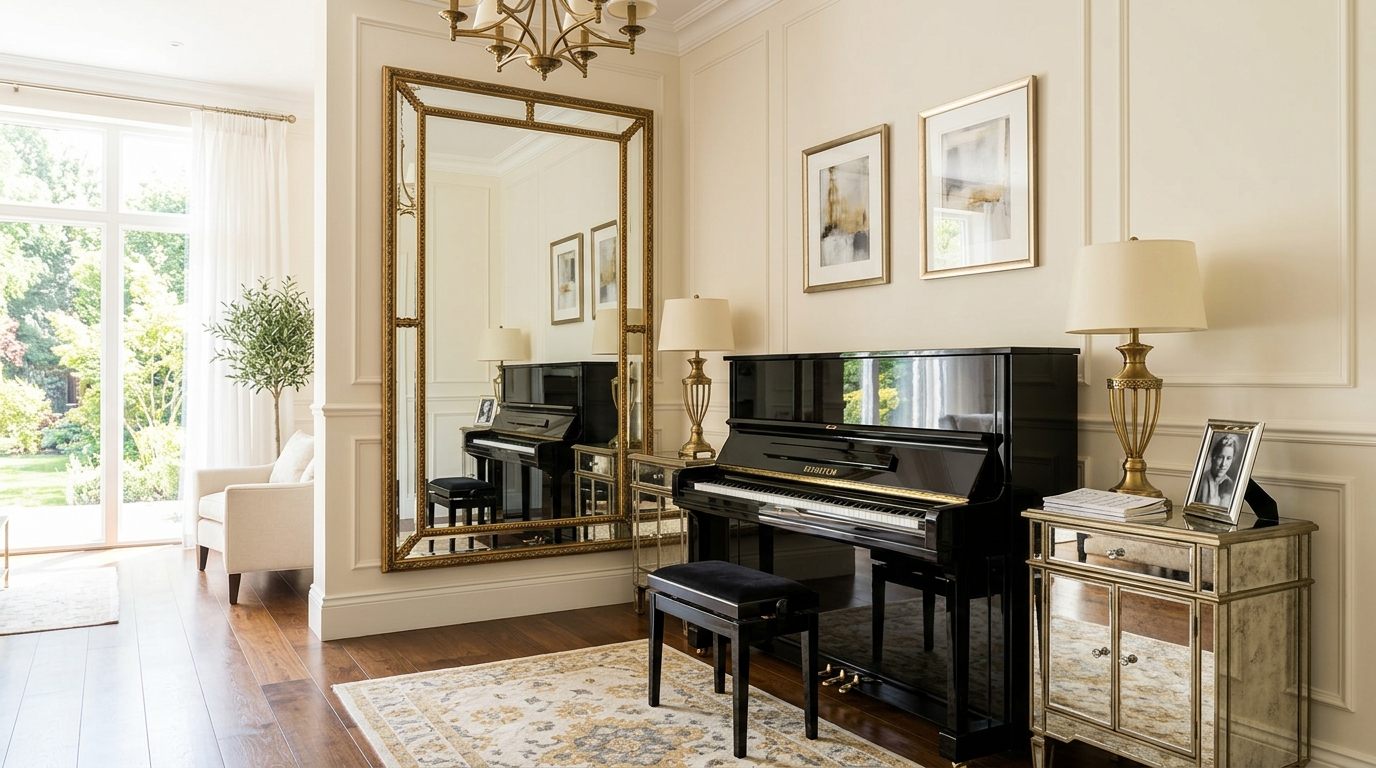
Hanging large mirrors and using metallic accents visually doubles the size of a tight room and prevents the heavy instrument from feeling oppressive. A large wooden instrument can easily swallow all the light in a small room and make the space feel cramped.
To combat this, I rely heavily on reflective surfaces to bounce natural light around the room. Hanging an oversized mirror on the wall adjacent to the keyboard tricks the eye into believing the room extends much further than it actually does.
You can also incorporate polished brass lamps, metallic picture frames, and mirrored side tables into your piano décor ideas. These subtle shiny elements catch the light from your windows and add a layer of sparkling glamour that lightens the visual weight of the heavy furniture. Strategically placing reflective decor around your setup ensures that even the smallest practice rooms feel bright, airy, and expansive.
13. Soften The Room With Heavy Pleated Curtains
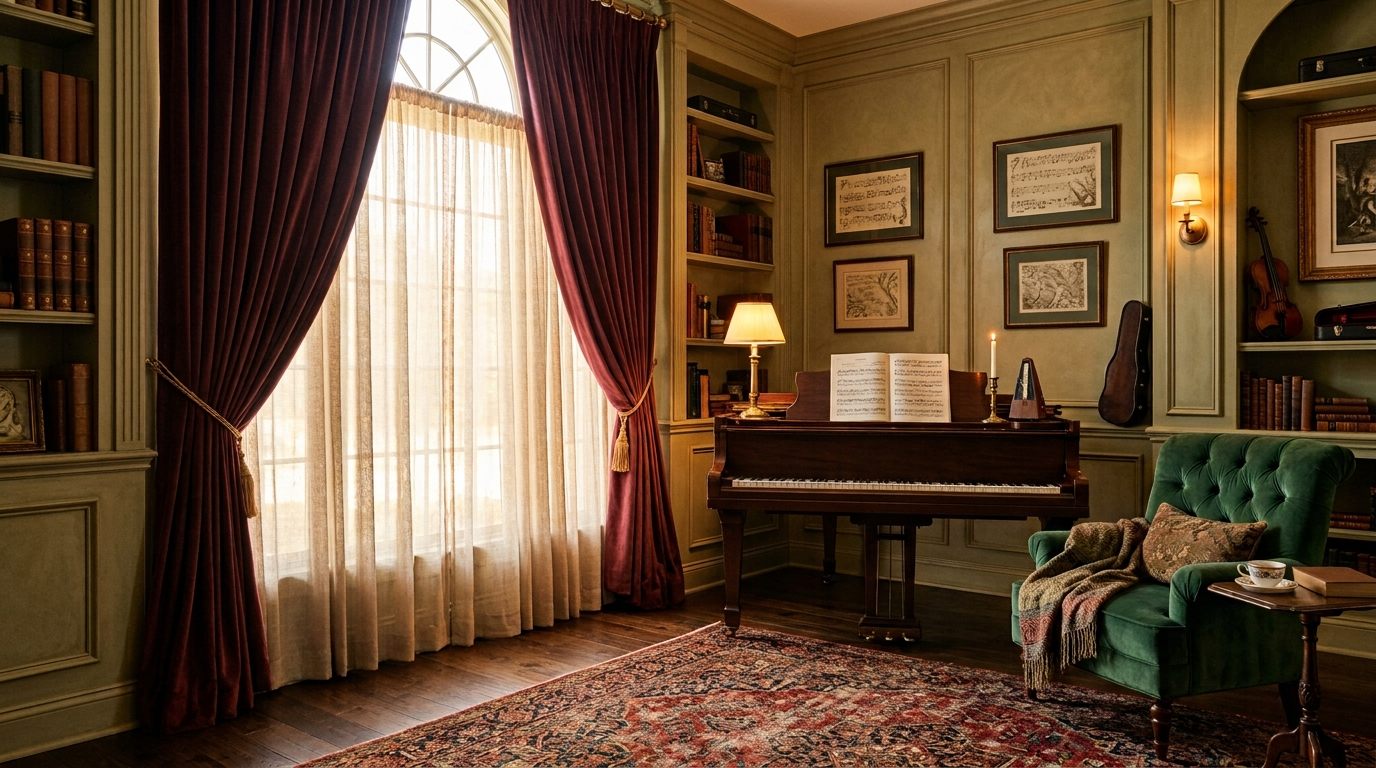
Installing thick fabric window treatments protects your instrument from sun damage while significantly improving the sound quality of the space. Hard glass windows are the enemy of good audio quality.
When bright and high-frequency sound waves hit a flat glass pane, they bounce directly back into the room and create a harsh echoing effect. I always recommend covering any nearby windows with thick and heavy pleated curtains to absorb those stray sound waves before they ruin your practice session. This is one of the simplest ways to use sound-absorbing curtains for the homewithout making the room feel overly technical or studio-like.
Beyond the audio benefits, thick curtains offer critical protection for the wood veneer and internal mechanics. Direct sunlight will quickly bleach the finish of your instrument and dry out the soundboard.
Pulling heavy drapes closed during the brightest parts of the day ensures your investment remains in pristine condition for decades. Layering your windows with dense textiles ensures your space sounds beautiful and remains visually soft and inviting.
14. Install Professional Acoustic Panels And Bass Traps
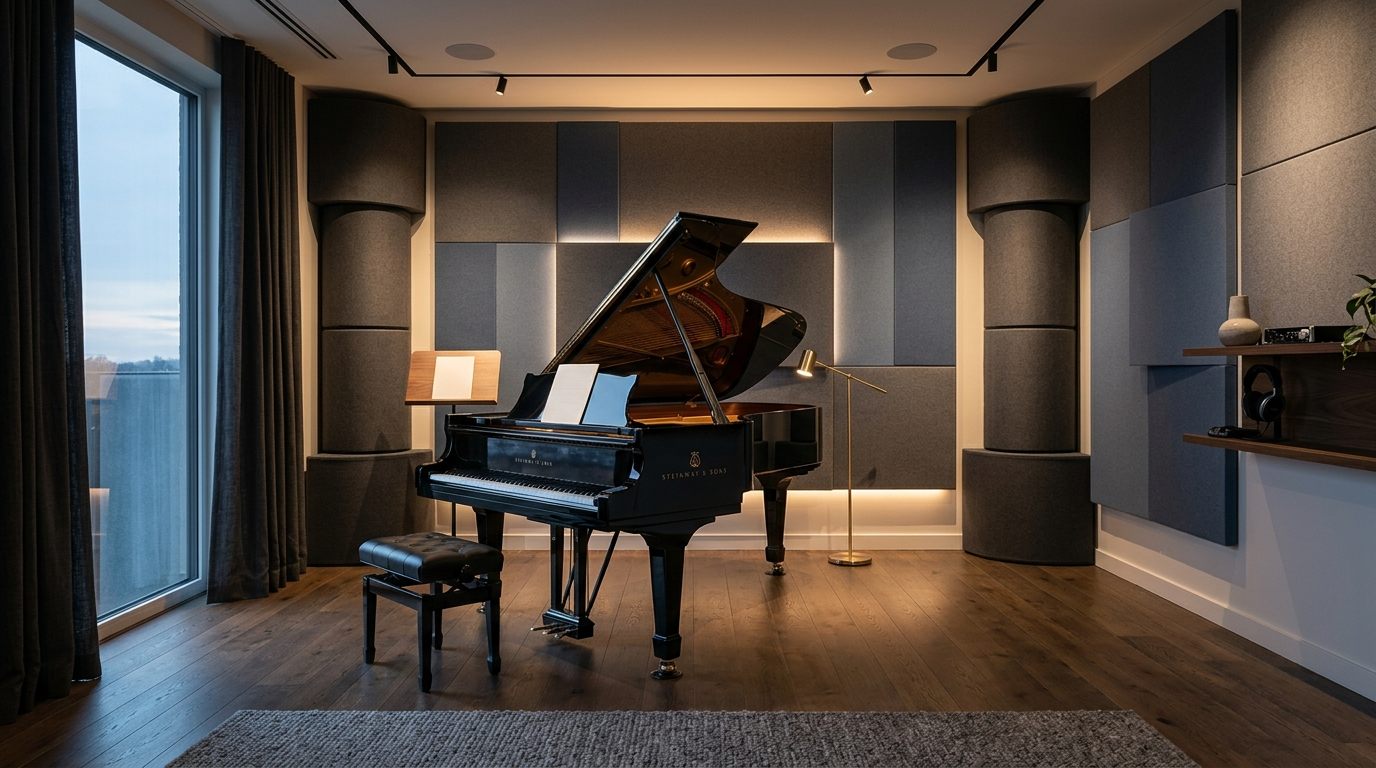
Adding professional acoustic treatments absorbs excess reverberation and provides the ultimate upgrade for your home audio experience. When designing dedicated practice spaces, I often find that standard soft furnishings are not enough to control the sound of a powerful grand model. This is where professional music room acoustics come into play. Installing fabric-wrapped acoustic panels on the walls helps absorb the mid-range frequencies that cause harsh and metallic echoes.
For rooms with heavy bass resonance, adding bass traps to the corners of the room makes a massive difference. Bass frequencies naturally pool in the corners of square rooms and create a muddy rumbling sound.
Placing foam or fiberglass traps in these corners tightens up the low end and makes every chord sound clear and precise. Investing in hidden acoustic treatments ensures your space sounds like a professional concert hall while looking like a high-end lounge.
Recommended: Sustainable Design Trends In Mixed-Use Developments
15. Separate Open Floor Plans With The Piano
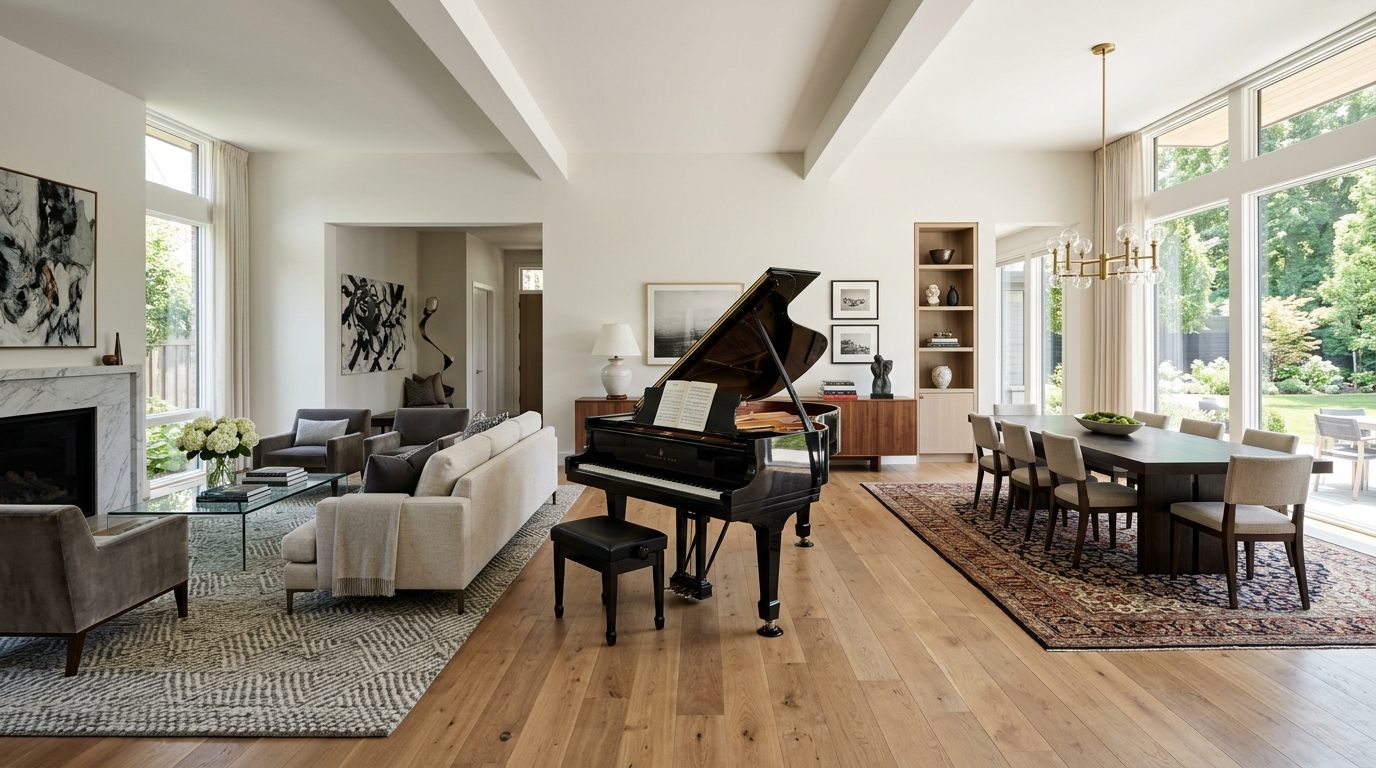
Using your instrument as a functional room divider creates distinct living zones without the need to build intrusive and permanent walls. Modern open-concept homes are great for entertaining, but they often lack definition between the living room and the dining area.
I love using the long and sweeping curve of a grand model to visually separate these oversized spaces. By placing the instrument in the transitional space between two zones, you create a natural physical barrier that guides foot traffic beautifully.
You can place a low console table against the flat side of the instrument to hold table lamps and decorative bowls. This grounds the layout and ensures the back of the instrument looks just as styled as the front.
Adding two distinct area rugs on either side of the setup further defines the separate functional areas. Positioning your instrument as a central dividing anchor brings structure and elegant organization to sprawling open floor plans.
16. Paint An Older Upright To Match The Trim
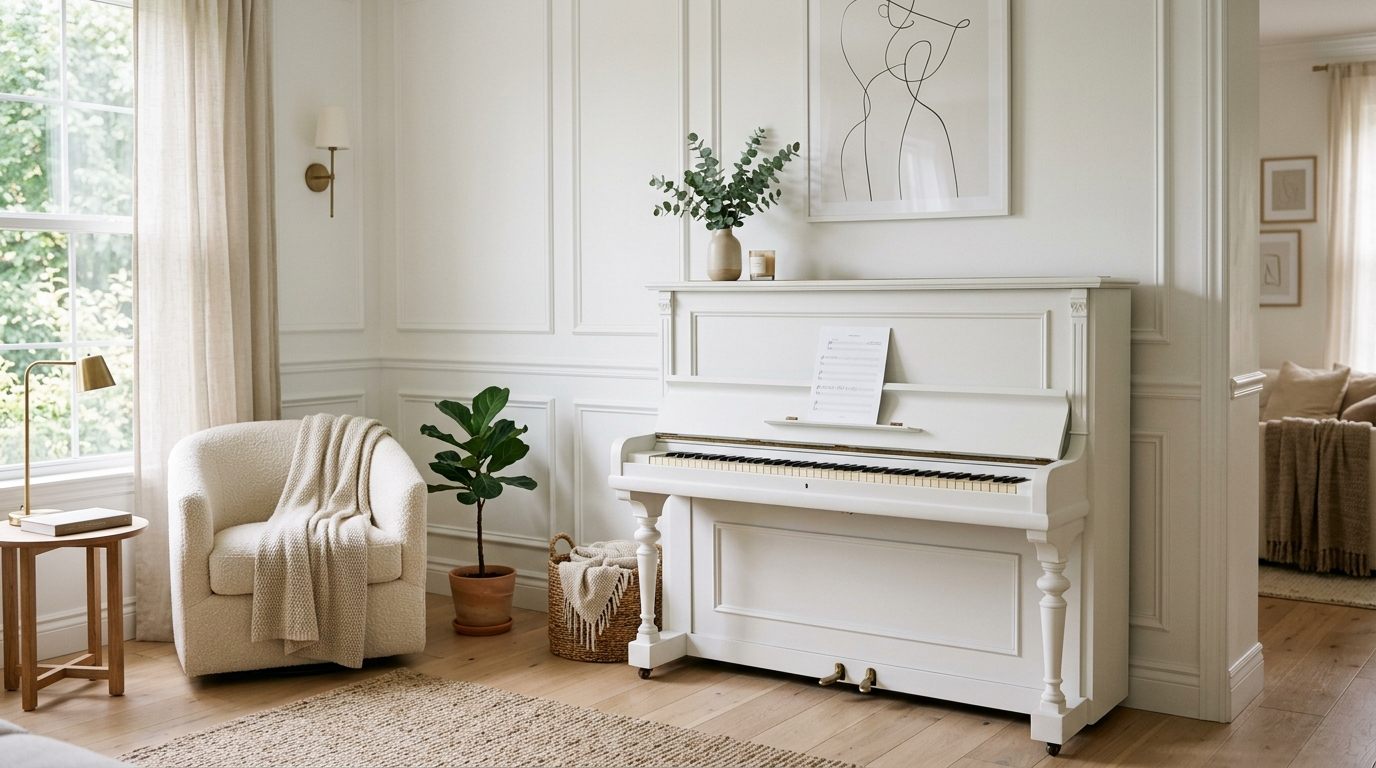
Applying a fresh coat of high-quality paint to a vintage instrument modernizes the room and helps a bulky piece blend seamlessly with the walls. Many families inherit older upright models that feature scratched veneers or outdated orange wood tones.
If the instrument holds no significant antique value, I highly recommend painting it to match the surrounding woodwork and trim. Painting the wooden casing a crisp white or a moody charcoal grey instantly erases decades of visual age and makes the piece look custom-made for the room.
You must be incredibly careful to mask off the keys, pedals, and internal soundboard before applying any primer or paint. I suggest using a durable cabinet-grade enamel paint to ensure the new finish can withstand daily use without chipping or peeling. Transforming an outdated family heirloom with a bold new color creates a personalized statement piece that fits perfectly with your modern aesthetic.
17. Introduce Flexible Modular Seating
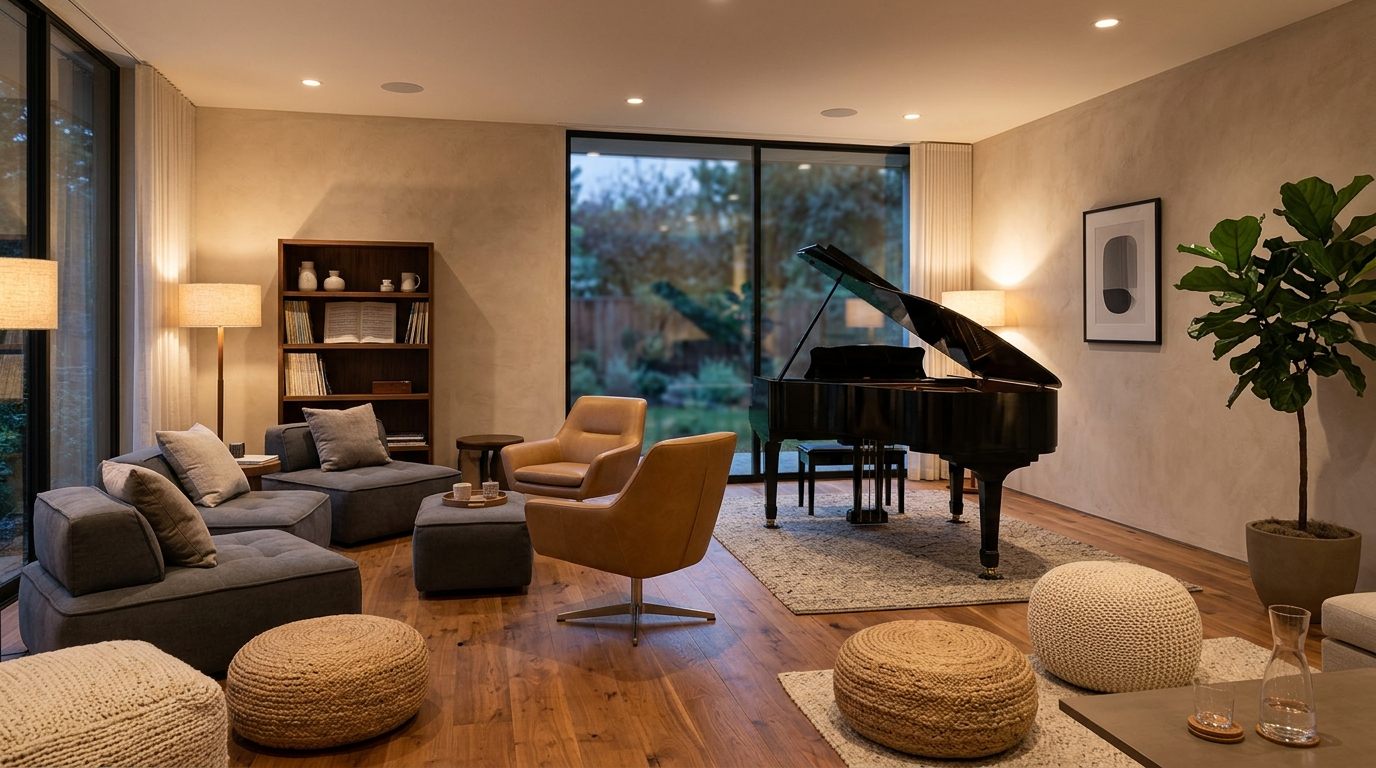
Using lightweight and movable lounge chairs allows you to easily reconfigure the room for private practice or a neighborhood recital. A static furniture layout rarely serves the dual purpose of a dedicated music room.
Most of the time, the player needs solitude and space to focus. However, when friends come over to listen, you need ample seating. I always design these spaces using flexible modular seating like lightweight swivel chairs and plush floor poufs that can be shifted at a moment's notice.
This approach provides fantastic piano studio inspiration for teachers who host students and parents in their homes. You can keep the chairs tucked against the walls during standard lessons and easily pull them into a semicircle around the keyboard for an impromptu performance. Embracing a flexible and modular furniture plan ensures your room adapts instantly to whatever musical event you have planned for the day.
18. Keep The Floor Plan Open Behind The Bench
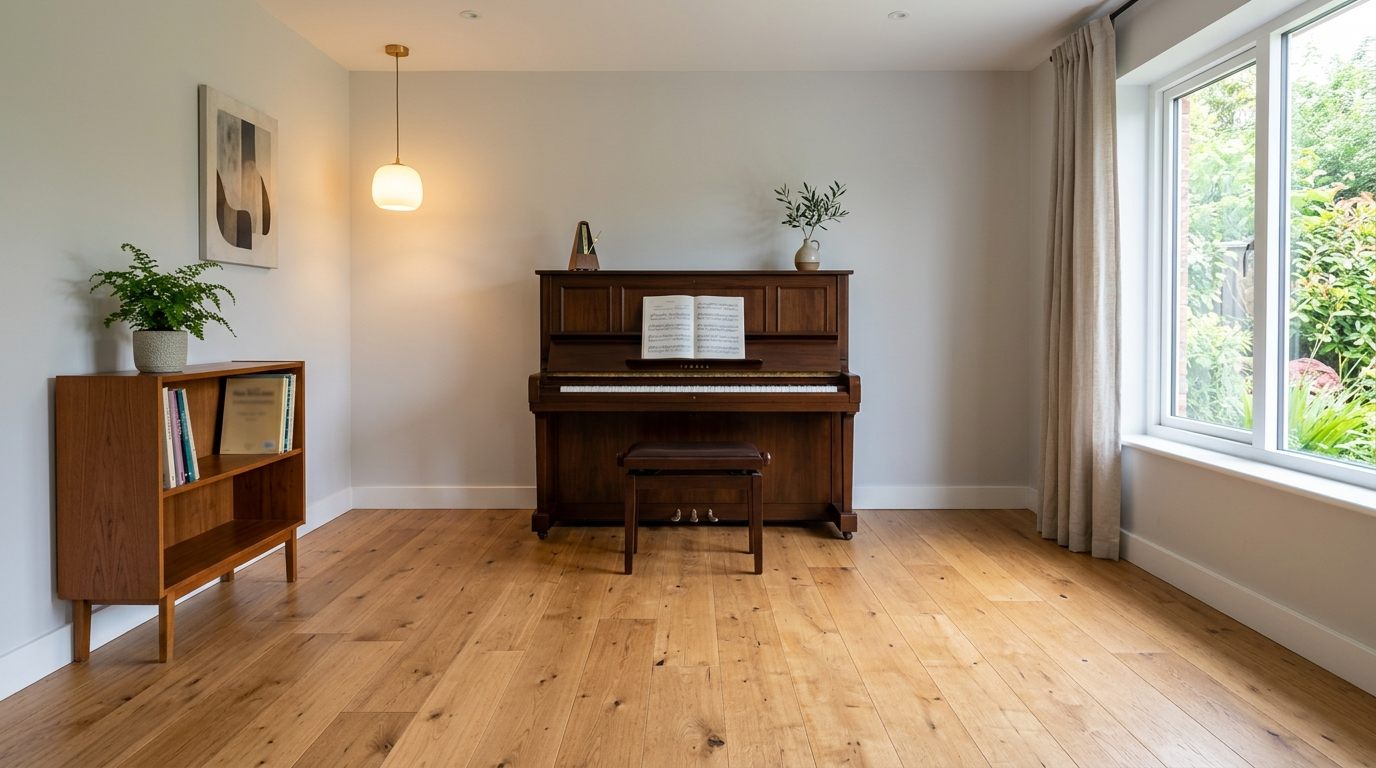
Leaving ample space behind the player prevents the room from feeling cramped and ensures proper posture and ergonomic comfort. In my experience, homeowners often push the bench too close to the coffee table or sofa to save space.
You must leave a minimum of 36 inches between the keyboard and any wall or furniture behind the player. This specific measurement ensures the pianist can slide the bench back to stand up comfortably without feeling trapped.
When you crowd the area behind the bench, the player subconsciously alters their posture and plays with tension in their shoulders. I always tape off a three-foot box on the floor during the design phase to protect this vital zone.
You should also ensure the pathway leading to the bench is completely clear of rugs with curled edges or trailing lamp cords to prevent tripping hazards. Protecting the space around the player guarantees a comfortable and relaxing environment that encourages longer and healthier practice sessions.
19. Hang An Oversized Mirror To Expand The Room
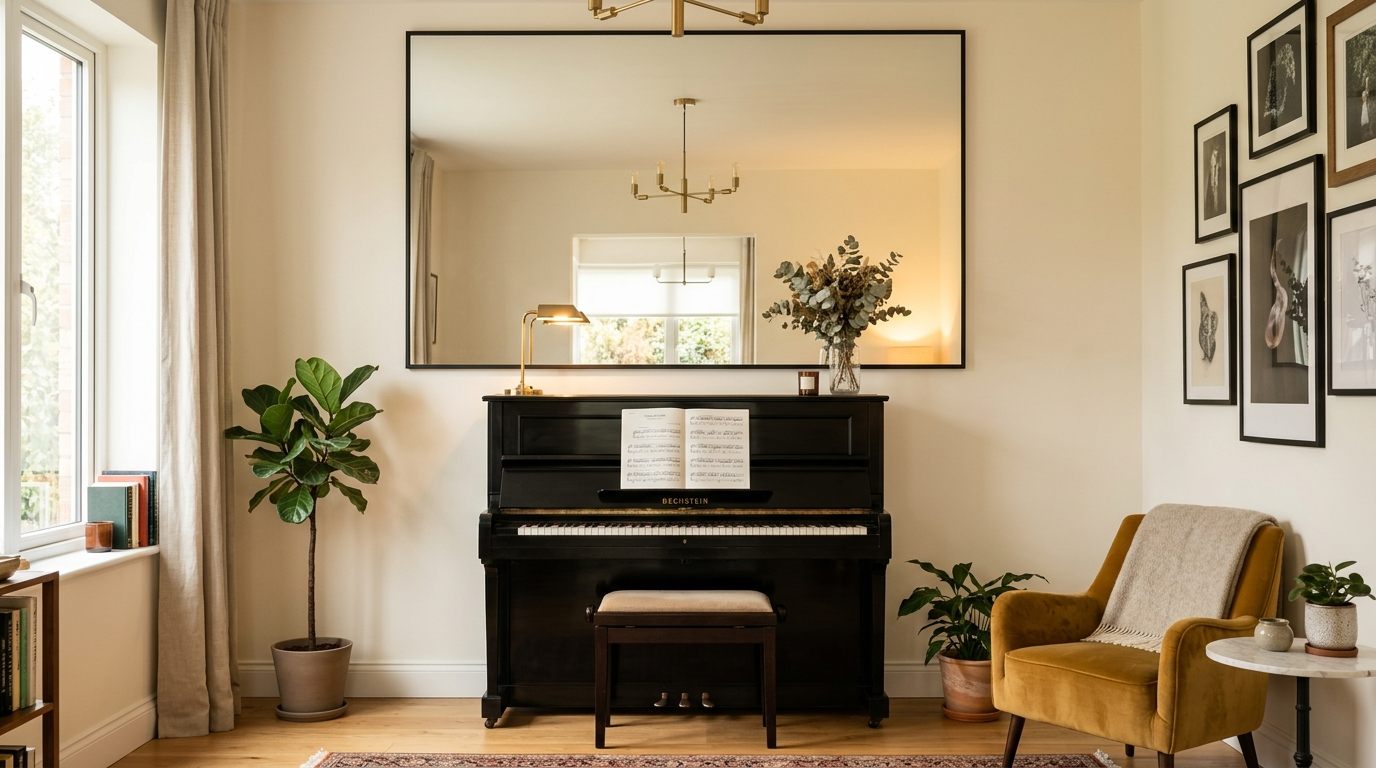
Mounting a massive reflective mirror above your instrument brightens the space and provides a beautiful backdrop for your daily practice. If you are working with a dark interior wall in a narrow room, the heavy silhouette of a wooden instrument can feel visually overwhelming.
I solve this by hanging an oversized mirror directly above the music desk. The mirror acts like an additional window that catches the ambient light and bounces it back into the darkest corners of the room.
I prefer using mirrors with thin and minimalist metal frames to keep the look modern and uncluttered. If you want a more traditional feel, an antiqued mirror with subtle silvering adds a gorgeous layer of texture and history to the wall. Hanging a statement mirror effortlessly lifts the visual weight of the room and creates a bright and welcoming atmosphere for the player.
20. Incorporate Nature-Mimicking Textures
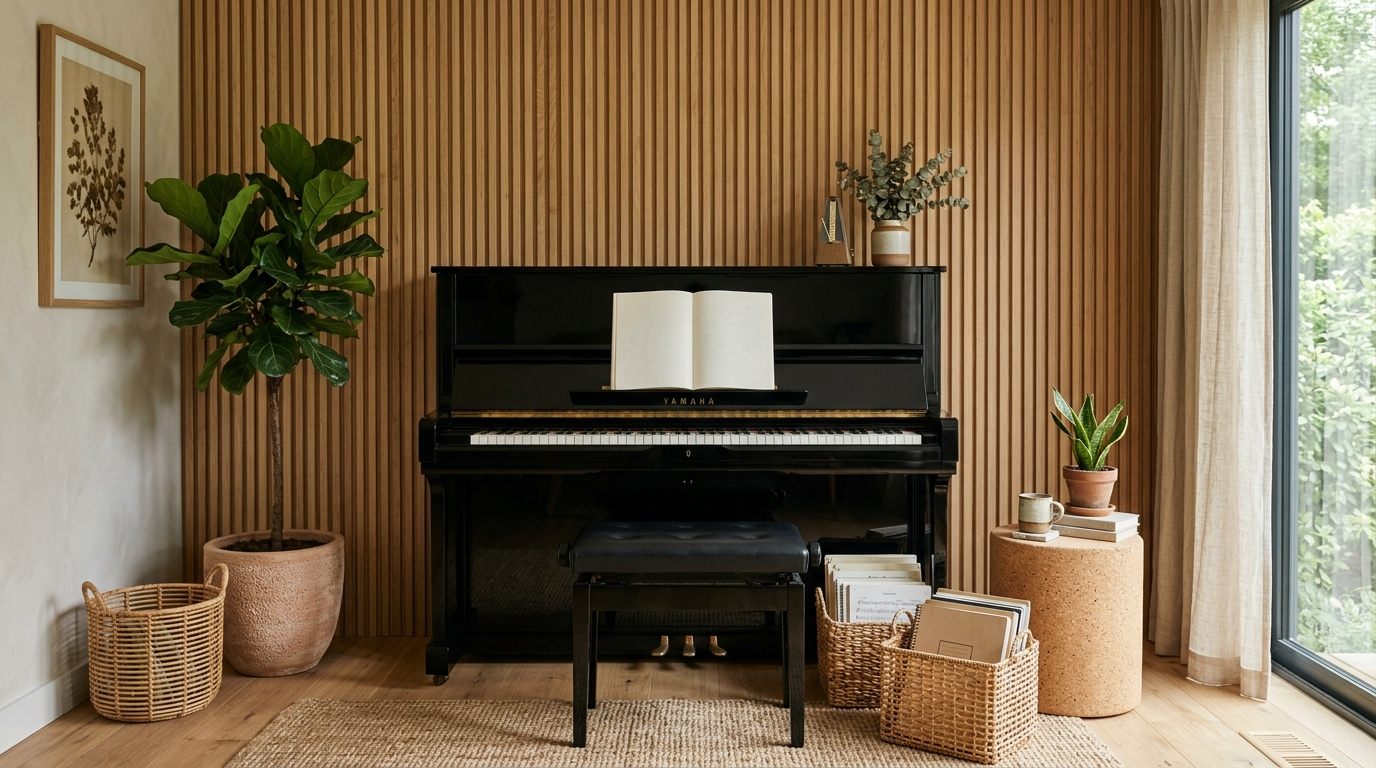
Surrounding your setup with organic materials like wood slats and woven rattan brings a calming and tactile energy to your creative space. Smooth drywall and polished lacquer can sometimes make a room feel slightly sterile and cold.
To inject warmth, I love applying nature-mimicking textures to the walls and surrounding furniture. Installing a fluted wood-slat accent wall behind the instrument not only looks incredibly modern but also helps diffuse harsh sound waves for better acoustics.
You can layer this look by bringing in woven rattan storage baskets for your sheet music and placing a textured cork side table near the bench. These earthy materials contrast beautifully against the sleek and manufactured finish of the instrument keys and pedals. Designing with rich and organic textures transforms a basic practice corner into a deeply grounding and restorative sanctuary.
21. Display Sheet Music With Floating Shelves
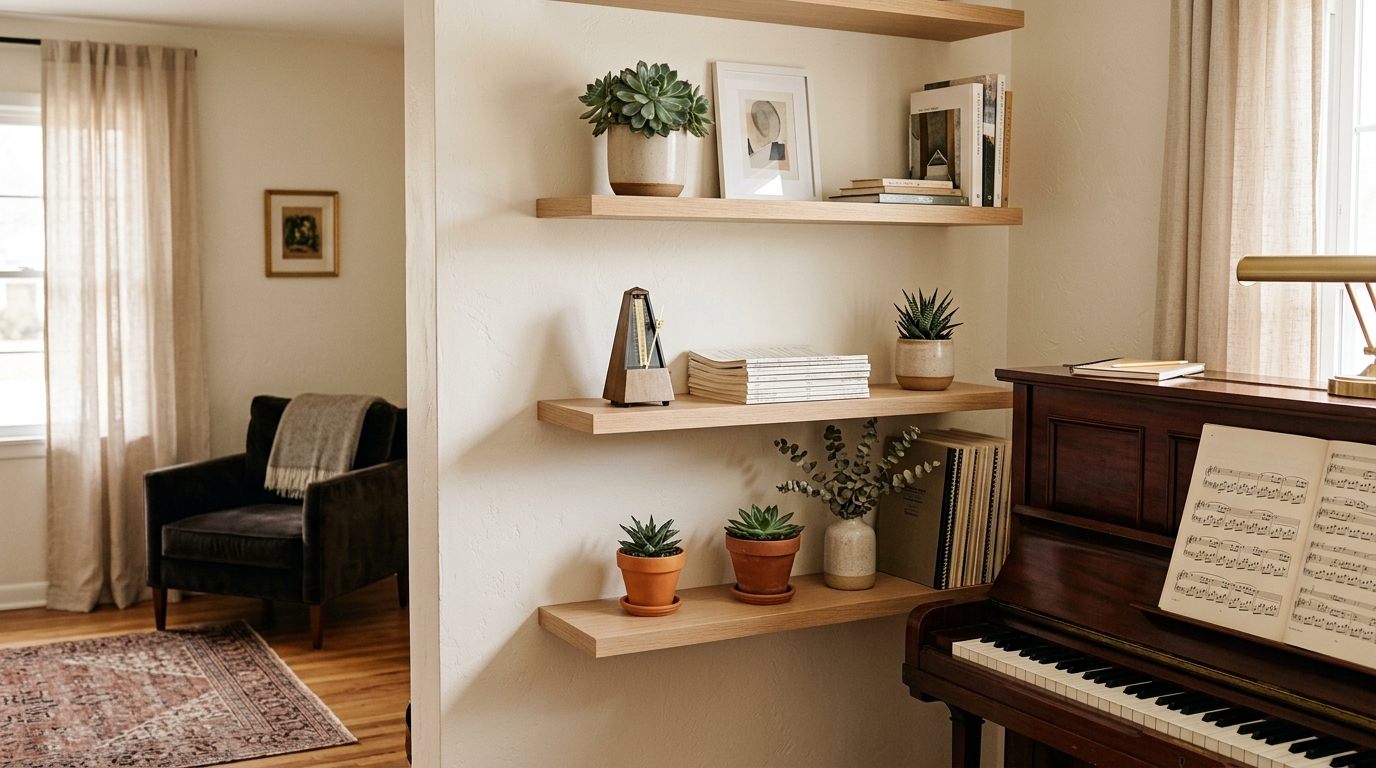
Installing minimalist floating shelves provides an elegant storage solution that turns your favorite musical scores into curated wall art. Piles of loose sheet music and tattered lesson books quickly turn a beautiful room into a disorganized mess.
Instead of hiding your music in a dark drawer, I recommend installing three or four shallow floating ledges on the wall next to the instrument. You can proudly display the beautifully illustrated covers of your favorite sonatas and concertos like pieces of fine art. I also like keeping a trusted online piano guidebookmarked nearby on a tablet or small digital display for quick access to lessons, tuning tips, or new practice material.
Using shallow picture ledges ensures the shelves do not protrude too far into the room or block the pathway to the bench. I always advise my clients to mix in small-framed metronomes, vintage tuning forks, and tiny potted succulents between the books to make the display feel styled and intentional. Organizing your materials on floating shelves keeps your space meticulously tidy while celebrating the actual art of making music.
22. Choose A Stylish Yet Ergonomic Bench
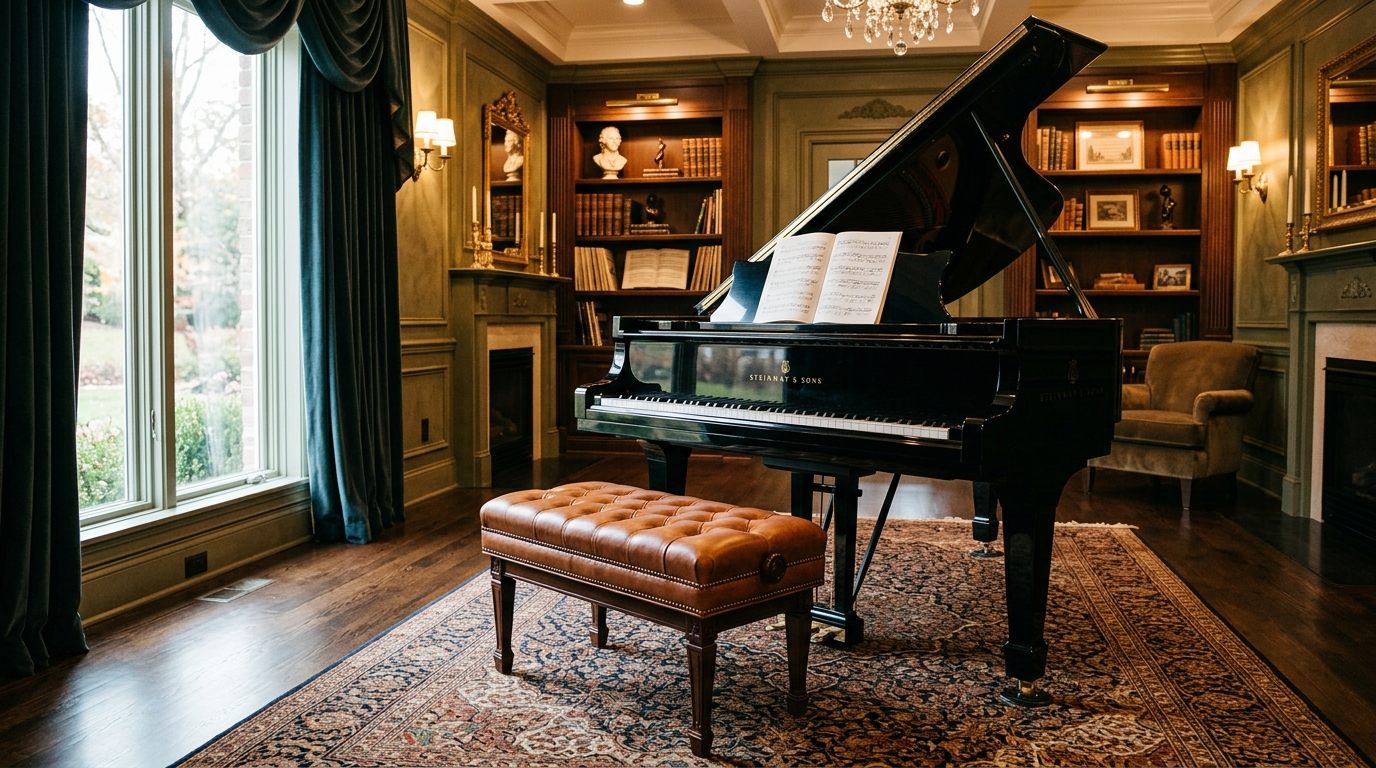
Upgrading from a generic factory stool to a custom upholstered bench adds comfort and injects a massive dose of personal style into the layout. The standard black vinyl bench that comes with most instruments is functional but rarely beautiful.
Since the bench is placed front and center in the room, it offers a fantastic opportunity to introduce color and luxurious fabrics. I often source vintage piano benches and have them professionally reupholstered in performance velvet or rich cognac leather.
While aesthetics are important, you must never sacrifice ergonomics. Ensure the bench you choose can be adjusted for height so different family members can play with proper posture.
If you opt for an upholstered top, make sure the padding is firm and supportive rather than overly plush and sinking. Selecting a beautiful and ergonomic bench elevates the entire look of the room and ensures your back stays healthy during long sessions.
23. Create A Cozy Vibe With Layered Textiles
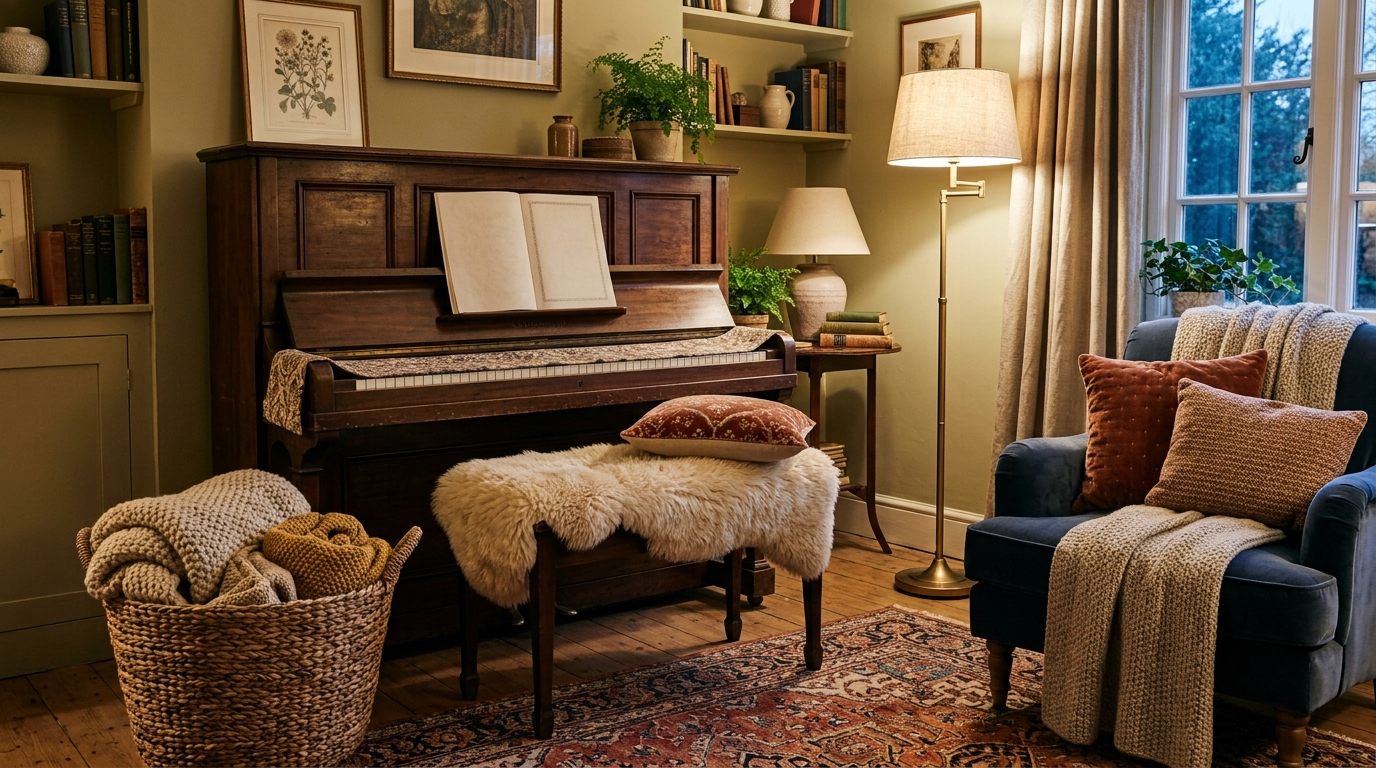
Draping sheepskin throws and placing plush velvet pillows nearby softens the hard angles of the instrument and invites people to sit and stay. A large wooden instrument can feel slightly intimidating and formal to guests.
To make the space feel casual and inviting, I rely heavily on layered textiles. Draping a soft faux sheepskin throw over one corner of the bench instantly signals that the room is meant for relaxation and enjoyment rather than rigid formal study.
You can also place a large woven floor basket nearby and fill it with chunky knit blankets for guests to grab while they listen to you play. These soft elements absorb excess sound vibrations in the room and provide a delightful tactile contrast to the glossy finish of the keys. Layering cozy textiles throughout the space strips away the formality of the instrument and turns the room into a warm and welcoming retreat.
24. Add A Bold Monochromatic Ceiling
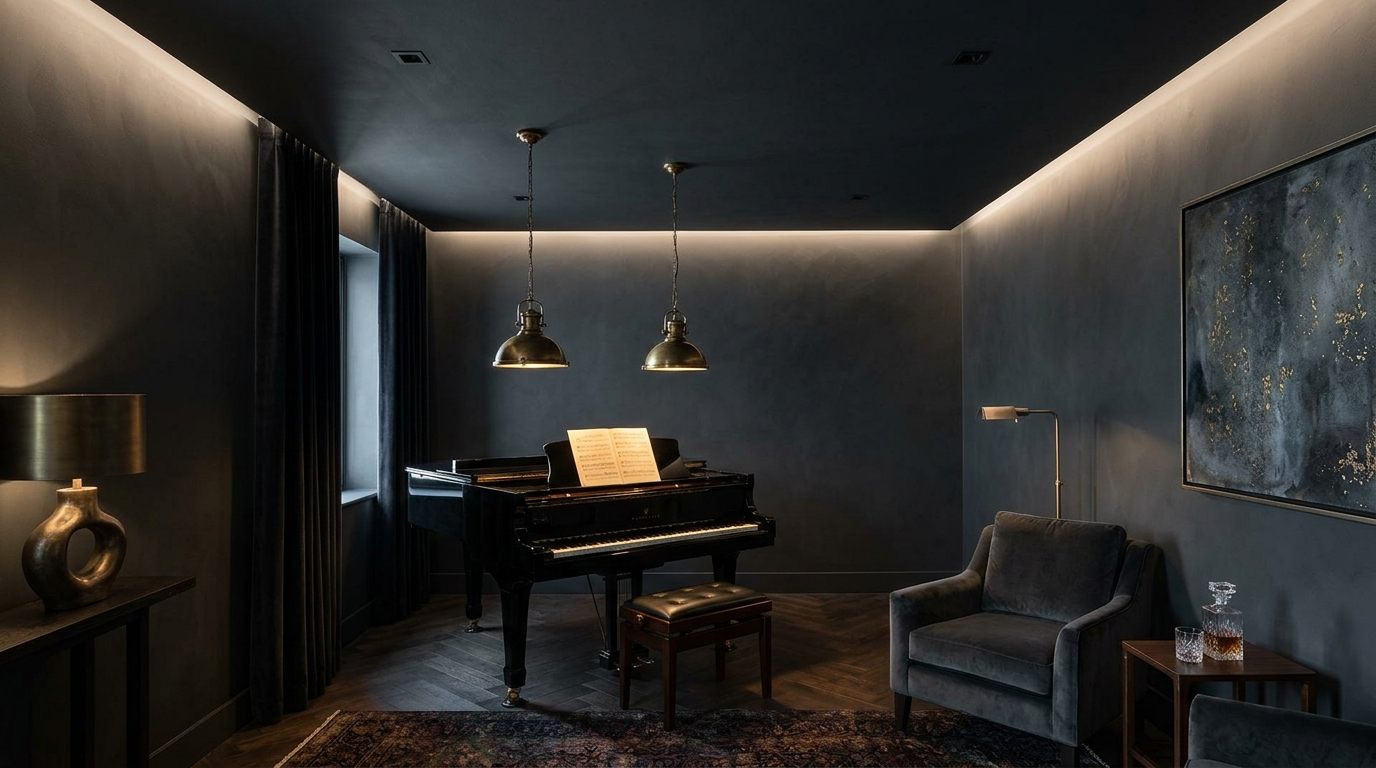
Painting the ceiling a striking complementary color draws the eye upward and adds a layer of unexpected drama to a small space. When floor space is limited and the walls are covered with acoustic panels or bookshelves, the ceiling becomes your best opportunity for creative expression.
I love treating the ceiling as the fifth wall in a music space. Painting the ceiling a deep charcoal or a soft blush pink changes the entire mood of the room without taking up a single inch of physical space.
If you want to take this trend a step further, you can apply a subtle metallic wallpaper to the ceiling. The soft sheen of the paper will reflect the glow of your task lamps and create a magical and shimmering atmosphere during evening practice sessions. Focusing your design efforts upward ensures your room feels finished and highly customized from top to bottom.
25. Elevate The Space With Digital Art Displays
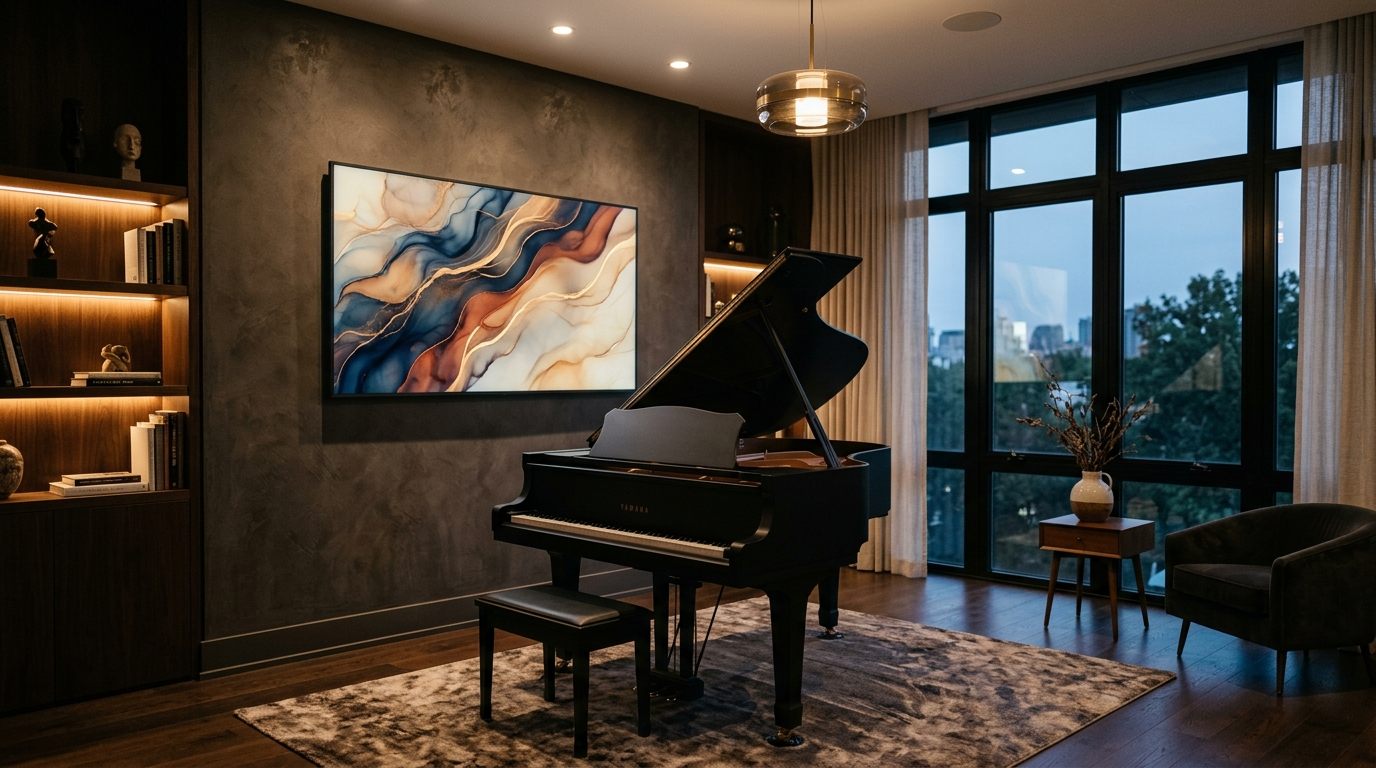
Mounting a slim digital canvas above your instrument allows you to change the artwork to match the mood of the music you are currently playing. Technology and traditional interior design are merging in incredibly exciting ways.
One of my favorite modern touches is installing a matte-finish digital art screen on the wall above the instrument. These screens are designed to look exactly like framed canvas paintings but allow you to cycle through thousands of different classic and contemporary artworks.
You can display a moody classical landscape while practicing a Chopin nocturne and easily switch to a vibrant modern abstract piece when playing upbeat jazz. I always hide the power cords inside the wall to ensure the digital display looks like a flawless and magical piece of traditional art. Integrating dynamic digital art gives you ultimate creative control and allows your visual environment to evolve alongside your musical repertoire.
Essential Guidelines For Taking Care Of The Room And Piano
Designing a beautiful space is only the first step. You must actively maintain the climate of the room to ensure your instrument stays in tune and the internal components do not degrade over time. Pianos are constructed from thousands of moving pieces of wood, felt, and metal. These organic materials react violently to unstable environments.
Before the movers arrive to position your heavy instrument, you must verify the following details to prevent irreversible damage.
- Confirm the chosen wall is an interior structure that does not share a boundary with the outdoors.
- Map the path of the sun throughout the day to ensure no direct sunlight will hit the veneer.
- Locate and close any HVAC heating or cooling vents that blow directly onto the placement area.
- Verify your flooring is structurally reinforced to handle the extreme weight of a cast-iron plate.
According to the Piano Technicians Guild, you should aim to keep the temperature of the room consistently around 68 degrees Fahrenheit. More importantly, the relative humidity must remain perfectly stable between 40 and 50 percent all year long. I highly recommend purchasing a digital hygrometer to monitor the moisture levels in the room. If you live in a climate with extreme seasonal changes, you should ask your technician to install a custom climate control system directly inside the casing of the instrument.
Finally, keep the space clean. Dust the casing weekly with a dry microfiber cloth and always close the lid over the keys when you finish playing to prevent dust from settling between the delicate mechanisms.
Frequently Asked Questions
Can I Put An Acoustic Piano On A Carpeted Floor?
A fully carpeted room is actually excellent for controlling echoes and softening bright sound waves. You should still place small caster cups under the wheels to prevent the heavy instrument from permanently crushing the carpet fibers and damaging the floor padding underneath.
Should I Keep The Piano Lid Open Or Closed When Not Playing?
You should always close the fallboard over the keys and shut the main lid when you are not actively playing. This simple habit prevents harmful dust, pet hair, and accidental spills from getting inside and damaging the delicate felt hammers and wooden action parts.
How Often Should A Home Piano Be Tuned?
Most manufacturers and professional technicians recommend tuning an instrument at least twice a year. You should schedule these appointments a few weeks after major seasonal weather changes, when the indoor heating or cooling systems have stabilized the humidity levels in your home.
Does Ceiling Height Affect How A Piano Sounds?
Rooms with high or vaulted ceilings allow sound waves to expand freely and create a grand and reverberant acoustic experience. If you have low ceilings, you will likely need to add more soft furnishings and rugs to prevent the sound from feeling compressed and overwhelmingly loud.
Final Thoughts
Designing a home around a piano does not have to feel like a choice between beauty and function. With the right placement, balanced acoustics, and thoughtful styling, your instrument can become both a visual centerpiece and a practical part of everyday life. Simple choices like rugs, curtains, and proper spacing can protect your piano while making the room feel warmer and more inviting.
Most importantly, your music space should reflect your personality. Whether you choose bold colors, custom cabinetry, or a minimalist setup, the goal is to create a space that feels inspiring to play in. Use these ideas as your guide, adjust them to fit your home, and enjoy building a room where music and design work together.
Jump to
1. Anchor The Instrument With A Thick Area Rug
2. Position Uprights Against Interior Walls
3. Use Built-In Cabinetry For Upright Integration
4. Angle Grand Pianos Into The Room
5. Create A Moody Atmosphere With Color Drenching
6. Add Tall Leafy Plants As Natural Sound Diffusers
7. Layer Ambient And Task Lighting
8. Frame The Space With Thick Vintage Picture Frames
9. Reclaim An Unused Dining Room
10. Use Bookshelves As Natural Acoustic Diffusers
11. Embrace Architectural Nooks And Alcoves
12. Opt For Reflective Surfaces In Small Spaces
13. Soften The Room With Heavy Pleated Curtains
14. Install Professional Acoustic Panels And Bass Traps
15. Separate Open Floor Plans With The Piano
16. Paint An Older Upright To Match The Trim
17. Introduce Flexible Modular Seating
18. Keep The Floor Plan Open Behind The Bench
19. Hang An Oversized Mirror To Expand The Room
20. Incorporate Nature-Mimicking Textures
21. Display Sheet Music With Floating Shelves
22. Choose A Stylish Yet Ergonomic Bench
23. Create A Cozy Vibe With Layered Textiles
24. Add A Bold Monochromatic Ceiling
25. Elevate The Space With Digital Art Displays
Essential Guidelines For Taking Care Of The Room And Piano
Frequently Asked Questions
Final Thoughts

George Evans
Author
George Anderson, an exceptional architectural designer, envisions and brings to life structures that transcend the realm of imagination. With an unwavering passion for design and an innate eye for detail, George seamlessly blends form and function, creating immersive spaces that inspire awe.
Driven by a deep appreciation for the interplay of space, light, and materials, George's innovative approach redefines the possibilities of architectural design. His visionary compositions leave an indelible mark, evoking a sense of wonder and transforming the built environment.
George Anderson's transformative designs and unwavering dedication continue to shape the architectural landscape, pushing the boundaries of what is possible and inspiring generations to come.
Latest Articles
Popular Articles