From Scan To Build: How 3D Laser Scanning And BIM Reduce Risk In Commercial Construction Projects
In commercial construction, the stakes are high. Projects often involve millions of dollars, tight deadlines, and complex coordination between architects, engineers, contractors, and clients.
Author:George EvansAug 21, 20252.8K Shares288.3K Views
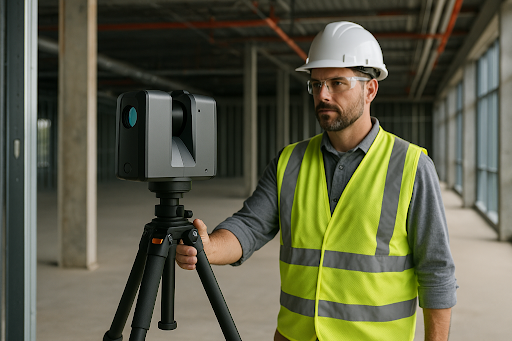
In commercial construction, the stakes are high. Projects often involve millions of dollars, tight deadlines, and complex coordination between architects, engineers, contractors, and clients. Yet despite the best planning, delays, budget overruns, and unexpected site issues are common.
One of the primary causes of these challenges is inaccurate or incomplete project data at the early stages. A few centimeters of error in initial measurements can cascade into costly design revisions, clashes during installation, and even structural adjustments once construction has begun.
Fortunately, advancements in 3D laser scanning and Building Information Modeling (BIM)are transforming the way commercial projects are planned and executed. By capturing existing conditions with millimeter-level accuracy and integrating them into intelligent, data-rich BIM models, stakeholders can make better-informed decisions, detect problems early, and keep projects on track.
The Role of Accurate Data in Commercial Construction
In the world of commercial architecture, precision is not a luxury — it’s a necessity. Whether you’re designing a high-rise office tower, a luxury hotel, or a large retail complex, accurate as-built data forms the foundation for every decision.
Traditional measuring methods — tape measures, handheld lasers, or manual surveys — are prone to human error and take considerable time. For large-scale properties, the risk of incomplete or outdated data is even greater. Missing a detail about a structural beam or mechanical system can trigger a cascade of redesigns later in the process.
3D laser scanning eliminates much of this uncertainty by providing an exact digital replica of the site. This “point cloud” can be navigated virtually, measured from any angle, and used as the basis for highly accurate BIM models.
How 3D Laser Scanning Works for Large-Scale Projects
A 3D laser scanner emits millions of laser points per second, recording the exact position of each point in space. As the scanner rotates, it captures every surface — floors, walls, ceilings, MEP systems — with remarkable detail. The result is a point cloud containing millions or even billions of data points that represent the site’s exact geometry.
For large commercial sites, multiple scans are performed from different vantage points and then registered together into one comprehensive dataset. This process is fast — scanning a 10-story building can take just two to three days — and highly accurate, with deviations typically within 2–4 mm.
This dataset can then be imported into BIM software such as Autodesk Revit, ArchiCAD, or Navisworks to create a fully coordinated 3D model that reflects reality down to the smallest detail.
BIM as a Risk Management Tool
Building Information Modeling is more than just 3D visualization — it’s a dynamic database of building information. Each element in a BIM model contains metadata: material specifications, manufacturer details, installation dates, and more.
When combined with accurate laser scan data, BIM becomes a powerful risk management tool. Features such as clash detection allow teams to identify conflicts — for example, a duct passing through a structural beam — before they reach the construction site.
This proactive approach minimizes costly on-site changes, improves communication between disciplines, and ensures that the entire project team works from a single source of truth.
Case Examples in Commercial Construction
Office Complex Renovation
A downtown office tower undergoing renovation used 3D scanning to capture existing conditions of its 15 floors. The scan revealed discrepancies between the original drawings and the actual structure, including shifted column positions. By updating the BIM model before design work began, the project avoided multiple redesign cycles, saving an estimated 20% in design time.
Luxury Hotel Development
For a new hotel project, 3D scanning captured the complex layout of MEP systems during construction. This data fed into BIM clash detection, revealing that several mechanical runs would interfere with planned lighting fixtures. Early resolution prevented weeks of rework and ensured the project stayed on schedule.
Retail Mall Redesign
A regional shopping center used laser scanning to quickly update as-built plans for several retail units. This allowed the design team to reconfigure spaces for new tenants without delays, supporting faster lease turnover and increased revenue.
In all these examples, the integration of 3D scanning and BIM provided a clear, accurate foundation for decision-making, reducing risk and enhancing collaboration.
Choosing the Right Partner
While technology is a critical factor, the expertise of your scanning and BIM team plays an equally important role. Specialists such as ScanM2bring experience in handling complex commercial sites, managing large datasets, and delivering models optimized for design, construction, and facility management.
An experienced provider ensures that the data is not only accurate but also tailored to your workflows, helping your team get the most value from the technology.
Conclusion
Commercial construction will always be complex, but it doesn’t have to be unpredictable. By integrating 3D laser scanning and BIM from the very beginning, project teams gain the insight and precision they need to reduce risks, control budgets, and meet deadlines.
In an industry where time is money, accurate data and intelligent modeling are no longer optional — they’re the new standard for delivering successful commercial projects.

George Evans
Author
George Anderson, an exceptional architectural designer, envisions and brings to life structures that transcend the realm of imagination. With an unwavering passion for design and an innate eye for detail, George seamlessly blends form and function, creating immersive spaces that inspire awe.
Driven by a deep appreciation for the interplay of space, light, and materials, George's innovative approach redefines the possibilities of architectural design. His visionary compositions leave an indelible mark, evoking a sense of wonder and transforming the built environment.
George Anderson's transformative designs and unwavering dedication continue to shape the architectural landscape, pushing the boundaries of what is possible and inspiring generations to come.
Latest Articles
Popular Articles