Ruohong Wu: Reshaping Architectural Philosophy With Magic
In the design world, David Carson has always advocated for rule-breaking design. In the field of architectural design rendering, Ruohong Wu consistently emphasizes the rhythm of light and shadow, the angle of water surface refraction, and the application of mottled mosaics.
Author:George EvansDec 11, 20251.2K Shares154.5K Views
BY Charlotte Hayes
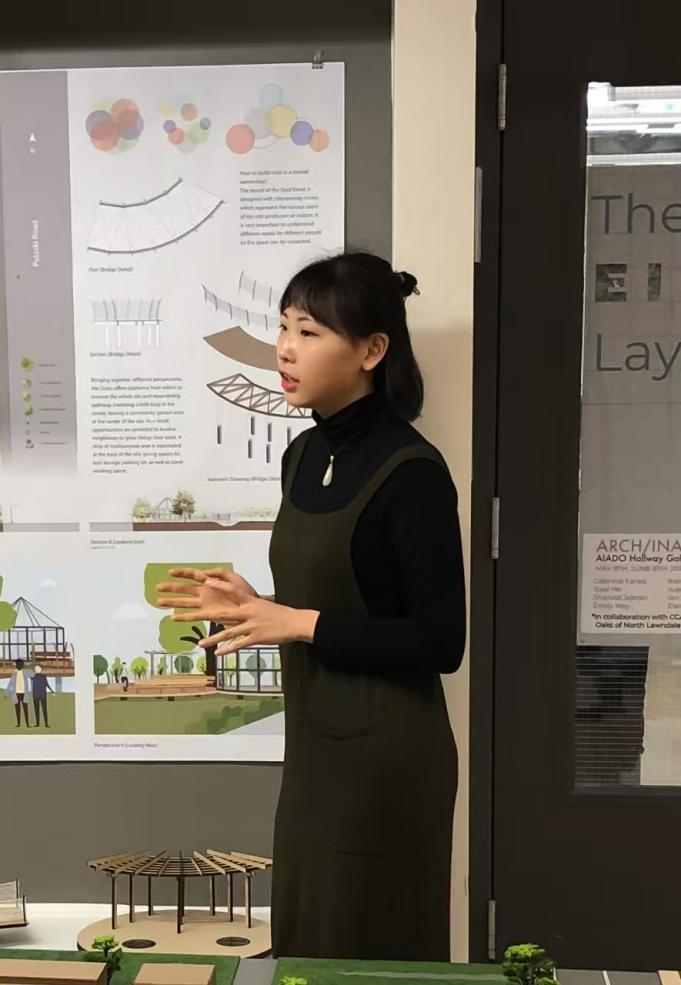
In the design world, David Carson has always advocated for rule-breaking design. In the field of architectural design rendering, Ruohong Wu consistently emphasizes the rhythm of light and shadow, the angle of water surface refraction, and the application of mottled mosaics. These elements are her secret weapons in design. It is this philosophy of harmonious coexistence with nature that imbues her architectural renderings with a spiritual brilliance, reconstructing an alternative architectural philosophy.
The Choice Of Life
Ruohong Wu chose to pursue a career in architectural design rendering because she has always believed that this world is filled with harmony and symbiosis. It is precisely for this reason that she holds her profession in the highest esteem. After graduating from high school, Wu received a letter of acceptance from the School of the Art Institute of Chicago, where she majored in interior architecture. Ruohong Wu stated that this was the artistic sanctuary she had always dreamed of and the battlefield where she could fulfill her creative talent and realize her future aspirations.
After entering the School of the Art Institute of Chicago, being immersed in one of the world's finest environments for art and design completely unleashed Ruohong Wu's inherent strength of embracing new ideas. During collaborative group projects with classmates, she developed a keen insight into the spatial awareness and perspective within design.
She mentioned that this was an aspect often overlooked by other group members, as many of them tended to focus more on structural elements, such as where to place a wall to achieve better structural integrity. However, Ruohong Wu believed that even a single wall must possess its own practical value. She would consider the specific area where the wall was located and then design functional spaces upon it. She stated that architectural rendering is not merely a superficial depiction of a building's appearance but rather a profound excavation and reshaping of its very soul.
She believes that every building possesses its own unique story and essence, and the renderer's mission is to perfectly convey these narratives and intrinsic qualities through technical skill and artistic sensitivity.
However, the ivory-tower design philosophies within the academy were far removed from practical work. Ruohong Wu's first substantive client engagement was a design project for Yale University. What left a deep impression on her was that hospital design must strictly adhere to institutional standards, resulting in significant constraints.
The placement of beds, the specific designs around them, the distance between windows and beds, the installation of handrails, and even the required height of the beds in centimeters—all were governed by explicit and stringent regulations. She stated that this was her first profound encounter with the true nature of this socially grounded profession, making her realize that all design must ultimately be rooted in the realities of life.
In addition to her major coursework, Ruohong Wu took on various administrative roles at the school in her spare time, for which she received the School of the Art Institute of Chicago Student Leadership Award for two consecutive years. Wu stated that this work was exceptionally challenging for her.
As a Chinese student, managing peers from European and American countries proved very difficult, firstly due to cultural and lifestyle differences, and secondly because art students tend to possess strong individual personalities, requiring significant investments of time and energy. Fortunately, Ruohong Wu performed admirably, and her contributions gained recognition within the school.
Notably, at her graduation ceremony, the dean of the School of the Art Institute of Chicago proactively approached her to offer a hug and commend her for her work.
Reshaping Architectural Philosophy
Ruohong Wu employs philosophical theories to deconstruct her artistic designs. While placing greater emphasis on the integration of practicality and aesthetic design, she simultaneously elevates the intellectual depth of her work.
In June 2020, Ruohong Wu independently took charge of a project involving the conversion of an old factory building into a senior activity center. Due to the constraints of the COVID-19 pandemic, she was unable to secure assistance from other team members. Consequently, Ruohong Wu handled the entire process of the project independently, from the initial negotiations and final design finalization to the ultimate project acceptance.
She reflected that during that period, she rapidly evolved from a novice design renderer into a project leader capable of independently overseeing every phase. As the client was highly satisfied with the outcome, they subsequently recommended her for another project: designing and rendering a wedding ceremony hall.
After independently overseeing these two projects, Ruohong Wu’s growth in the industry is there for all to see. Subsequently, her design series for Fox Point Library was awarded the Silver Medal at the New York Architecture Design Awards—an honor recognizing innovative and outstanding architectural works of exceptional design from around the world.
This is a community library located in Fox Point, on the eastern side of Providence, Rhode Island, USA. As a waterfront community, most of the residences retain the architectural styles of the 18th and 19th centuries. However, this also means the library lacks windows, with relatively low ceilings, resulting in an overall oppressive spatial experience.
Upon taking over the project, Ruohong Wu implemented a design featuring bricks of different colors for distinct sections. This mosaic-like exterior effect shattered the previously monotonous atmosphere, instantly enhancing the building's vibrancy and vitality while creating an immediate visual impact. Subsequently, through an analysis of sunlight paths and the building's foundation, she deconstructed the original structural layout.
By employing techniques such as elevation shifts and volumetric stretching, she maximized the perception of space. The strategic use of site additions and subtractions introduced the conceptual theme of a "mountain of books." Ruohong Wu's design gained recognition from the New York Architectural Design Awards committee and secured the Silver Award. The New York Architectural Design Award is a prestigious platform. That her design received such an accolade stems from her visionary approach and her ability to apply innovative techniques.
Shortly thereafter, she won the London Architectural Design Silver Award for her Life on Water series. Her unique design features a bridge system fixed by pillars under normal water level conditions, connecting the buildings on both banks and meeting the slope requirements for accessible ramps, thereby ensuring convenient passage.
In her design, when facing a 500-year flood event, the new structure would be significantly elevated (as water levels rise), and the bridge would rise accordingly, resulting in a gentler slope. Simultaneously, through tunnels integrated within the existing structure, people can directly experience the spatial variations caused by changing water levels. This design not only serves functional purposes but also creates a nature-driven, immersive exhibition experience.
The London Architectural Design Award, often referred to as the "Oscar of the Global Design World," saw Ruohong Wu's name, following her receipt of this prestigious honor, become highly sought-after within the industry, cementing her status as a leading rendering design expert.
Conclusion
Today, through her passion and dedication to architectural rendering, coupled with exceptional technical and artistic talent, Ruohong Wu has become an outstanding representative in the field of architectural rendering. Through her body of work, she has demonstrated that architectural rendering is not merely a technical skill, but an art form capable of endowing architecture with soul and life.
George Evans
Author
George Anderson, an exceptional architectural designer, envisions and brings to life structures that transcend the realm of imagination. With an unwavering passion for design and an innate eye for detail, George seamlessly blends form and function, creating immersive spaces that inspire awe.
Driven by a deep appreciation for the interplay of space, light, and materials, George's innovative approach redefines the possibilities of architectural design. His visionary compositions leave an indelible mark, evoking a sense of wonder and transforming the built environment.
George Anderson's transformative designs and unwavering dedication continue to shape the architectural landscape, pushing the boundaries of what is possible and inspiring generations to come.
Latest Articles
Popular Articles